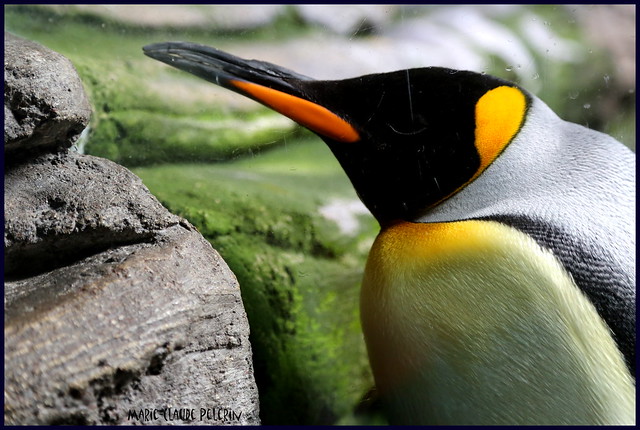
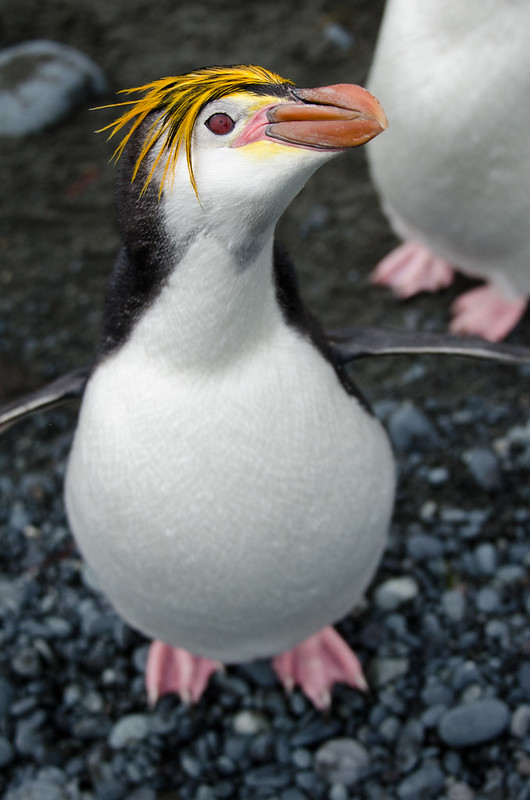
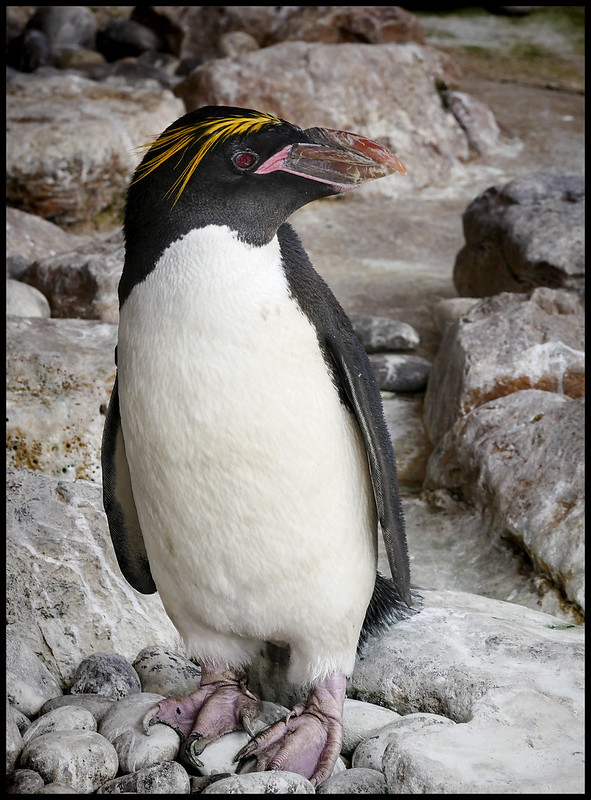
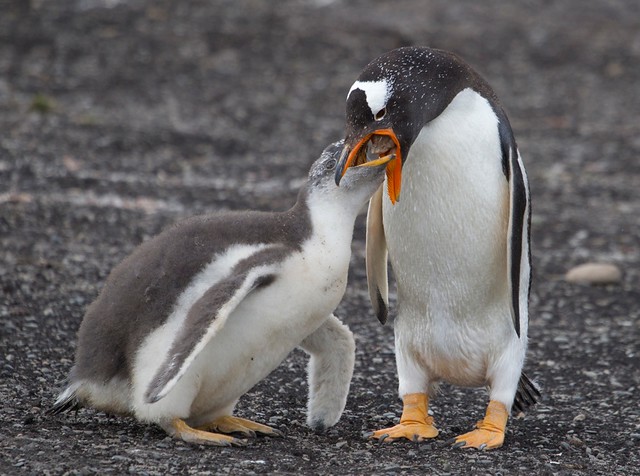
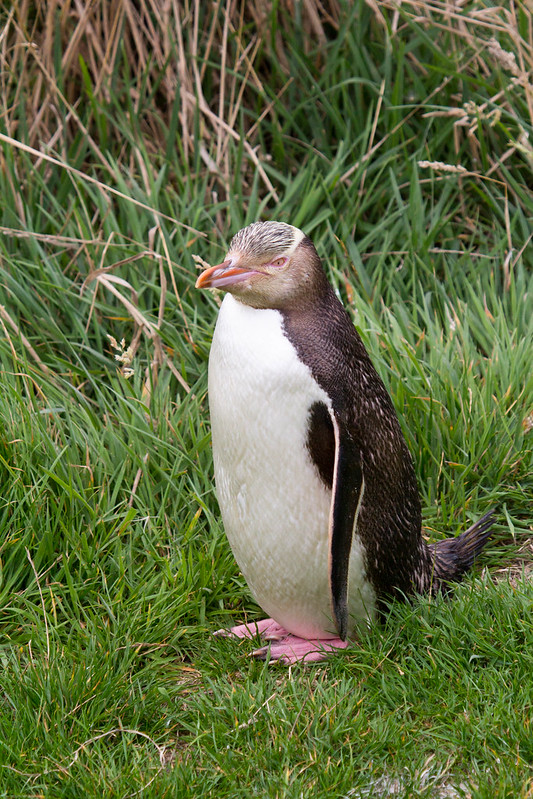
Antarctic Peninsula, Petermann Island by Ian Withnall
Pages
▼
Tuesday, June 30, 2015
Monday, June 29, 2015
Sunday, June 28, 2015
Outfoxed: Penguin-hunting killer shot dead at North Head
Outfoxing Manly's penguin snatcher
The battle to save Sydney's penguins
is underway by The National Parks and Wildlife Service and volunteers in
Operation Little Penguin. A lone fox's reign of terror in Sydney's northern beaches has come to
an end, after rangers trapped and shot the predator early on Saturday
morning.
The carcass has now been taken to Taronga Zoo, where veterinarians will conduct a necropsy to examine the fox's stomach contents and bite pattern.
Based on advice from Taronga Zoo, the NPWS believes the one fox was responsible for the fairy penguin massacre. But as a precaution, it will continue the operation until at least Monday, with one shooter on patrol Saturday night and fox traps to be left in the bush for another week. "It is possible that there could be another fox involved," Mr Hay warned. "We've taken out a significant predator here, but we're just being cautious."
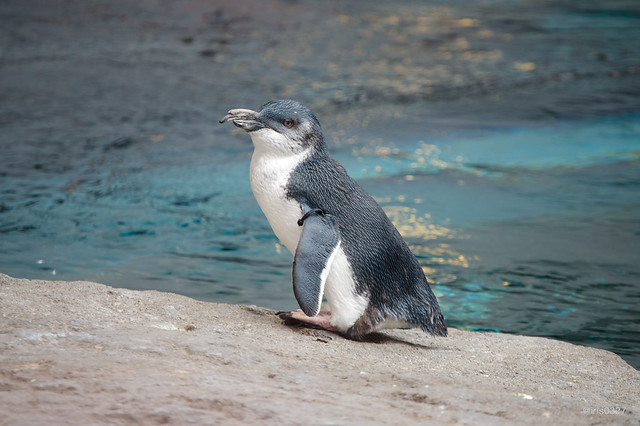
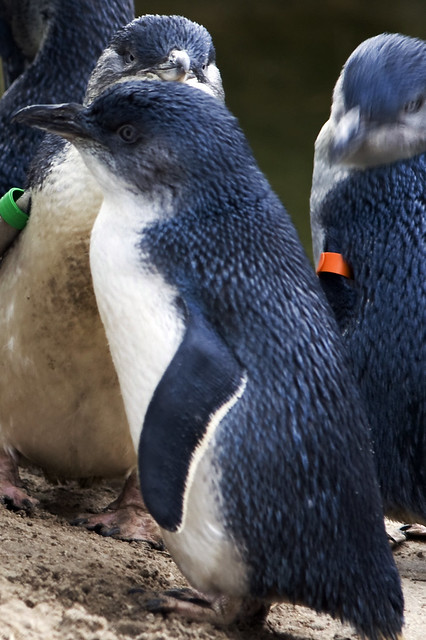
The little penguins that call the coastal heath at North Head home constitute the last remaining colony on the NSW mainland, but their proximity to Manly's urban area has left them vulnerable to attacks from dogs and foxes.
Mr Hay said the carnage of the past fortnight is relatively uncommon. A previous attack in 2009 resulted in 13 penguin deaths, while 20 were killed in 2000, he said.
Local penguin warden Sally Garman said the 26 deaths over the past fortnight were a terrible blow to the local penguin population, but the colony would survive. "It's devastating but it's not catastrophic to this colony of penguins," she said. "We can save them."
source
#Penguin of the Day
Shedd Aquarium's newest rockhopper penguin
Brenna Hernandez/Shedd Aquarium
(and here are a few more shots of this adorable baby!)
Brenna Hernandez / Shedd Aquarium
Saturday, June 27, 2015
Fox kills 26 penguins at North Head, despite efforts of shooters, trapping dogs and guards
- John Morcombe
- Manly Daily
- June 26, 2015
A SINGLE thrill-killing fox has wiped out 26 little penguins at North Head in the past 11 days and eluded all attempts to catch or kill it, including two snipers and tracker dogs.
The fox has avoided baits and traps, as well as the snipers, so nearly 100 National Parks and Wildlife Staff and local volunteers having been standing guard over the vulnerable penguins’ nests just as their breeding season begins.
A NPWS spokeswoman said there was no doubt a single fox was responsible for the slaughter, with necropsies, paw prints and infra-red camera footage indicating just one fox had entered the national park and attacked the penguins.
A screen shot of the fox that has killed 26 little penguins at North Head Pic credit: NSW National Parks and Wildlife Service
“It’s avoided all routine and specialist management strategies that other foxes have fallen for in the past,” she said. “It’s trap-shy and bait-shy. And it’s thrill-killing because it’s not eating them. We have two shooters on roster, one at a time, and staff and volunteers are sitting near the nests at night to protect them.”
Last year there were 67 breeding pairs at North Head — or 134 birds in total — of which some are microchipped so they can be monitored. But the NPWS believes that figure represents only three-quarters of the penguins breeding at North Head.
The penguins have been picked off by a wily fox.
She said the 26 dead penguins had been killed in batches of six or seven at a time, although there had been no deaths in the past five nights. “We’re throwing everything at this,” she said. “We’ve got lots of cameras up there, we’ve got lots of very supportive staff and volunteers and we’re throwing every possible resource we have into getting this fox.”
NPWS ranger Mel Tyas and penguin warden Sally Garman on Collins Flat — which 26 penguins have been killed by a fox
She said up to 95 people have been working day and night and taking every possible action to protect the little penguins. “The community has been fantastic,” she said. “The NPWS has been supported by the adjoining land managers and council and a team of wonderful local community volunteer penguin wardens who are monitoring specific sites and guarding the little penguins at night.”
North Head is a tranquil part of the northern beaches. Picture: Google Maps
The NPWS employed two marksmen in 2009 after nine penguins were killed by dogs and/or foxes
The little penguins’ breeding season general runs from June to February.
source
Competition win for yellow-eyed penguins

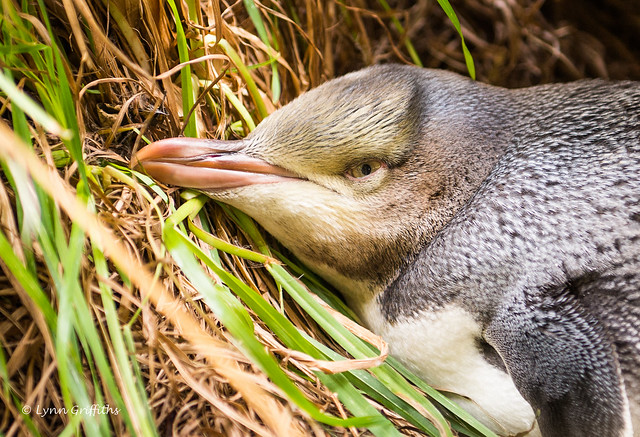
Juvenile Yellow Eyed Penguin by Lynn Griffiths, on Flickr
Contributor:
Thursday, 25 June, 2015
Endangered Stewart Island yellow-eyed penguins will benefit from tourism operators Real Journeys Cruise-for-a-Cause.
As the winners, the Yellow-eyed Penguin Trust will organise ‘Cruise-for-a-Cause’ involving a Doubtful Sound Overnight Cruise on August 29th, 2015. The 70 donated berths will be sold through the Trust’s networks to raise funds in support of the yellow-eyed penguin monitoring on Stewart Island. The Trust has worked in this area since 1999 and found, over that period, penguin numbers have significantly decreased. For example, on neighbouring Codfish Island/Whenua Hou, a predator-free island, numbers of breeding pairs have decreased from 61 nests in 2001 to an estimated 36 in 2014.
This trip is the final preparation for Real Journeys staff training before the tourism season begins. Previously berths were for invited guests, but this year Real Journeys offered this unique fundraising scheme to charities to make a bigger difference for the chosen charity.
"Conservation is a big part of who we are and the work the Yellow-eyed Penguin Trust intends doing on Stewart Island could make a huge difference to the future of these birds. It’s perfect for our first Cruise-for-a-Cause," says Richard Lauder, Real Journeys Chief Executive.
The Trust has previously received support from Real Journeys through transport to and from Stewart Island. The Trust’s General Manager Sue Murray said "this win elevates the level of support the penguins will receive this year. This work was dependent on external funding which Cruise-for-a- Cause will supply."
This new opportunity comes at an ideal time for the Trust, since having worked on the Island since 1999 it is now considered a core site for our conservation effort.
source
As the winners, the Yellow-eyed Penguin Trust will organise ‘Cruise-for-a-Cause’ involving a Doubtful Sound Overnight Cruise on August 29th, 2015. The 70 donated berths will be sold through the Trust’s networks to raise funds in support of the yellow-eyed penguin monitoring on Stewart Island. The Trust has worked in this area since 1999 and found, over that period, penguin numbers have significantly decreased. For example, on neighbouring Codfish Island/Whenua Hou, a predator-free island, numbers of breeding pairs have decreased from 61 nests in 2001 to an estimated 36 in 2014.
This trip is the final preparation for Real Journeys staff training before the tourism season begins. Previously berths were for invited guests, but this year Real Journeys offered this unique fundraising scheme to charities to make a bigger difference for the chosen charity.
"Conservation is a big part of who we are and the work the Yellow-eyed Penguin Trust intends doing on Stewart Island could make a huge difference to the future of these birds. It’s perfect for our first Cruise-for-a-Cause," says Richard Lauder, Real Journeys Chief Executive.
The Trust has previously received support from Real Journeys through transport to and from Stewart Island. The Trust’s General Manager Sue Murray said "this win elevates the level of support the penguins will receive this year. This work was dependent on external funding which Cruise-for-a- Cause will supply."
This new opportunity comes at an ideal time for the Trust, since having worked on the Island since 1999 it is now considered a core site for our conservation effort.
source
This Newly Hatched Rockhopper Penguin Chick Will Steal Your Heart
By Kim Bellware
06.26.2015
The world just got a few ounces cuter.
The Shedd Aquarium in Chicago on Thursday announced the recent hatching of its latest Rockhopper penguin chick, and darn if isn't the cutest thing on two webbed feet.
Hatched on June 9, the tiny chick weighed between 57 and 59 grams at birth, but recently tipped the scales at 200 grams, the aquarium said in a release. "It is amazing how fast they grow," Christy Sterling, Shedd's assistant supervisor of penguins and sea otters, told The Huffington Post via email. "The chick will grow to adult height within two months!"
Like other penguin species, Rockhoppers are considered a vulnerable group in the wild -- mostly because of people. "Some of the biggest potential threats to them are from humans, like overfishing and oil spills," Sterling said.
Shedd's veterinary staff won't know Chick #23's sex for a few months. The little chick is so named because it is the 23rd Rockhopper chick hatched at the aquarium -- and not for the legendary Chicago Bull, Sterling noted.
"Our staff is very excited about the chick, we have our own little nursery here at Shedd: a dolphin calf, young sea otter and penguin chick," Sterling said. "The staff are always trying to catch a glimpse of the chick on exhibit."
Friday, June 26, 2015
Thursday, June 25, 2015
More #Penguin Chick News from the TN Aquarium
June 25th, 2015
by Staff Report
The newest Macaroni Penguin in Chattanooga has been growing by leaps and bounds since entering the world on June 5.
Photo by
Courtesy of Tennessee Aquarium
Full of surprises. That's how Tennessee Aquarium senior aviculturist Loribeth Lee describes the first baby penguin of 2015, the Tennessee Aquarium reported in a news release."This chick started hatching four days before we were expecting it," said Lee. "But at the first weigh-in, three days later, it was clear that the parents were doing a great job feeding this little bird."
The newest Macaroni Penguin in Chattanooga has been growing by leaps and bounds since entering the world on June 5. In addition to its early appearance, this is Little Debbie's first baby. So initially Lee and the Aquarium's other penguin keepers were a bit nervous.
Photo by
Courtesy of Tennessee Aquarium
Sometimes first-time penguin moms lack the nurturing skills to feed and tend to their first offspring. "Little Debbie surprised us with her parental instincts," said Lee. "She acts as though she has raised a lot of chicks in the past. She and Hercules are doing a great job caring for this baby."
This pudgy little penguin is a pretty laid-back bird. Lee says it seems like a very calm creature even while spending time out in the open. But because it is now beginning to do a little exploring, an acrylic playpen has been erected around Little Debbie and Hercules' nest.
"It takes about 70 to 75 days for baby Macaroni Penguins to grow their adult feathers," said Lee. "Until then, we need to make sure they don't accidentally end up in the water."
The clear barrier, located on the far left-hand side of the exhibit, allows Aquarium guests to observe the chick's behaviors and also see how the parents feed the chick. Nosy neighbors also can see the "new kid in town" while not disturbing the family.
"There's always a lot of curiosity in the colony when a new chick starts vocalizing," said Lee. "Among the most curious birds this year are Beaker, Clare and Cheddar, our one-year-old penguins. They seem to enjoy looking in on the new chick."
Soon aviculturists and penguin volunteers will begin spending some play time with the baby Macaroni behind the scenes. "By letting the chick waddle around and explore a bit, they learn not to be afraid of us and the backup space," said Lee. "This really helps us later when we need to handle the birds for semi-annual physicals and other times when we need to closely examine them."
The next round of exams for all of the birds is scheduled for late November. A DNA test will be run on this baby penguin to determine the gender at that time with a naming contest to follow.
There are more eggs in the exhibit so visitors will continue to have fun the rest of the summer watching the nesting behaviors of the other Gentoos and Macaronis.
source
3 penguin chicks debut at N.E. Aquarium
New England Aquarium
A trio of endangered African penguin chicks made their debut Thursday.
By Rebecca Fiore
Globe Correspondent
When the penguins hatched in mid-May they weighed just over 2 ounces, the aquarium said in a statement, and after six weeks they weigh about 4 pounds each.
The “ever demanding” chicks were separated from their parents so they could learn to take food from the penguin biologists, the aquarium said.
The chicks will remain behind the scenes until around late July or early August. By that time, the three chicks will live together behind the scenes, “as their fluffy down gets pushed out by waterproof feathers,” the aquarium said.
The aquarium successfully hatched six penguin chicks of three different species, including a little blue penguin native to Australia and a rockhopper penguin, which can be found in southern South America.
African penguins usually live from 10 to 15 years, come from Namibia through South Africa, and on average weigh up to 9 pounds.
source
Tuesday, June 23, 2015
St Andrews Aquarium’s new baby penguin, Ace, is an absolute cracker
By Graeme Ogston,
23 June 2015
Ace makes a debut in front of the cameras.Supplied
It was a case of Game, Set and Hatch when St Andrews Aquarium welcomed the arrival of its first penguin chick. The Humboldt Penguin chick, named Ace, successfully cracked its way out of its egg over the course of the weekend.
When the second duo of eggs arrived a few weeks ago, Aquarium staff were hopeful that one of the eggs was fertilised.
It was kept in an incubator to give it the best chance of hatching and early on Friday morning cracks began to appear. Within a few hours there were audible signs of life coming from the sturdy egg, which took more than 48 hours to hatch.
On Sunday morning, Ace flopped out of its shell and chirped its way into the hearts of the team of Fife aquarists at St Andrews Aquarium who had gathered to watch the spectacle unfold. St Andrews Aquarium manager John Mace said it had been an “incredible experience.”
He said: “Because it takes such a time to hatch, we had time to focus the CCTV onto the eggs so we didn’t miss a moment, and to photograph the different stages of hatching as it took place. It was terribly tempting to help the wee chick along on its journey into the world, but it’s always better for the chick if we let nature take its course. The penguin chick is now acclimatising itself to its new surroundings and we’re providing round the clock care for it in these very early days. The next few days are vitally important so we’ll be keeping a close eye on the chick.”
source
#Penguins of the Day
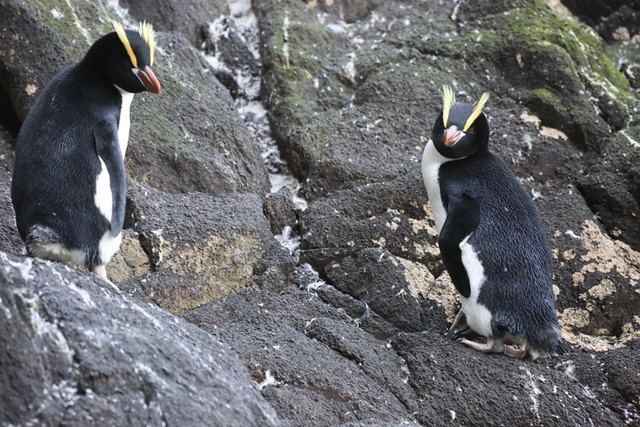
Adult Erect Crested Penguins Coastal Volcanic Rock Platform Antipodes Island Remote New Zealand by ngaire hart
Penguins from Living Coasts in Torquay lost in Georgia flood disaster
By Herald Express
|
Posted: June 22, 2015
PENGUINS from Torquay are among the animals who were killed in deadly floods which swept through a Georgia zoo, it has been revealed.
Living Coasts sent 19 penguins to the flood-hit Eastern European Tbilisi Zoo last summer.
And one of the lost penguins has now reportedly been found safe after swimming 40 miles to neighbouring Azerbaijan. But most of them are believed to have been killed in the disaster which so far has claimed 13 lives and more than half of the 600 animals.
Living Coasts representative Phil Knowling has confirmed that 19 penguins were sent to Georgia just last year.
The penguin that was found in Azerbaijan after escaping from Tbilisi Zoo in Georgia when floods destroyed it's home.
-
The penguin that was found in Azerbaijan after escaping from Tbilisi Zoo in Georgia when floods destroyed it's...
-
Living Coast penguins enjoying the pool in Georgia before the flood. Photograph taken from Tbilisi Zoo website
Monday, June 22, 2015
News crew gets behind the scenes look at endangered species at the Little Rock Zoo
KATV - Breaking News, Weather and Razorback Sports
Jun 20, 2015
LITTLE ROCK (KATV) - African penguins, cheetahs, and black rhinos are just three of the many endangered species across the world. All three can be seen at the Little Rock Zoo, but researchers say if we don't change our ways that may soon be the only place they could be found. That's why hundreds of zoos and aquariums are launching a new campaign this year to save the animals called SAFE, or saving animals from extinction.
"Most people don't just wake up and say i want to save an animal today, but what people do is wake up in the morning and go i want to go and see the animals," Susan Altrui, assistant director of the Little Rock Zoo said.
Arkansans flood into the zoo, hoping to catch a glimpse of Maggi and Zazi, this mother-daughter cheetah duo, catch a peak of the penguins playing in the water, or see Johari the black rhino, baking in the sun. Little do they know, they're small visit to the zoo has a huge impact on wild life throughout the world.
"Zoos or aquariums may be the only places where you can see these animals one day and that's something we dont want to have happen," Altrui said.
"Rhinos are pretty smart and trainable, and he's very personable," Erin Lien, zookeeper, said. Johari can usually be seen in the Africa section of the zoo. The 20-year-old is one of about 5,000 living black rhinos in the world.
"He likes to paint and we use that as a part of his enrichment. So he likes to have the interaction with us and its part of his training as well," Lien said. While rhinos are being poached for their horns, the African penguin population is declining due to over-fishing and oil spills.
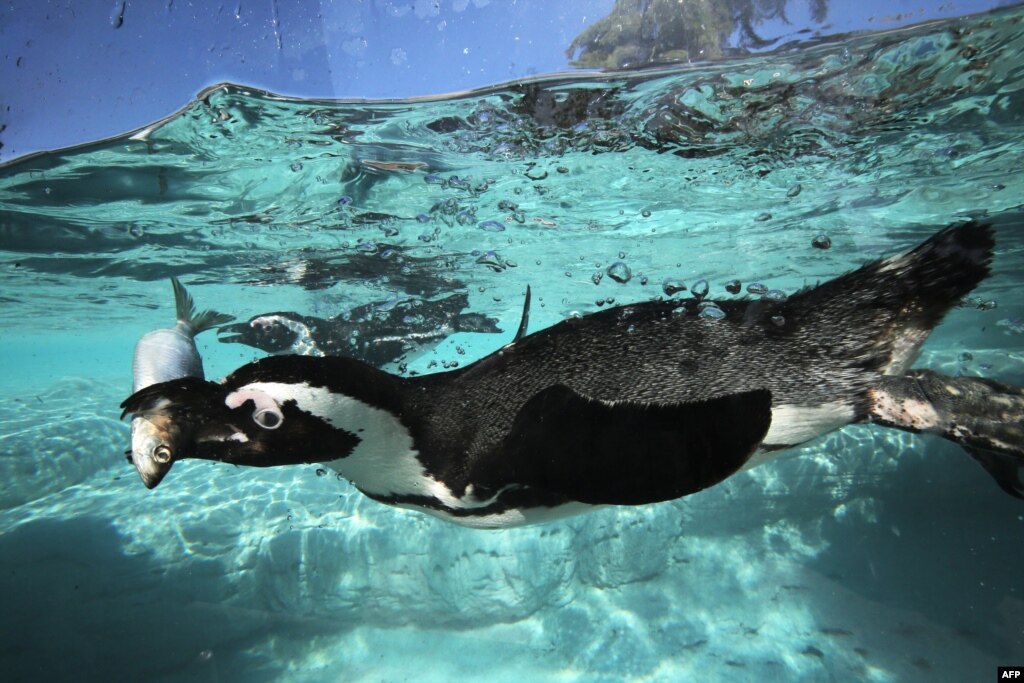
"So this is Kai and she is one of our African black footed penguins," Jason Emery, zookeeper, said. This exhibit is home to 21 penguins, including 6 bred in Little Rock.
"They're built for the water. They love to swim, they love to eat fish, and their body is shaped like a torpedo," Emery said. He looks after this waddling bunch, and said for every encounter like this, another penguin could be saved.
"A motto that i've always learned is touch the heart to teach the mind. People are more prone to remember something if they have a up close personal interaction," Emery said. This is all a part of an initiative launched this year called SAFE.
"This is really an exciting time in our worlds history to really have a combined effort to save animals," Altrui said. She continued to say around 180 million people visit zoos with this program. Every ticket purchased helps fund conservation efforts in the wild.
Altrui said she hopes by educating the public and raising awareness through safe, we can keep our penguins and rhinos around for a little longer.
"If we can reach all of those people and teach them about how endangered these animals are in the wild and activate them to do something to do about it, that's pretty powerful," Altrui said.
source
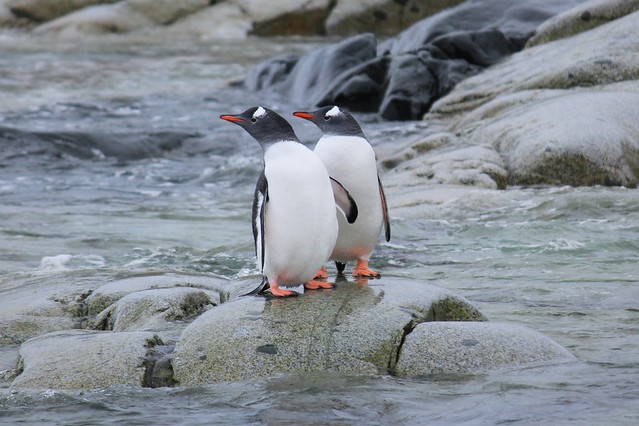
By Stacey Spivey
LITTLE ROCK (KATV) - African penguins, cheetahs, and black rhinos are just three of the many endangered species across the world. All three can be seen at the Little Rock Zoo, but researchers say if we don't change our ways that may soon be the only place they could be found. That's why hundreds of zoos and aquariums are launching a new campaign this year to save the animals called SAFE, or saving animals from extinction.
"Most people don't just wake up and say i want to save an animal today, but what people do is wake up in the morning and go i want to go and see the animals," Susan Altrui, assistant director of the Little Rock Zoo said.
Arkansans flood into the zoo, hoping to catch a glimpse of Maggi and Zazi, this mother-daughter cheetah duo, catch a peak of the penguins playing in the water, or see Johari the black rhino, baking in the sun. Little do they know, they're small visit to the zoo has a huge impact on wild life throughout the world.
"Zoos or aquariums may be the only places where you can see these animals one day and that's something we dont want to have happen," Altrui said.
"Rhinos are pretty smart and trainable, and he's very personable," Erin Lien, zookeeper, said. Johari can usually be seen in the Africa section of the zoo. The 20-year-old is one of about 5,000 living black rhinos in the world.
"He likes to paint and we use that as a part of his enrichment. So he likes to have the interaction with us and its part of his training as well," Lien said. While rhinos are being poached for their horns, the African penguin population is declining due to over-fishing and oil spills.
"So this is Kai and she is one of our African black footed penguins," Jason Emery, zookeeper, said. This exhibit is home to 21 penguins, including 6 bred in Little Rock.
"They're built for the water. They love to swim, they love to eat fish, and their body is shaped like a torpedo," Emery said. He looks after this waddling bunch, and said for every encounter like this, another penguin could be saved.
"A motto that i've always learned is touch the heart to teach the mind. People are more prone to remember something if they have a up close personal interaction," Emery said. This is all a part of an initiative launched this year called SAFE.
"This is really an exciting time in our worlds history to really have a combined effort to save animals," Altrui said. She continued to say around 180 million people visit zoos with this program. Every ticket purchased helps fund conservation efforts in the wild.
Altrui said she hopes by educating the public and raising awareness through safe, we can keep our penguins and rhinos around for a little longer.
"If we can reach all of those people and teach them about how endangered these animals are in the wild and activate them to do something to do about it, that's pretty powerful," Altrui said.
source
Sunday, June 21, 2015
Saturday, June 20, 2015
Video: 2 baby penguins hatch at Loveland Living Planet Aquarium
Martha Ostergar
June 20, 2015
DRAPER — The Loveland Living Planet Aquarium released a video introducing its newest residents, two gentoo penguin chicks.
According to a written statement, the chicks are the first for the group of penguins at the aquarium in general and the first chicks for parents Sampson and Fria. More chicks are expected to hatch within the next few weeks.
In the wild, gentoo penguins typically lay two eggs a year, and it’s common for only one chick to survive. In light of this, one chick is being raised by its parents in the exhibit, and staff members are caring for the other chick off-exhibit.
“Gentoo penguins are very nurturing. Both parents work to build the circular nest made of stones. Once the eggs are laid, the mother and the father take turns sitting on it for about a month. The chicks remain in the nest for up to a month after they’re born,” the statement reads.
Aquarium staff said visitors may not be able to spot the chicks at the exhibit for the next few weeks, but you can always see what the penguins in the exhibit are up to by visiting the aquarium’s Penguin Cam online.
Check hours and ticket prices for the Loveland Living Planet Aquarium on its website.
source
Friday, June 19, 2015
Curry, An African Penguin Chick, Gets A NBA Championship Trophy (videos)
Named after Step Curry, point guard for the Golden State Warriors, Curry
the African penguin lives at the California Academy Of Sciences In San
Francisco.
Imagine you're only 1 month old, and you already have your NBA championship trophy.
Well, that's a reality for Curry, a penguin chick at the California
Academy of Sciences in San Francisco, California, who has received a NBA championship trophy from the Golden State Warriors, according to NBC Bay Area.
Named after Step Curry, point guard of the Warriors, Curry is an
African penguin, which live in colonies on 24 islands along Africa's
southwestern Africa, according to California Academy of Sciences. "The
Penguin Islands, a stretch of rocky outcroppings off the coast of
Namibia once considered valuable for their guano deposits, get their
name (and, er, their guano) from Spheniscus demersus [African penguin] — the only species of penguin to breed in Africa," according to their website.
The California Academy of Sciences also did a Google Hangout with biologist and Curry's caretaker, Crystal Crumchin.
source
Jessica Pineda
June 19, 2015
The California Academy of Sciences also did a Google Hangout with biologist and Curry's caretaker, Crystal Crumchin.
source
Rehabilitation of oiled penguins continues at SANCCOB Eastern Cape (video)
Published on Jun 17, 2015
SANCCOB
(the Southern African Foundation for the Conservation of Coastal Birds)
continues to wash and rehabilitate 30 endangered African penguins and
four penguin chicks after a mystery oil spill in Algoa Bay, Port
Elizabeth (Eastern Cape). The birds were admitted two weeks ago from
Bird and St. Croix islands (part of the Algoa Bay Hope Spot) after being
rescued by rangers from the Marine Section of the Addo Elephant
National Park (SANParks). A team of about 15 staff and volunteers have been hard at work washing and rehabilitating the birds at SANCCOB’s seabird centre in Cape St. Francis. Almost all of the penguins have been washed, with the exception of two, who were too weak to be washed when first brought to the centre. After some TLC, they are ready to have the oil cleaned off their feathers; the first step in a rehabilitation process that lasts several weeks. For the next three to four weeks, the washed birds will continue to be fed, hydrated and swum to ensure that they regain their natural waterproofing of their feathers. The four African penguins chicks that were admitted as a result of their parents being oiled are responding well to the rehabilitation and now weigh more than 1Kg each.
Juanita Raath, Rehabilitation Coordinator at SANCCOB Eastern Cape, said, “The team is very pleased with how the birds are responding to the rehabilitation. Most of the penguins are very strong and in good condition. Now that we are nearly done with washing all of the birds, we hope to release the first group at the end of June, pending the outcome of their pre-release evaluation. The chicks, however, will still need to grow into young fledgelings over the next six to eight weeks before they will be ready for release back into the wild. ”
Bird and St Croix islands collectively support approximately 60% of the endangered African penguin population in South Africa. The ongoing chronic pollution of seabirds is a major concern for SANCCOB and its conservation partners, as it is estimated that less than 2% of the African penguin population remain in the wild today.
Thursday, June 18, 2015
Penguin From Flooded Tbilisi Zoo Swims To Azerbaijani Border
June 17, 2015
An African penguin from the zoo was spotted swimming in a river near a bridge at the international border some 60 kilometers from Tbilisi, the zoo administration said on June 17.
"He is alive," it said. "A group has gone to bring him back to Tbilisi."
Twenty African penguins were moved to the Tbilisi Zoo in July 2014 from Living Coasts, a zoo in the town of Torquay in southern England, in a bid to set up a new breeding colony for the endangered species.
The penguin found near the border was among many animals that broke loose and roamed after the zoo was swamped by severe floods that killed at least 17 people and caused severe damage to the Georgian capital.
Many zoo animals drowned, and some were shot dead by police who cited safety concerns. The zoo said more than half of some 600 animals in its care had drowned or been killed by the authorities.
source
Babies abound, including rare penguins, at Wildlife World Zoo
Nick Cote
Wildlife World Zoo & Aquarium
aquarists Jennifer Jones and Matthew Velaski weigh a baby black-footed
penguin as the mother looks on at the zoo in Waddell. Several new
animals have been born recently including warthogs, a striped hyena, an
arctic fox and a gray fox. Tuesday, June 16, 2015 (Nick Cote/Daily
News-Sun)
Posted: Wednesday, June 17, 2015
Staff report
It has been more
than a decade since Arizona's only penguins successfully reared a chick.
Currently, a young adult pair is raising not one but two.
The aquarium at Wildlife World Zoo has been home to endangered Black-footed penguins for years; however, until recently most of the one dozen adults on display were too young and inexperienced for parenthood. All that has changed with the hatching of two chicks a few weeks ago.
Thus far, both chicks, about a week apart in age and noticeably different in size, are being well cared for and fed by both parents. To monitor their progress, several times a week, aquarists weigh and examine the chicks to ensure both are growing and getting enough nutrition.
Black-footed penguins are found on the south and south western coasts of Africa. They are also referred to as African or jackass penguins due to their unique call that sounds similar to a donkey bray. "To have these inexperienced parents properly for both chicks is very exciting for our aquarium team and it bodes well for the future of penguins here in the desert," said Jeff Beals, Aquarium Curator.
In the wild, if the oldest chick thrives, the younger chick often does not, given its size disadvantage at feeding time. The biggest threats to wild penguin populations are declining food supplies, predation from land animals, pollution such as from oil spills, and coastal habitat destruction affecting their nest sites.
Penguins are not the only new arrivals to the zoo. A baby striped hyena is on display at the baby animal nursery. Striped hyenas are quite different form the spotted hyena species already on display at the Wildlife World Safari Park.
Striped hyenas are smaller and tend to live in small groups with just their mate. Their species was once widely found throughout northern Africa, the Middle East and parts of Asia. Like other species of hyena, the striped hyena has been feared and severely hunted leaving only isolated populations.
Other baby animals include warthogs, gazelles and monkeys.
Wildlife World Zoo & Aquarium is located at 16501 W. Northern Ave., Litchfield Park, on the corner of Northern and Sarival avenues, ½ mile east of State Route 303. It is open 365 days a year, including all holidays.
Zoo exhibits are open from 9 a.m. to 6 p.m. (last zoo admission is at 5 p.m.) Aquarium exhibits are open from 9 a.m. to 9 p.m.
Daytime admission includes access to the zoo and aquarium. Special reduced-price evening admission to the aquarium only is available after 5.
source
The aquarium at Wildlife World Zoo has been home to endangered Black-footed penguins for years; however, until recently most of the one dozen adults on display were too young and inexperienced for parenthood. All that has changed with the hatching of two chicks a few weeks ago.
Thus far, both chicks, about a week apart in age and noticeably different in size, are being well cared for and fed by both parents. To monitor their progress, several times a week, aquarists weigh and examine the chicks to ensure both are growing and getting enough nutrition.
Black-footed penguins are found on the south and south western coasts of Africa. They are also referred to as African or jackass penguins due to their unique call that sounds similar to a donkey bray. "To have these inexperienced parents properly for both chicks is very exciting for our aquarium team and it bodes well for the future of penguins here in the desert," said Jeff Beals, Aquarium Curator.
In the wild, if the oldest chick thrives, the younger chick often does not, given its size disadvantage at feeding time. The biggest threats to wild penguin populations are declining food supplies, predation from land animals, pollution such as from oil spills, and coastal habitat destruction affecting their nest sites.
Penguins are not the only new arrivals to the zoo. A baby striped hyena is on display at the baby animal nursery. Striped hyenas are quite different form the spotted hyena species already on display at the Wildlife World Safari Park.
Striped hyenas are smaller and tend to live in small groups with just their mate. Their species was once widely found throughout northern Africa, the Middle East and parts of Asia. Like other species of hyena, the striped hyena has been feared and severely hunted leaving only isolated populations.
Other baby animals include warthogs, gazelles and monkeys.
Wildlife World Zoo & Aquarium is located at 16501 W. Northern Ave., Litchfield Park, on the corner of Northern and Sarival avenues, ½ mile east of State Route 303. It is open 365 days a year, including all holidays.
Zoo exhibits are open from 9 a.m. to 6 p.m. (last zoo admission is at 5 p.m.) Aquarium exhibits are open from 9 a.m. to 9 p.m.
Daytime admission includes access to the zoo and aquarium. Special reduced-price evening admission to the aquarium only is available after 5.
source