Monday, September 12, 2011

Image of the Day

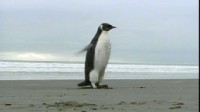
Happy Feet's transmitter falls silentHappy Feet's transmitter falls silent


NZ Newswire September 12, 2011
Happy Feet​ fans may never learn if he reaches his penguin friends in Antarctic because his tracker has stopped transmitting.
The emperor penguin Happy Feet was heading roughly homeward when the transmitter stopped working.
The Our Far South website, where people have been able to see his progress, reported the problem on Monday.
The website says the most likely scenario is the transmitter has fallen off.
It was only glued on and would have had to survive extreme conditions.
It could have also been damaged or suffered a technical fault, the website said.
The transmitter may start working again and it would be a couple of days before it would be known for sure.
"But if we don't get further readings then we'll have to hope for the best and be thankful that we've had such a wonderful cause to raise people's awareness of the Far South," the website says.
The penguin became an international celebrity after he washed up on a beach north of Wellington in June.
He was taken to Wellington Zoo where he had several procedures to remove sand and sticks from his stomach.
Experts believe he ate it thinking it was snow to keep him cool.
Thousands of fans worldwide followed his every move on the zoo's website and on Facebook.
He made a full recovery and was released into the ocean from a fishing boat on September 4, with the tracker attached.
Zoo staff had hoped it would stay on until he moulted next year.
source

Friday, September 9, 2011

Little penguins think big when it comes to feeding


The penguins of Victoria's Phillip Island have been found to employ sophisticated feeding strategies while breeding.
PHILLIP ISLAND'S MUCH-LOVED little penguins have been found to use a sophisticated feeding strategy that allows them to remain in top condition whilst raising their chicks.
Little or 'fairy' penguins (Eudyptula minor), which are around 30cm tall as adults, are the smallest of the world's 17 penguin species. They are found in colonies on the southern coast of Australia - such as Phillip Island, near Melbourne, and also in Sydney's North Harbour - and all around the coast of New Zealand.
For a new study, detailed in an upcoming edition of the journal Ecology, data from hundreds of penguins were collected over eight years to hone in on feeding strategies of breeding pairs. A team of French and Australian scientists found that these penguins alternate between short and long feeding trips, balancing their own need for food with that of their chicks.

Australia only penguin

"When little penguins finish what we call the 'guard stage' and can first leave their chicks for extended periods of time, they are quite hungry, so they go on two long trips, which allows them to replenish their own energy stocks," says Dr Andre Chiaradia, a biologist at Phillip Island Nature Parks and co-author of the study.
"These extended journeys are well known in offshore seabirds like albatross, but normally we would expect inshore seabirds like the little penguin to take only short trips," he told Australian Geographic.
"Short foraging trips yield larger meals and allow for regular provisioning of chicks. But adults can deplete their energy reserves during these trips and ultimately risk their own survival," says co-author Claire Saraux, a PhD student from the University of Strasbourg in France.

To replenish themselves, adults have to take some longer trips when they reach a critically low body weight, she says. "The two consecutive long trips therefore enable little penguin parents to rebuild their reserves before another round of short trips."


Little penguins in a nest on Phillip Island, which is 140km south-east of Melbourne. (Credit: Daniel Cranton Photography).

New approach to study

While little penguins have been observed at Phillip Island for over 40 years, Andre says this study takes a new approach by closely examining the behaviour of  individual birds. "We have collected data over eight years using microchips, similar to those you might have in a pet, and also a weigh bridge with sensors, so we know exactly when an individual goes out to feed and how long it is gone for."
When they collated the data, Andre's team noticed the alternating lengths of feeding excursions. "It was clear that these birds would take more short trips to feed their chicks during good seasons, while during bad times they would do less of this," he says. "They always take regular long trips, however, no matter what food availability is like."
"While it is the first time this behaviour has been observed in an inshore species, it doesn't surprise me," comments Dr Thomas Mattern, an ecologist at the University of Otago in New Zealand. The adult penguins expend significant time and energy nurturing their chicks, so must also find time to feed themselves, he says. "If I had to eat baby food day-in, day-out... I would be very tempted myself to sneak away for a decent steak and beer every now and then too."


source

Image of the Day (Yesterday & Today)

<a href="http://www.flickr.com/photos/gcanny/4404219916/" title="King Penguins by Carrot Cake Man, on Flickr"><img src="http://farm3.static.flickr.com/2723/4404219916_88b9081f90_z.jpg" width="640" height="427" alt="King Penguins"></a>

<a href="http://www.flickr.com/photos/ligthelm/5908016867/" title="Penguin, Antarctica by rick ligthelm, on Flickr"><img src="http://farm6.static.flickr.com/5039/5908016867_c7fc7d7180_z.jpg" width="427" height="640" alt="Penguin, Antarctica"></a>

Thursday, September 8, 2011

Endangered penguins to stay at Sarasota Mote Marine


Endangered black-footed penguins, similar to these, will live at Mote Marine from Nov. 1 through February 2012.
Published: Wednesday, September 7, 2011
SARASOTA - The fish, crabs and sharks at Mote Marine Lab are making way this fall for the arrival of one of the most unusual creatures to ever grace the Sarasota aquatic institute: penguins.
Standing about two feet tall, and sporting a coat resembling a black tuxedo, the warm-weather penguins will be the stars of the show and get their own island exhibit at Mote for about four months this fall.
Two or three pairs of endangered flightless penguins, known as black-footed or African penguins, will waddle into Mote as the featured guests of the marine lab starting Nov. 1 and stay through the end of February. On loan from Six Flags Discovery Kingdom in Vallejo, Calif., these penguins are expected to drive major local and tourist traffic to Mote's facilities on City Island.

"There's just a magical quality about penguins," says Virginia Haley, president of the Sarasota Convention & Visitors Bureau, which is promoting the event with Percy the Penguin mascot pins, among other things. "But what's interesting is the way Mote plans to bring science into it."
Numbering in the millions off their native South Africa in 1930, the black-footed penguin population has dwindled to an estimated 120,000. Last year they were placed on the endangered species list, and the birds have more in common with Southwest Florida than one might suspect.

"They face of lot of environmental threats in common with what we're up against on the Gulf Coast," says Nadine Slimak, Mote director of communications. "They've got oil spill-related issues, climate change, rising sea levels and they nest on land up against cliffs. There's not a lot of places for them to go."
One characteristic of the black-footers has led to a less-than-dignified nickname; renowned for their ability to bray like donkeys, the penguins are sometimes known as jackass penguins.

Given the birds' preference for temperate waters averaging 65 degrees, Sarasota in the winter is as good a venue as any for them to chill out. With any luck, says Slimak, the penguins' plight will encourage visitors to adopt their endangered relatives through sponsorships ranging from $30 to $300. A portion of the proceeds will benefit a conservation group, the Southern African Foundation for the Conservation of Coastal Birds.
Mote has a number of activities planned for the exhibit, called Penguin Island. sleep-overs for children, a "breakfast with the penguins" program and a related documentary — called "City Slickers," about humans and African penguins competing for suburban habitat — will show at Burns Court Cinema as part of the event.

Slimak says Penguin Island is the first of an ongoing series of temporary exhibits designed to draw return visitors to Mote on a more regular basis. Convention official Haley expects the strategy to be a boon for the nonprofit organization.
"Something new is always good," Haley says. "And because it's here on a limited basis, people are going to have to actually make plans to see it, because it'll be gone before you know it."
The buzz formally begins with a black-tie fundraiser on Oct. 29. For more details on Penguin Island, or for volunteer information, contact Mote at 388-4441.

Follow a Newly Released Penguin on Google Maps as He Swims to Antarctica


A few months ago, the Emperor Penguin that would come to be known as “Happy Feet” came ashore in New Zealand. After it was clear that the penguin was not faring well on his own, rescue workers nursed him back to health and released him with the hope that he would find his way back to Antarctica. Now, the whole world can follow this plucky bird’s progress from the comfort of their own homes through Google Maps.
The whole scheme works thanks to a small GPS tracking device attached to the penguin. Sirtrack, the device’s maker, is keen to point out that it has been specially designed not to impede the penguin’s swimming ability and weighs less than 1% of the bird’s weight. Twice a day, the device activates and broadcasts location data for three hours at a time, presumably to increase the onboard battery life.

So far, Happy Feet seems to be doing quite well on his southward journey, but we can only hope that he doesn’t get thrown off course again.
 source

Image of the Day--New Marshall Island Stamps Issued


http://www.stampagencies.com/wp-content/uploads/2011/07/C__Users_melodygren_AppData_Local_Microsoft_Windows_Temporary-Internet-Files_Content3.bmp

Huntington W VA based artists provides artwork for new postal stamps

September 04, 2011
HUNTINGTON -- A new sheet of nine stamps has been issued by the Republic of the Marshall Islands that features two paints by Huntington-based artist Chuck Ripper.
Ripper, who is widely known for his many L.L. Bean catalog covers, painted the Emperor Penguin to help mark the 50th anniversary of the Antarctic Treaty.
Ripper also painted some sea life images for Marshall Islands stamps in 2001.

source

Happy Feet, Lost Emperor Penguin, Swims for Antarctic Home

<img style="visibility:hidden;width:0px;height:0px;" border=0 width=0 height=0 src="http://c.gigcount.com/wildfire/IMP/CXNID=2000002.11NXC/bT*xJmx*PTEzMTU*ODM4OTU3NDMmcHQ9MTMxNTQ4Mzk1NDY3NCZwPSZkPSZnPTImbz1jMmEwYjcyOTZiYTg*MjAzODk3ZDMyN2M5/Mjk1MjYyZCZvZj*w.gif" /><object name="kaltura_player_1315483688" id="kaltura_player_1315483688" type="application/x-shockwave-flash" allowScriptAccess="always" allowNetworking="all" allowFullScreen="true" height="221" width="392" data="http://cdnapi.kaltura.com/index.php/kwidget/wid/0_048eh2ox/uiconf_id/5590821"><param name="allowScriptAccess" value="always" /><param name="allowNetworking" value="all" /><param name="allowFullScreen" value="true" /><param name="bgcolor" value="#000000" /><param name="movie" value="http://cdnapi.kaltura.com/index.php/kwidget/wid/0_048eh2ox/uiconf_id/5590821"/><param name="flashVars" value="autoPlay=false&screensLayer.startScreenOverId=startScreen&screensLayer.startScreenId=startScreen"/><a href="http://corp.kaltura.com">video platform</a><a href="http://corp.kaltura.com/video_platform/video_management">video management</a><a href="http://corp.kaltura.com/solutions/video_solution">video solutions</a><a href="http://corp.kaltura.com/video_platform/video_publishing">video player</a></object>


Happy Feet, the emperor penguin who captured the hearts of millions around the world when it got lost 3,000 miles from its snowy Antarctica home, has successfully been returned to the sea, but not without some drama.
In a video showing his release yesterday, the bird -- nicknamed Happy Feet -- seemed reluctant to leave his crate aboard the research vessel Tangaroa. Once he was in the water, the bird started swimming in the wrong direction.

The wayward penguin had been housed at the Wellington Zoo in New Zealand since it arrived on the nation's shores in June. After life-saving surgeries, the bird left New Zealand with a crew aboard the Tangaroa on Aug. 29.
Choppy seas in at the drop-off point in the Southern Ocean yesterday would have made it too difficult to release him by hand, so a special slide was constructed.
But, faced with the open ocean for the first time in months, the 3-foot tall, 3-year-old penguin didn't seem to know what to do.

"Happy Feet needed some gentle encouragement to leave the safety of his crate that has been his home for six days," Dr. Lisa Argilla, the zoo's manager of veterinary science, said in a posting on the zoo's blog yesterday. "He slid down his specially designed penguin slide backwards but once he hit the water he spared no time in diving off away from the boat and all those 'aliens' who have been looking after him for so long.
"It's an indescribable feeling to see a patient finally set free. It's definitely the best part of the job."

ABC News
Happy Feet, the emperor penguin who captured the hearts of the world.
Happy Feet, the Penguin, Out of Third Surgery 
Happy Feet Heads Home 
 
Added Dr. Richard O'Driscoll, the voyage leader: "He went onto his belly … unfortunately he went down the stern ramp backwards rather than forwards, so he wouldn't have got a perfect 10 for entry."
Once he was in the water, the bird initially started swimming in the wrong direction. Happy Feet was heading east, rather than south toward Antarctica.

But he corrected his course, and last night was swimming for home.
Argilla said some "deviations in his swimming course" were to be expected, according to the Herald Sun of New Zealand.

Happy Feet Becomes Worldwide Sensation

Happy Feet was found washed up on a New Zealand beach June 20, the first emperor penguin in 44 years to be found so far from its home.
He was moved to the zoo after he became sick from eating sand that zoo officials said he likely mistook for snow.

The penguin underwent three medical procedures in his two months at the zoo, including one in which approximately 7 pounds of sand, sticks and stones were removed from his stomach.
Happy Feet regained about 18 pounds after his surgeries, thanks to a diet of fish milkshakes, and was given the all-clear by officials over the weekend.
"It's very exciting for me to get him to this point where we can release him," zoo veterinarian Lisa Argilla told ABC News.

Happy Feet captured the world's attention with his amazing tale of travel and recovery. He lived in a glassed area at the zoo, which also set up a web camera to allow people everywhere to tune in.
Nearly one quarter of a million viewers logged on to watch the penguin mainly eat and sleep. Happy Feet fans also sent in more than $28,000 in donations which allowed the zoo to cover the cost of his surgeries and recovery.

And on Sunday, more than 1,700 people gathered at the zoo to say a final goodbye to him.
"Obviously, the world is attached to him. I am attached to him, and my team is attached to him, but it's the best thing for him," she said, speaking of his release.
The penguin has been fitted with a GPS tracker, and fans can follow his progress on Our Far South website, the Sirtrack website and the Wellington Zoo.

ABC News' David Wright and Ben Krolowitz and the Associated Press contributed to this report.

source 

~~~~~~~~~~~~~~~~~~~~~~~~~~~~~~~~~~~~~~~~~~~~~~~~~~~~~~~~~~~~~~~~~~~~~

Another video!!!