Sunday, October 7, 2012

This week's Pencognito!


Please visit Jen and all the Pengies HERE!

Images of the Day


Humbolt Penguin

Penguin

Humboldt PenguinHumboldt penguins

Once in a Lifetime Image: Emperor Penguins Under the Aurora Australis

by Nancy Atkinson on October 5, 2012


Emperor Penguins on the Antarctic Sea Ice Under the Aurora Australis. Credit and copyright: Stefan Christmann. Used by permission.
Photographer Stefan Christmann called this incredible Antarctic view a once in a lifetime experience.
“It was the most impressive experience to sit on the sea-ice and watch the Aurora Australis dance above the penguin colony with the sounds of the chicks and the adult penguins. I feel truly blessed for having had the opportunity to witness this once in a lifetime experience,” he told Universe Today.

Christmann is currently based in Antarctica, working at the German Antarctic research station Neumayer III. He is an “overwinterer” — scientific and technical staff who stay at the base for the entire southern winter — and will stay in Antarctica for an uninterrupted 14 months. “As a physicist, my duty is to maintain the data acquisition of our seismological and geomagnetic observatories as well as the analysis of the collected data,” Christmann said.

But he is also an accomplished photographer. His website and Facebook page are filled with beautiful nature images from around the world, and recently feature the Emperor penguins and their adorable chicks, as well as the stark beauty of the Antarctic landscape.

Originally from Germany, he studied photography in the US, and his work has now brought him to an extended stay in Antarctica.

Christmann explained the conditions and the difficulties in obtaining this shot, one he had long hoped for, the planning of it always in the back of his mind.
“The picture was taken at Atka-Bay on the sea-ice. The bay is roughly 8 km away from our station so the penguin colony is a popular destination for free-time trips. The idea of a photo of the Aurora Australis above the penguin colony had been in my head for a long time, but the conditions have to be just right –which usually never happens. You need a full Moon, high magnetic activity and a cloudless sky. Also the penguins should be standing close enough to the ice-berg. I made multiple attempts to get the photo, but we either had incoming clouds, low activity or had to cancel our stay because of wind picking up (which can be really dangerous out on the sea-ice).”
And time was short, as after he had been outside for a few hours the wind picked up and he and his accomplices had to leave the ice for safety reasons. “Otherwise we probably would have sat there all night!” Christmann said. The image was taken on October 1, 2012.

Christmann shared what equipment he uses as well as a few tips for Antarctic and cold weather photography.

“I used a Nikon D700 Fullframe DSLR with an AF-S G-Nikkor 14-24mm f/2.8. ISO settings varied with the intensity of the aurora from ISO 500-800,” he said. “F-Stops in the range of 4.0-5.6 and Exposure times from 20s to 30s. I try to keep ISO as low as possible for noise reasons and also try to limit the exposure time in order not to get star trails. It’s either super long star trails or almost star-dots, but I don’t really like the in between. A full battery charge (in my case around 2500mAh) lasts around 1h in the cold, so I had to switch batteries twice during our stay out on the ice!”

Asked what other details he felt was important to share about this image, Christmann said, “Antarctica is an incredible place where nature dwarfs anything made by humans. Hopefully people will gain even more interest in this continent and help to protect it as well as its inhabitants.”
To see more of Christmann’s work visit his website, Nature in Focus or his Facebook page, where he shares many pictures of his Antarctic adventure.

source

A cruise to the Falklands, South Georgia and Antarctica: readers' travel writing competition

Lucy Grewcock, winner of the adventure category in the 2011 competition, had a prize that took her south to Antarctica for a close encounter with the region's breathtaking wildlife – and an invitation to join the biggest penguin party on the planet
  • The Guardian,
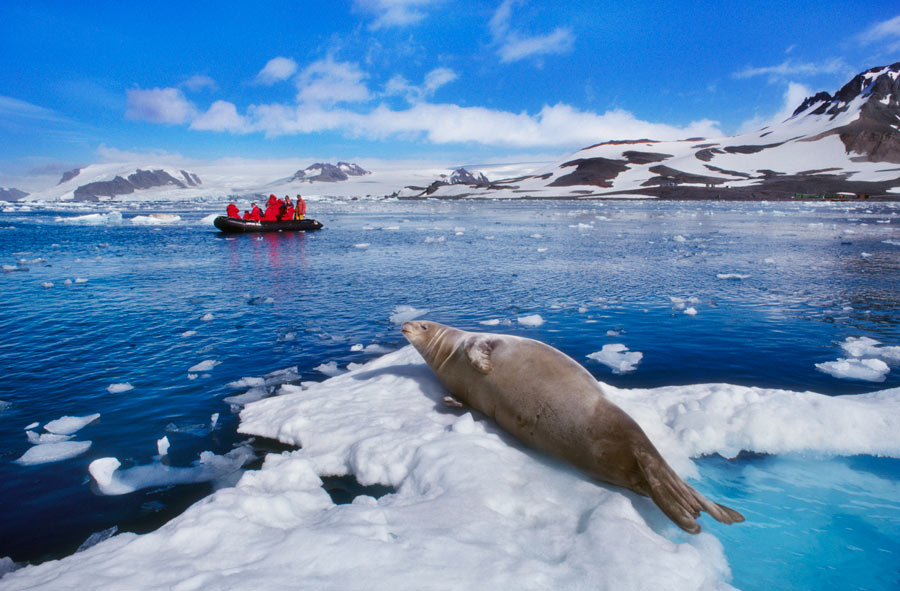
Weddell seal basking in the sun, and snow, in Antarctica View larger picture
Cold comfort … a Weddell seal basking in the sun, and snow, in Antarctica. Photograph: Frans Lanting/Getty Images/Mint Images
 
"Act like a penguin and you will be accepted as a penguin," Frank Todd, our expedition ornithologist, briefed us as we buckled our life jackets and prepared to go ashore.

Dropping anchor in South Georgia's Bay of Isles, we filed off the gangway into eight-man Zodiac boats. Mine was the first to fill and we sped away with the engine revving loudly, leaving a swell of icy water in our wake.

Crisp air filled our lungs as we bounced across the chop towards Salisbury Plain – a bay which, except for the broad valley sweeping through it, bears little resemblance to its English namesake.
As we raced towards the shore, it came alive with frantic fur seals that lurched in the shallows, splashed in the surf and wriggled up the beach behind. We were heading for a fur seal holiday camp and, with zoom lenses already extended, there was a flurry of camera clicks from the boat.
Having left port in Argentina, I'd spent the past week-and-a-half rocking and rolling across the Scotia Sea with 100 other passengers on board the 340ft M/S Expedition.

For most passengers – an assortment of Canadians, British and Antipodeans, aged 16 to more than 60 – the real appeal of this expedition was the white continent. Seduced by the mouthwash-blue glaciers and petrified seas of the BBC's Frozen Planet documentaries, we were a party eager for ice. But, with our 18-day cruise heading to the Falkland Islands and South Georgia first, we'd have to wait until day 16 to set foot on Antarctica.

Lucy Grewcock makes new friends in South Gerogia  
Lucy makes new friends in South Georgia 
 
No nature programme could ever have prepared us for the experiences that lay ahead: as we cruised ever closer to the end of the earth, the gin-clear waters our ship was sailing in would become choked with ice, like an ocean of melting mojitos. At times, the surface of the sea would appear to freeze over entirely, slowing our progress to walking pace, as the bow of our ship pushed at the pack ice until it fissured enough to let us through.

We would see icebergs five times the size of our ship, pocked with sun spots and fractured with wound-like crevices that glowed sapphire-blue inside. Weddell seals with frosted lashes, contorted coastlines encased in ice sculptures, research stations with no running water, and washed-up whale bones the size of fallen trees … all this, and more, awaited us in Antarctica.

"You may as well see it all though, if you're coming this far south," was a phrase that regularly got batted around at meal times, when guests justified booking this multi-stop tour rather than the "Antarctica-only" option.

But the Falkland Islands had been much more than a filler. We'd seen giant albatrosses feed chicks the size of terriers, watched spouting whales, and walked barefoot across white sand beaches. And now, after three full days at sea, South Georgia already seemed set to exceed expectations.
As we entered the shallows, the engines of the boat were cut and the air filled with the purrs and grrrrs, snivels and sneezes of seal pups – a constant murmur beneath the barks and snorts of their parents, who lolloped along the water's edge.

Swinging our wellie-booted feet on to the beach, we heaved the Zodiacs ashore as a squad of seals shuffled over on their fore flippers and cautioned us with low growls and sharp yellow canines.
As I waggled a trekking pole in defence, a party of well-dressed penguins paraded through a swarm of seal pups and waddled down the beach to welcome us. One particularly smart adult stepped forward and casually waved a wing at the scene behind him.

As I followed his gesture, my jaw began to drop – and kept dropping.

King penguins adorned the dunes in their thousands, packed out the plain beyond, and sprawled up the hillside until their silvery silhouettes merged into the horizon.

more than 100,00 penguins on Salisbury Plain, South Gerogia  
There were more than 100,00 penguins on Salisbury Plain, South Georgia 
 
We had arrived at one of the biggest penguin parties on the planet. More than 100,000 of them populated the scene, and were bathed in a pool of golden light that radiated across the rookery like a warm glow. But searching the sky for a break in the clouds, I saw nothing but a solid mass of grey mist over the bay – a typical South Georgian sky.

"I think they look better in poor light," Frank commented from behind me. "They really shine, don't they?"

I nodded in agreement, suddenly realising it was their yellow-tinged chins that were giving off the glow.

Mesmerised, I picked my way across the pebble beach towards the colony, taking care not to squash the seal pups that fidgeted about my feet and doing my best to avoid their pugnacious parents.
As pups gave way to penguins, growls and purrs turned to twitters and trumpet calls, and the musky odour of seal fur was replaced by the fusty smell of feathers.

Like a busy market, the colony was in a constant state of murmur and mutter. Every few minutes, the hubbub was cut through by groups of adults who would stretch their throats skywards, raise their beaks above the throng, and give a chorus of trumpet calls that echoed across the plain.

Their calls were answered by the squeak and whistle of indignant chicks, who sat in thick, fur coats, awaiting their next feed of fish. These infants take more than 14 months to go from fur ball to fully watertight and, until then, are beach-bound and at the mercy of the petrels and skuas, circling above.
Distancing themselves from their squeaking siblings, adolescents waddled around the rookery in various stages of moult, the remains of their baby fluff clinging to their lower bellies in pubescent fashion or adorning their crowns with unfashionable crops.

In contrast, their parents stood in perfect penguin plumage, their tuxedo coats acting as natural wetsuits, and each appeared to be wearing a set of carrot-coloured earmuffs over a velvet-black hood – handsome markings which seemed to afford them inner confidence.

Seeing the next boat of tourists arrive on the beach, I set off to find a quiet spot to take it all in. But as I clambered across the dunes, I had the feeling I was being followed and turned to find I had a penguin in tow. Up to my waist in height, he wobbled along with his head down, webbed black feet slipping across the stones.
The MS Expedition anchored off South Gerogia  
The M/S Expedition anchored off South Georgia 
 
"They are prone to being groupies," Frank had warned us during our briefing. South Georgia's penguins have little reason to fear us. The only humans to settle on the island were the whalers, who came and went in the 1900s, and had little interest in penguin meat. Apart from the odd explorer, penguins have never been hunted by man, and their only visitors these days are groups of tourists and a scattering of scientists. Consequently, it appears, fear has been replaced with fascination.

Finding a vacant mound of tussock grass, I sat down and let out a contented sigh. I had been unprepared for the sheer scale and overwhelming purity of South Georgia and now I was here, the stirring beauty of this virgin wilderness was almost too much to take in.

Gazing out across the bay, where immense glaciers licked down to the sea, and our ship lay dwarfed by the ice-clad peaks beyond, I heard a shuffle of stones behind me and soon found my feathered follower standing by my shoulder.

His khaki-coloured eyes level with mine, the penguin followed my gaze out to sea, nodding his head as we took in the scene together. The pair of us stayed like that for a while, listening to the whimper of seal pups and watching the tide tickle the shoreline.
"Act like them, and you will be accepted by them," I smiled to myself. I'm sure he was thinking the same.

source

Thursday, October 4, 2012

Image of the Day

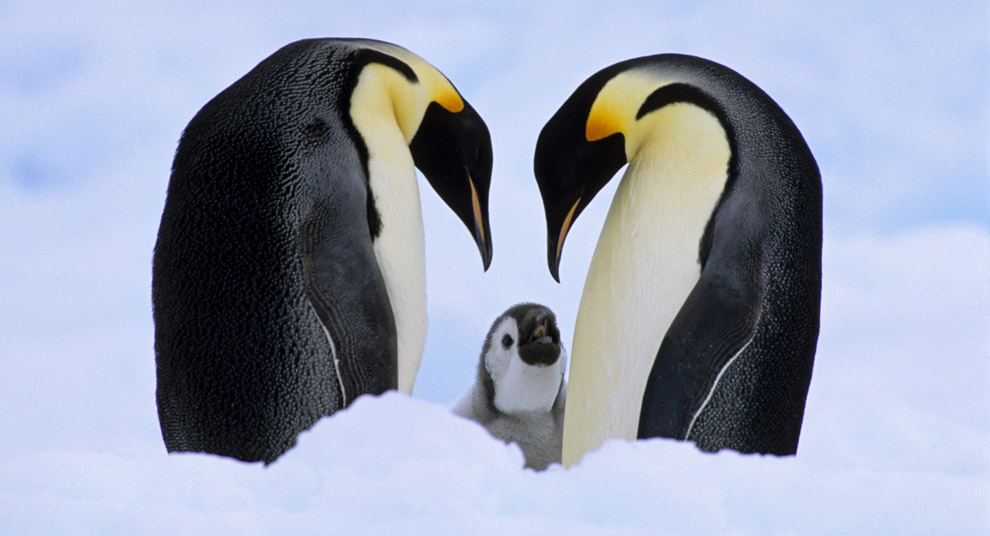
Emperor Penguins are seen in an undated photograph from an exhibit titled "Irreplaceable: Wildlife in a Warming World," recently shown at the Peerless building in downtown Providence, Rhode Island. Warmer temperatures in Antarctica are causing declines in krill, one of the penguin's main food source. (Kevin Schaffer) 

Celebrate World Animal Day--make a difference any way you can!

African Penguins colonise dorpie

Penguins colonise dorpie

NASHIRA DAVIDS | 03 October, 2012
Patios and gardens in Betty's Bay have become breeding areas for a colony of African penguins. While the birds are enjoying the home comforts, their cacophonic noise - 'like donkeys braying' - is leaving residents sleepless Picture: SHELLEY CHRISTIANS

They are everywhere: in the bushes, on the lawn, the patio, the driveway - they've even been caught breaking and entering homes.

The African penguin might be endangered, but homeowners in Stony Point in Betty's Bay believe the breeding birds are "endangering" the lives of residents.

Thousands of African penguins are driving people in the Western Cape town crazy. While many have holiday homes there, "79 and a quarter-year-old" Barbara Wallers has lived in the area since 1947, and said she gets little sleep because the birds make too much noise.

"Just a month ago, I found one in my kitchen that s**t all over the floor. I tried to get it out with a swatter, but it wouldn't go. Eventually someone caught it," said Wallers, as she tried to chase dozens of penguins from her friend's property.

"Listen to them. They grunt and bellow and squeak all night. I can't sleep," she said.
"When I call the authorities to complain, they say I am rude. Who wouldn't be?
"I can't use earplugs at night because we have burglaries."

Wallers said they have always had the occasional penguin in the garden, but in the last two years things have got out of hand.

Johannes Klopper, a retired medical doctor from Durbanville, said the penguins have kept him away from his holiday home.

"On my property I have between 30 to 50 nests. They cause such a big mess that it really has become a health hazard. My wife doesn't want to go there now because we cannot sleep at night," said Klopper.

He said it is difficult for him, at his age, to clean up the guano that smells terrible and kills plants.
Klopper and Wallers claim the municipality promised to erect a fence large enough to keep the waddling birds away from the homes, but it has been an empty promise.

The existing fence has not been maintained and is riddled with holes.

The African penguin colony in Stony Point is one of two land-based breeding colonies. According to the Southern African Foundation for the Conservation of Coastal Birds, African penguins mainly nest on offshore islands.

They are also called Jackass penguins because of their "donkey-like bray", which keeps Stony Point residents wide awake at night.

However, Mike Oosthuyzen, who has a holiday house there, said he did not mind the penguins and liked having them in his garden.

But things may quieten down soon. Fanie Krige, spokesman for the Overstrand Municipality, said problems with the fence will "hopefully" be resolved in a few months' time, as they recently received authorisation to extend it.

He said the fence can only be put up after the breeding season is over, as the nesting penguins would otherwise have no access to the sea.

"The management of the area is done in close collaboration with Cape Nature," said Krige.
"One method to try to reduce the problem with the stench of guano is to make use of sprinkler systems."

Krige said while penguin numbers are decreasing everywhere else, the contrary is true for Stony Point. There are between 4500 and 5000 penguins and 1988 active nests.

"It may have to do with the availability of food resources. There is also a theory that some of the penguins have moved from nearby islands to Stony Point."

According to Sanccob, the African penguin:
  • Is one of 17 penguin species;
  • Can swim up to 20km/h;
  • Can breed all year;
  • Was reclassified from vulnerable to endangered in 2010;
  • In the last 100 years has seen its numbers decreased by 90%; and
  • Is mainly threatened by human settlements, commercial over-fishing and pollution.
source
~~~~~~~~~~~~~~~~~~~~~~~~~~~~~~~~~~~~~~~~~~~~~~~~~~~~~~~~~~~~~~~~~~~~~~~~~~~

African penguins

October 3, 2012
African penguin.
This is one of a series presented by the National Aviary, which works to inspire respect for nature through an appreciation of birds.
 On a cool crisp fall afternoon in Pittsburgh, a crowd gathers to peek at Sidney and the rest of the penguins. It's not an unofficial NHL-lockout workout at Southpointe, but feeding time at the National Aviary. Sidney, Stanley, Elvis and 13 other African Penguins jostle to be first in line.

At just shorter than 2 feet and weighing between 6-10 pounds, African penguins are quite different from the recognizable Emperor penguin, seen in movies such as "Happy Feet" and "March of the Penguins." Emperor penguins live in a frozen Antarctic climate, but African penguins do not. They live in large flocks, called rookeries, on the temperate beaches along the southern tip of Africa and its surrounding islands. Here, the flightless birds dine on a variety of cold water fish such as anchovies and sardines. A penguin can eat 15 percent of its own body weight in fish, every day. That's the equivalent of a 100-pound human eating 60 quarter-pound hamburgers.

An African penguin may hunt up to 16-18 hours in the water. Using their paddle-like wings, they can "fly" underwater at speeds of 15-20 mph. Webbed feet act like rudders on a boat to steer them toward their next meal.

Despite the beachfront property and daily all-you-can-eat seafood buffets, African penguins, like all penguins, are seeing their numbers decrease in the wild. In 1920, there were more than 1 million African penguins in the wild. Today, there are fewer than 40,000 -- a 96 percent drop. Habitat loss, oil spills, climate change and over-fishing are dramatically affecting the African penguin population. This past month, the South African Foundation for the Conservation of Coastal Birds, a nonprofit organization dedicated to the conservation of seabirds and other sea life, has been working to save 219 oiled African penguins and 33 chicks whose parents were caught in the SELI 1 oil slick off Robben Island in Africa.

But all is not lost. Zoos such as the National Aviary are working to save the species.
Through a Species Survival Plan, the National Aviary partners with other zoos across the country to breed and raise a genetically diverse population of penguins. In February, the Aviary welcomed the first penguins to hatch in its 60-year history. Two new rookie prospects joined our team: Sid's kids, Tribby and Kaden.

We all can work together to support African penguins. Join the National Aviary's "Share the Care" program to help us feed, nurture and support the African penguins in our care. And visit the National Aviary as we host African Penguin Awareness Day on Oct. 13. A special fun-filled day of penguin-related events is planned: daily feedings, Penguin Connections, Family Penguin Paintings and more. You can learn more about the South African foundation's oil spill rehabilitation, chick rearing and education efforts and how you can help African penguins in the wild.

Even if there isn't hockey this winter, the penguins will always be in season at the National Aviary. For more information, visit our website at www.aviary.org.

source

Tuesday, October 2, 2012

Image of the Day

Dallas Zoo - African Penguin by SpeedyJR
Dallas Zoo - African Penguin, a photo by SpeedyJR on Flickr.

Hi Laurette!

Meet the penguin wardens of Manly


Miriam Hall reported this story on Monday, October 1, 2012 12:50:00
ASHLEY HALL: For the small colony of penguins on Sydney's Northern Beaches, life can be cruel.

These little penguins are also known as fairy penguins, and where they nest around the beaches of Manly, they are vulnerable to dog attacks and being hit by boats.

But each night, a group of volunteers does their best to protect the penguins by watching over them as they make the risky journey from the ocean to their nests.

Miriam Hall joined these "penguin wardens" during an evening's work.

MIRIAM HALL: It's dusk at Manly, and a penguin chick is waiting for its father to come home from the sea with dinner.

This chick, nicknamed Pingu by local residents, is about five weeks old.

Pingu's mother was killed by a dog, so its father is left with the responsibility of finding food and providing protection.

Sarah Davies lives just near this penguin's nest, and checks on it twice a day.

SARAH DAVIES: He is, like, triple the size in three weeks. The dad is doing such a good job.

MIRIAM HALL: Sara Davies is a penguin warden in-training. At dawn and dusk she checks around the nest for signs the father penguin has been returning to the nest at feeding time.

SARAH DAVIES: Normally there would be two adults, and without the mother there to protect it, the little chick is really at risk.

MIRIAM HALL: In a few weeks Pingu will lose its baby feathers, and head out to sea for the first time. These penguins would have been taken to the zoo but instead they're being watched over by penguin wardens.

ANGELLIKA TYSLER: My name is Angelika Treichler and I'm the coordinator for the Manly penguin wardens. They've taken over my life, the penguins, I've got to admit that. I used to come here every night, and now I'm 70, and I've got 20 people helping me.

MIRIAM HALL: This is the only inland penguin breeding colony in New South Wales. Angelika Treichler has been leading the team of volunteers for the past eight years.

ANGELIKA TREICHLER: They come from all walks of life. We've had ex-ballet dancer, we've had, we even get homeless people coming to help us, and people who need a bit of company.

MIRIAM HALL: On a warm evening, the beach at Manly is busy, and there's a small crowd gathering. This is where the penguin wardens step in, making sure people don't get too close or use camera flashes

JAKE: Most of them are really cooperative, but you have that small minority who will just hate you for telling them what to do.

I'm Jake and I'm 19-years-old and I've been a penguin warden for five years now. We have the two main penguins, Silver Wing and Stickybeak that live here. Silver Wing had a silver tag on her flipper-when, that's when the penguins were being, before they were microchipped they had silver bands on them, so that's how she got her name. And Stickybeak got his name because of a funny incident - Stickybeak was found across the road in one of the night clubs.

MIRIAM HALL: So it actually came into a night club?

JAKE: Actually came into the nightclub, which was really, really funny.

MIRIAM HALL: The penguin wardens say plastic rubbish on the beach, pet dogs and leisure boats are the biggest threat to the penguins.

The chief penguin warden is Angelika Treichler and she has experienced ups and downs in eight years watching over the penguins.

ANGELIKA TREICHLER: At the end of this bay there is a beautiful rocky habitat, and there was a rocky balcony with Romeo and Juliet living on it, there were two penguins, and three of their sons with their partners lived there, and one night one dog killed seven of them.

MIRIAM HALL: What kind of successes have you have, which kind of moments have been really good?

ANGELIKA TREICHLER: The best this is that when I first started here at the wharf, there was only one couple breeding under the wharf. And in the end we had five couples!

MIRIAM HALL: For Angelika Treichler, the penguin warden program has not only helped the birds, but the volunteers as well.

ANGELIKA TREICHLER: We've often had people tell us that, after having depression, or feeling bad or down, that they felt a lot better when they saw the penguins, and when they were able to help them, too.

MIRIAM HALL: What do you think is it about penguins?

ANGELIKA TREICHLER: I think they're really cheerful animals. They look so funny, like little martians or like little men waddling along, and also they have something, at the same something very vulnerable.

ASHLEY HALL: Manly chief penguin warden Angelika Treichler, ending that report from Miriam Hall.

Monday, October 1, 2012

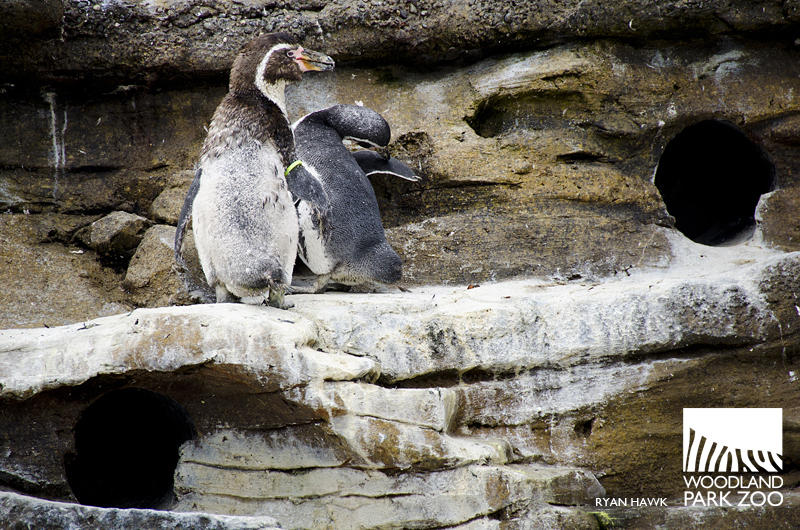
Bad Hair Day? Penguins have them, too!


Ever seen a penguin having a bad hair day? Don't worry. This Humboldt penguin is just molting—losing and replacing its feathers:


Image of the Day

Galapagos Islands-178 by Tristan27
Galapagos Islands-178, a photo by Tristan27 on Flickr.