Wednesday, December 4, 2013

This Penguin 'Selfie' Is The Best Kind Of Selfie (PHOTO)

Posted:
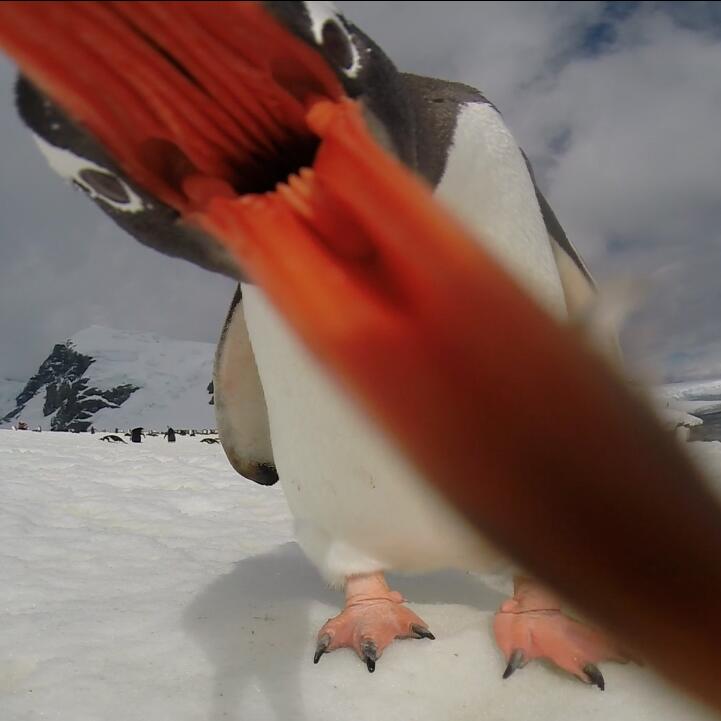
First an eagle, now a penguin? It seems animals are getting more comfortable in front of the camera.
The latest animal photo, featuring a penguin that just learned how to take a "selfie," comes courtesy of M/S Expedition.

The Canadian cruise ship company was touring Antarctica recently when a gentoo penguin got ahold of one of its GoPro cameras. Fortunately, the GoPro captured a snap of the penguin at just the right moment.
Gentoos are recognizable because of their brightly colored red-orange beaks. The penguins, which are found only the Southern Hemisphere, prefer to build their colonies in ice-free areas near shorelines, National Geographic notes.


source

Penguin Tic!


You've heard of kitten tics, where the cat will run and jump and chase throughout the house like a maniac, right? Well, apparently, penguins are guilty of the same. Watch as this little guy goes on a rampage while the dreary holiday music drones on.

Image of the Day

Pelican and Humbolt Penguin

The Pelican and the (Humbolt) Penguin

Monday, December 2, 2013

The untold story of a dancing penguin on an Antarctica cruise

Ever think that a dancing penguin was something that was just reserved for movies? Think again. A newly published memoir of a ship captain details how a real life dancing penguin brought inspiration and joy to people

by S. C.

"People from all over the world would sign up for this Antarctica cruise", explained Tommy Bellows, the ship captain. "Sure, there were other cruises they could be on, but this was unique and rare. All thanks to a special little penguin."

Sometime in the 1980s, members of the crew noticed that a special little penguin would appear on the iceberg. This penguin would perform what appeared to be tap dancing tricks and skills.

"I took tap for a number of years", said Gavin Star, a crew member on the ship. "I knew those tap dancing steps anywhere. It was so odd to see a penguin performing them for the members of the crew."

The crew gave it not a second thought, until the second run of the cruise. The same penguin was back, dancing again for the people on the Antarctica cruise.

"We started to notice that the penguin would only come out for our ship", explained Star. "It was really weird. People all over the ship would gather around to see the penguin dancing. That was when we knew we had to market this somehow."

The members of the crew never disturbed the penguin's habitat, but they did start to use it as a marketing item. Once marketing started for the dancing penguin, people from all over the world were signing up for the Antarctica cruise.

"We had people from Italy and China asking to take part in the cruise", said the ship captain. "It was really amazing. They all said they wanted to see this dancing penguin firsthand for themselves. It was really inspiration."

It is believed that over a million people were able to catch a glimpse of the penguin. The penguin would perform once a day and the people on the ship would gather to watch it.

Many scientists and animal experts have tried to discover how or why the penguin learned its tricks, but they have been unable to find out that information.

"It is just something that is really weird", said the ship captain. "How this penguin learned the steps and all that is just amazing. No one taught it to do that, which is what makes it even better."

The captain's memoir talks about how the penguin changed his life and those that watched it dance. The memoir will be published sometime next year.

by S. C.
02 December 2013 

Teatro Naturale International

source 

Image of the Day

Penguin by Chris D 93
Penguin, a photo by Chris D 93 on Flickr.
African conga line

Sunday, December 1, 2013

Images of the Day


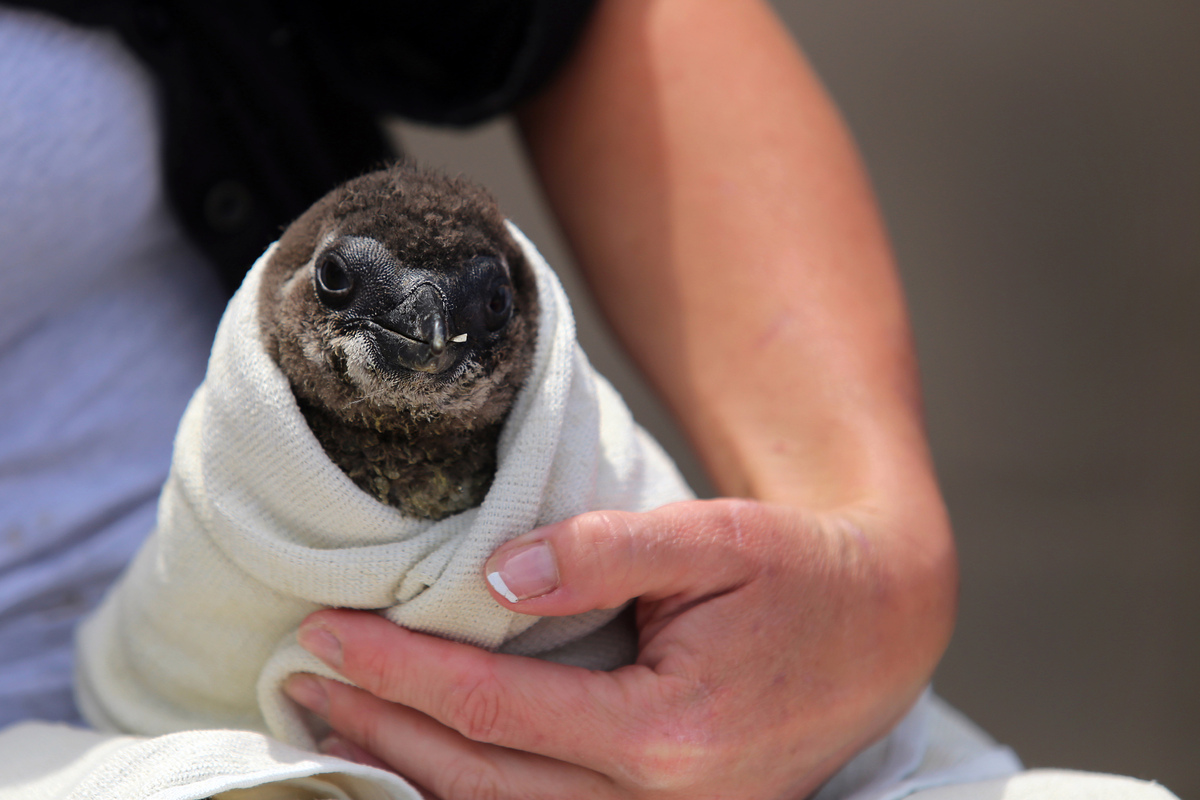
African penguin chicks are pictured on November 30, 2013 at the Southern African Foundation for the Conservation of Coastal Birds (SANCCOB) in Cape Town. 

 
A volunteer prepares to feed an African penguin chick at the Southern African Foundation for the Conservation of Coastal Birds (SANCCOB) in Cape Town, on November 30, 2013

 
African penguin chicks are pictured on November 30, 2013 at the Southern African Foundation for the Conservation of Coastal Birds (SANCCOB) 

This Week's Pencognito!


Please visit Jen and all the Pengies by clicking this link!

Penguin Appreciation Weekend at the FL Aquarium

Posted by on Fri, Nov 29, 2013

  dothis_penguin_112813.jpg 

Black-footed penguins take over Black Friday in Tampa — say whaaat? Salute nature’s cutest critter in a perpetual suit and tie —not Justin Timberlake — at the Florida Aquarium this weekend.

Penguin Appreciation Weekend allows you to get up close to African black-footed penguins and learn about the adorable and, sadly, endangered animals. There will be penguin-themed activities and scavenger hunt throughout the Aquarium and even tuxedo T-shirt-wearing divers.

It doesn’t cost extra to participate in the festivities, and a portion of the proceeds goes to the Southern African Foundation for the Conservation of Coastal Birds, a non-profit organization dedicated to the conservation of the super-lovable birds. Nov. 29—Dec. 1, 9:30 a.m.-5 p.m., $16.95-$21.95, 701 Channelside Drive, Tampa, flaquarium.org. Photo courtesy of fotopedia. flaquarium.org.

source 

Ski Dubai penguin researcher, and data, comes in from the cold

With more than 20 hours of video and hundreds of photos and acoustic recordings from 11 penguin colonies in Antarctica, Dr Brent Stewart is confident in saying his recent expedition was a success.
He will spend the next few months analysing his data in the hope it will shed light on the birds and the health of the colonies. His findings will be published in early to mid-2014.

The research focuses on how penguins are able to locate each other in colonies numbering thousands of birds. One aspect looks at the unique vocal signature each penguin is thought to have – a particularly useful trait for parents tending to offspring. “The adults go to sea and come back, looking for their offspring in these huge, congested areas and then they find them and feed them,” Dr Stewart said. “It is pretty awesome to think about how they are actually recognising each other, picking each other out and reuniting.”

In September, Dr Stewart recorded vocalisations from Ski Dubai’s colony of Gentoo and King penguins. “We get help in exploring that from the captive colonies, particularly here at Ski Dubai, where, in a controlled setting, we can record vocalisations of the adults and try to discriminate what separates them out from each other.”

Studying the captive birds allows Dr Stewart to track changes in their vocalisations with age, or throughout the season. The scientist, who has previously worked with large marine mammals, sharks, sea turtles and marine birds, also used his visit to Dubai to study whether visual markings on the plumage of penguins could contain unique patterns. “We can look at their patterns as they moult each year and determine if the pattern remains the same,” he said. “If the research proves the birds’ plumage contains patterns unique to each individual, this could help scientists develop another means of tracking them in a non-invasive way.”

Being able to track individuals in the wild through audio or visual markers could help scientists to construct population models that evaluate how well species are doing at key locations.

While in Antarctica, Dr Stewart for the first time also used battery-operated aerial equipment to film and photograph colonies and he will use the footage to carry out population counts. The last estimates in these colonies are at least a decade old, he said.

The aerial surveys also help to document the distribution of the birds and their terrestrial habitat. In collecting the data, Dr Stewart was aided by fellow Hubbs research associate, Frank Todd, one of the world’s leading experts on waterfowl and penguins.

Besides the Ski Dubai grant, Dr Stewart also received support from G Adventures, a Canadian eco-tours company, which provided him with a space on board one of its tour ships that visits the penguin colonies. He said the assistance he received was important considering the decrease in funding for research in the Antarctic. “Right now, it is pretty important to explore these kinds of opportunities and partnerships because the funding for field studies has dwindled,” he said.

Ultimately, the information will not only increase mankind’s knowledge of penguins, it will also help authorities to conserve the birds. “The key thing is really being able to collect data that will allow us to make evaluations of population status and then feed that into the management agencies so they can decide what can be done to either help populations that are in trouble or just maintain vitality of the populations that seem to be doing OK.”

source

African Penguins in the News

SANCCOB cares for abandoned penguins

A total of 155 abandoned African penguin chicks have been admitted to SANCCOB centres. Picture: Aletta Gardner/EWN 
 
| 2 days ago


CAPE TOWN - The Southern African Foundation for the Conservation of Coastal Birds (SANCCOB) on Friday said 155 abandoned penguin chicks have been admitted to their centre this month.

The chicks have been at their centres in Table View and Cape St. Francis since the beginning of November.
The centre says it is important to try and save every African penguin as they are endangered species.

The birds are abandoned at the end of the breeding season just before the parents start their annual moulting cycle.

Every year during summer, SANCCOB admits more than 300 abandoned African penguin chicks from Stony Point, Boulders Beach and Robben Island.

SANCCOB's Francois Louw says although it is a timely and costly process, it is crucial to save every endangered animal.

“They will be fed six times a day so it’s a very busy period for our staff. They will receive fish and they will get something we call fish smoothie, which basically helps them with their sustenance.”

They are expecting at least another 300 chicks before February.

Louw says there are less than 19,000 breeding pairs left in South Africa.

source


Every year between November and February the Southern African Foundation for the Conservation of Coastal Birds (SANCCOB) takes in up to 400 abandoned penguin chicks. Picture: Aletta Gardner/EWN


The chicks are admitted to SANCCOB’s Table View and Cape St. Francis rehabilitation centres from Stony Point, Boulders Beach and Robben Island in the Western Cape and Bird Island in the Eastern Cape. Picture: Aletta Gardner/EWN


SANCCOB says it has noted the chicks came in slightly later than previous years, which suggests a change in the breeding cycle among the colonies. Picture: Aletta Gardner/EWN


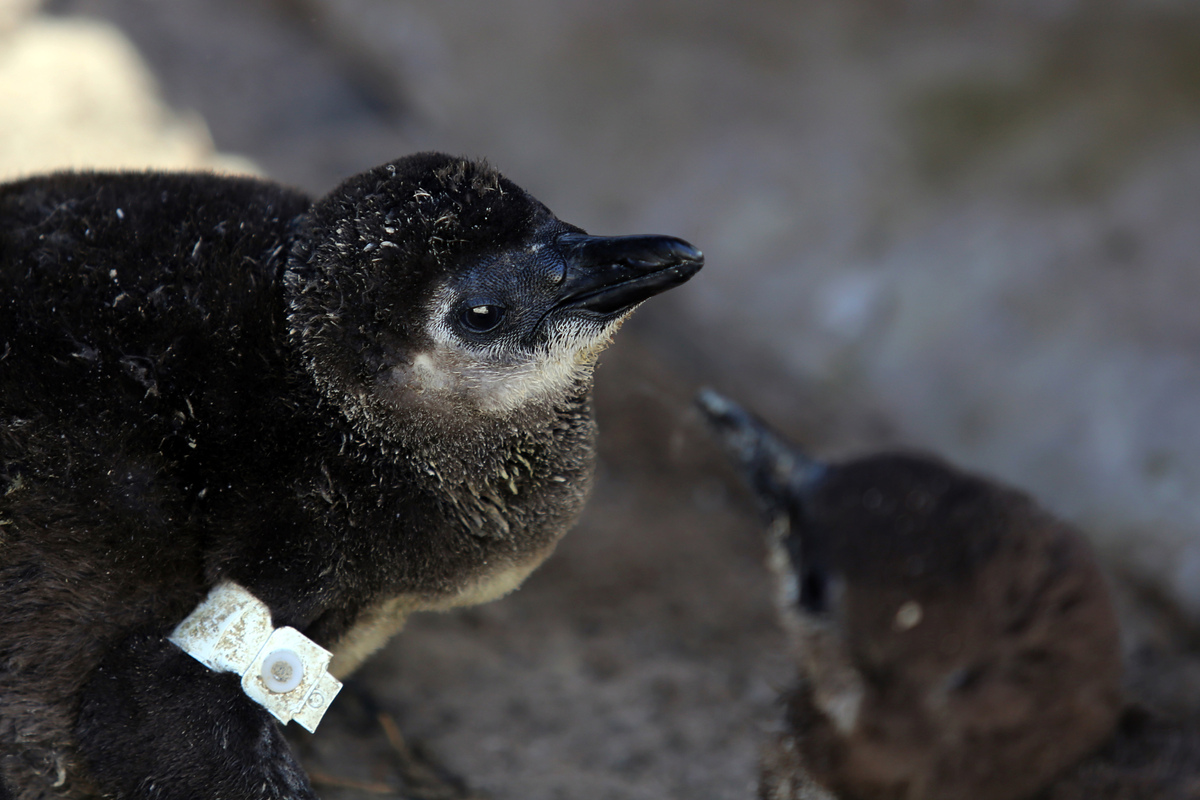
When chicks are admitted they are taken into a unit where they are numbered so their progress can be tracked over a three month period. Picture: Aletta Gardner/EWN


Some of the permanent residents at SANCCOB are older birds who would not survive in the wild. Picture: Aletta Gardner/EWN


'Hopper' the rock hopper penguin is one of the newcomers, who was obtained as a mate for resident female 'Rocky'. Picture: Aletta Gardner/EWN


The organisation says it costs between R500 and R1000 to rehabilitate one chick and it relies on donations to fund this. Picture: Aletta Gardner/EWN


Fewer than 19,000 African penguin breeding pairs remain in South Africa with a 66% decline in the population in the last 10 years. Picture: Aletta Gardner/EWN


SANCCOB's new chick–rearing unit sees the birds being fed six times a day. Food includes pilchards and fish smoothies as well as an electrolyte fluid and water to help them stay hydrated. Picture: Aletta Gardner/EWN


Survival rates vary each year, but SANCCOB's target is to release 80% of the chicks back into the wild. Picture: Aletta Gardner/EWN
~~~~~~~~~~~~~~~~~~~~~~~~~~~~~~~~~~~~~~~~~~~~~~~~~~~~~~~~~~~~~~~~~~~~~~~

Penguins in Antarctica (video)