Thursday, March 6, 2014

South African Diesel Spill / Penguin Update

Penguins monitored after diesel spill


iol scitech march 4 Stony Point Penguin Colony
INDEPENDENT NEWSPAPERS
The penguin colony at Stony Point is one of four mainland colonies in South Africa. Picture: Henk Kruger

Cape Town - Penguins in the Stony Point Penguin Colony near Betty’s Bay will be monitored this week after 10 000 litres of diesel spilt from a wrecked boat threatened the colony. 

About 4 000 penguins and 400 nests of various seabirds were exposed to contamination when the fishing trawler Connect, carrying 10 000 litres of diesel and 80 litres of engine oil, ran aground 5km from the Betty’s Bay Marine Protected Area last Thursday. 

The area was closed as authorities prepared to examine the penguin and seabirds for diesel contamination. CapeNature spokesperson Justin Lawrence said although the diesel was not visible and authorities were unable to determine how far it had spread, the colony had been reopened and penguins and seabirds were back in the water. 

SA Maritime Safety Authority principal officer Gustav Louw said his team of surveyors responsible for the clean-up of the Connect said they were met by a strong diesel stench when they went out to the wreck last week. “Fortunately diesel will eventually evaporate and disintegrate. It won’t be a threat to the environment forever,” said Louw. 

Nicky Stander, rehabilitation manager at SA National Foundation for the Conservation of Coastal Birds (Sanccob), said because the water was not 100 percent diesel-free, Sanccob and officials of the Overberg Municipality would visually inspect the birds this week. “The white parts of their bodies would turn a yellowish colour from the diesel. If a rescuer spots a penguin that cannot move its wings or it appears fragile, they would immediately try to catch the bird and then treat it,” Stander said.
She said seabirds were more difficult to monitor because their nests were scattered high above sea level. “Unfortunately, we would most likely only be able to spot whether a bird has been contaminated long after it has gotten sick. Diesel would cause the bird to lose its appetite and become frail,” Stander said. 

She added that rescuers were not just dealing with the birds from the Stony Point area, but others, too, as might come to feed at the area. “We are not only dealing with the birds from this colony, but will have to monitor those from other colonies as well,” said Stander. 

The Connect had eight crew aboard when it ran aground last week. NSRI spokesman Craig Lambinon said five of the boat’s crew had jumped to safety aboard a life raft, while three others stayed on board. They later tried to jump to safety, but one of the men, a 43-year-old believed to be from Strandfontein, went missing. Rescuers in a Skymed helicopter later spotted his body washed up on rocks. 

Louw said the SA Maritime Safety Authority and the Connect’s crew would this week continue to salvage as much of the boat as possible. - Cape Times 


~~~~~~~~~~~~~~~~~~~~~~~~~~~~~~~~~~~~~~~~~~~~~~~~~~~~~~~~~~~~~~~~~~~~~~~~~~~~

Penguin colony reopens after ship runs aground

2014-03-04 

(Lisel Krige)
Cape Town – Betty’s Bay’s penguin colony has been reopened to visitors after a ship carrying 10 000 litres of oil ran aground close by, causing concern over the seabirds’ wellbeing.

The Stony Point colony was closed to the public on Thursday last week after an early morning accident where a 19-metre fishing trawler crashed on rocks about 5km away from the penguins.

A seabird and animal rescue team had been stationed at Stony Point to observe seabirds for oil contamination.

Die Burger reports that Marietjie Engelbrecht, a spokesperson for CapeNature confirmed that no penguins had been affected and that the colony is open to visitors once more.

The ship has in the mean time been broken into pieces by Samsa for removal from the rocks and the owner of the vessel has appointed a company to assist in the process once weather conditions along the coastline have improved. 

Little penguins make new friends

The little penguin colony at Manly's Sea Life Sanctuary has welcomed two new females before this year's breeding season. (AAP)

UPDATED 5 Mar 2014
Twirl is shy, Velma is dominant. And now they're part of one big, happy little penguin family.
The pair waddled into their new home at Sydney's at Manly Sea Life Sanctuary on Wednesday after spending three weeks in quarantine. It was quite a stint, given they were only making the short journey from Taronga Zoo lower down the harbour.

Little penguins are friendly, social animals and Sea Life veterinary nurse Marina Tsamoulos says the group is "getting along beautifully". The younger and smaller Twirl is known for being shy while Velma is a dominant and "very, very curious" individual. Little penguins, the smallest of the species, grow to about 30-35cm in height and weigh about one kilogram.

The new arrivals are part of a national breeding program and have been brought to Manly to balance out the colony's gender ratio. It's hoped they'll boost the chances of the "relatively new" colony breeding this season. "We've only had them for just under two years," Ms Tsamoulos told AAP. "We didn't expect to have any breeding immediately, so this year they're just gearing up for their breeding season again and to start nesting."
Male little penguins begin digging burrows and attracting mates between June and August and most couples remain breeding partners for life.

An endangered wild population lives in Sydney's north harbour.

source

My Day: Penguin keeper Dianne Lim

Dianne Lim holding a penguin called 21 at the International Antarctic Centre Dianne Lim trained as a beautician before becoming a penguin keeper
 
Dianne Lim, 53, works as a penguin keeper at the International Antarctic Centre in Christchurch, New Zealand. The centre is home to several native penguins with disabilities, who cannot survive in the wild.

I've been working with penguins for about six years now. I can't see myself doing anything else - I love it. I normally get up at around 06:00. I normally start by going on a 4km (2 mile) walk with my dog. I have cereal and fruit for breakfast before heading to work. At work, I start with a headcount to make sure all the penguins have survived the night.

We can house up to 26 penguins in our enclosure, which has a beach, several bedding boxes and a pool. We take in badly injured penguins that can't survive in the wild. I have to scrub down the penguin beach every morning - it's always covered with poo. I go to their beds and change their sheets - they're also covered with penguin poo in the morning.

A penguin swimming at the International Antarctic Centre in Christchurch, New Zealand, 7 January 2013  
The centre includes a freshwater pool where penguins are fed
 
I need to prepare their fish before feeding time - we have a fresh water pool, not a saltwater pool, so we need to soak the penguins' fish in a bucket of salt water every day.
I put two vitamin pills under the gill of each fish to make sure the penguins get all the nutrients they need.

The penguins are still wild animals. When they first come to us they are injured, so we quarantine them for about three weeks, and get rid of fleas and any STDs they may have - they're very promiscuous in the wild.

We teach them to swim in a small pool downstairs, and help them with injuries. At that stage, they are sweet and bond quite well with us. However, when we take them up to join the rest of the penguin colony they turn wild again - after that, they bite you when you pick them up. It's very painful - they grab your skin, rip and twist it open. It's like pulling a sticking plaster off, but 100 times worse than that. It's because penguins have fine bones, and are injured easily, so it hurts them when you pick them up. We only handle them if we're giving them medical attention.  

Replica eggs
 
I often give group penguin tours around noon. After lunch, I go down to the plant room to make sure all the machines supporting the penguin colony are working. I make sure the water recycling system is working, and collect rubbish out of the filter system. Then I put the fresh bedding in the penguin beds.

The female penguins get pregnant every so often. Whenever they lay eggs we gently take them away and replace them with replicas. After about 40 days or so they'll think the egg's a dud and push them out of their nest. We give the eggs to the local university for research.
Dianne Lim holding a penguin called 21 and checking for eggs at the International Antarctic Centre 
The keepers check the penguin boxes for eggs and replace them with replicas
 
Our permit only allows us to have 26 birds, so keeping baby birds would take up spots for injured birds who need a home. By law, we also have to release chicks to where their parents were found, but we don't know where all of our penguins come from.

In the afternoon, it's feeding time. I throw fish into the pool for the penguins, and feed the ones that aren't good at swimming on land. I have to hand feed Turk, a white flippered penguin with brain damage, as she has a paralysed tongue. After I've done my last feed, I wash the floor again, do another head count, and make sure everyone is tucked into bed.

You always go home smelling of fish! I went to the cinema with friends the other day, after two days off work - and my friends still asked what the smell was. And I already shower every day!

Dianne Lim feeding a penguin in the penguin enclosure  
The weaker or shyer penguins are hand-fed on land
 
We give all the penguins names, and they have individual personalities. Our penguin Lincoln has a badly broken beak, but he's very handsome and has about three girlfriends at the moment. He's our most eligible bachelor and we call his bedroom the party bedroom as there are always lots of penguins in there! Squirt and Yappy are our laziest penguins. They are lazy swimmers, so they will wait until the weaker penguins eat on land, and then steal their food.

A penguin called Baby in a pen at the International Antarctic Centre Injured penguins are cared for in a pen in the basement
 
I'm actually a fully trained beautician - that's my trade. But I needed to do more work when my kids were grown up. I walked into the International Antarctic Centre in 2004 and they gave me a job working in the shop. I worked my way up to being a guide, and in 2007 they got penguins, so I started volunteering in the penguin enclosure. I learned a lot from my colleagues - and then when a vacancy came up I applied. I was so thrilled when I got the job.

After the earthquake
  The penguins were very scared during the 2011 Christchurch earthquake. We lost the water in the pool and the fire brigade had to come to pump water back in.

Dianne Lim cleaning penguin bedding at the International Antarctic Centre  
The job also involves cleaning dirty penguin bedding
 
We closed down the centre during the aftershocks, and the penguins slept outside their nests because they were scared and very stressed. We had no tourists after the quake, so times were hard. The centre had no money, and we had to operate on a skeleton staff and do our own cleaning and everything. Then the original owner sold the centre to Christchurch airport, which meant we got more funds. It took about six months before visitors started picking up again.

Christchurch was badly damaged by the earthquake, but I think we're starting to get things going again. There's a good vibe, and a feeling of hope and good will in the city. I think Christchurch is going to be a beautiful and like a new city again.

Dianne Lim was talking to the BBC's Helier Cheung.

source 

Tuesday, March 4, 2014

Image of the Day

Antarctica by richard.mcmanus.
Antarctica, a photo by richard.mcmanus. on Flickr.
Adelie Penguins diving into the Ross Sea

Monday, March 3, 2014

This Week's Pencognito!


Please visit Jen and all the Pengies by clicking this link

Penguin display opens at The Deep in Hull

Mon 3 Mar 2014 

Penguins arrive at The Deep

Here we are! Gentoo penguins Credit: PA
The Deep in Hull is getting ready to show off its latest arrivals - ten Gentoo penguins (six adults and four juveniles) who have taken up residence in a new exhibit called 'The Penguins of Grytviken'. The first five birds are now in residence.

The £750,000 exhibit opens to the public today and will give visitors views of the penguins across three floors, both underwater and on land. Features include a swimming pool, diving pool, beach area, nesting area and the penguins very own outdoor balcony with views overlooking the River Humber.

source

~~~~~~~~~~~~~~~~~~~~~~~~~~~~~~~~~~~~~~~~~~~~~~~~~~~~~~~~~~~~~~~~~~~~~~~~


We all know penguins don't fly - unless they're on a plane, that is!
Five Gentoo penguins have been flown all the way from Texas in America to a new home in Hull, England.
These birds were born in captivity and they've come over to join a European breeding programme, which aims to help protect the species.
Their new living area at The Deep Aquarium has three levels and includes a diving pool, beach, nesting area and even an outdoor balcony overlooking the River Humber!
And if you want to find out more of those penguins and live in the Yorkshire and Humberside area then tune in to BBC1 at 7.30pm on March 3rd 2014.

source

~~~~~~~~~~~~~~~~~~~~~~~~~~~~~~~~~~~~~~~~~~~~~~~~~~~~~~~~~~~~~~~~~~~~~~~~
 Mon 3 Mar 2014 

Fact files: 12 facts about Gentoo penguins

A gentoo penguin propelling itself out of the water.
A gentoo penguin propelling itself out of the water. Credit: The Deep/James Denman
:: Gentoo penguins are the third largest penguin species reaching 80cm and up to 8kg when fully grown.
:: They are listed as 'near threatened' on the International Union for Conservation of Nature's red list of threatened species.
:: It is estimated there are 387,000 breeding pairs.
:: The gentoo penguins are found on the islands around the Antarctic and Sub Antarctic and on the Antarctic Peninsula including the Falklands.
:: Gentoos spend most of their time preening to maintain the oily condition of their feathers.
:: They can breed from as young as 1 year old.
:: Gentoos tend to nest on flat, low-lying beaches gathering up to 1700 stones to build it.
:: They lay a clutch of two eggs at a time, usually two to four days apart.
:: During incubation the parents take turns to sit on the nest while the other collects food.
:: Adult penguins moult once a year.
:: While moulting the penguins cannot go to sea to find food and they look scruffy as all their feathers drop out.
:: Penguins are vulnerable to disturbance by tourism and oil spills, climate change and fishing.

source

Ferntree Gully great-grandmother knits woolly protective gear for fairy penguins

Merle Davenport from Ferntree Gully knits jumpers for penguins at Phillip Island. Picture
Merle Davenport from Ferntree Gully knits jumpers for penguins at Phillip Island. Picture: Susan Windmiller Source: News Limited
 
PENGUINS  don’t wear tuxedos, they wear jumpers — but only when they need protection after an oil spill. 

The oily preventive measure is largely thanks to Ferntree Gully great-grandmother Merle Davenport, 96, who has knitted more than 1000 tea-cosy type jerseys for the fairy penguins at Phillip Island.

She is part of a worldwide network of volunteers who work the needles to create specialty jumpers for the Penguin Foundation, a ­charity dedicated to raising funds for conservation, research and the care of sick or injured penguins on Phillip Island.

The birds are referred to as fairy penguins because they are so small.

Penguin Foundation officer Lauren Jones said during an oil spill, rescuers dressed each penguin in a jumper to stop the birds from ingesting oil before they were treated.

The nature park’s wildlife clinic had a stockpile ready for an emergency, while extras were fitted on toy penguins and sold to help fund the clinic’s lifesaving work, she said.

Mrs Davenport said she started knitting the jumpers after a 1998 oil spill, when a call went out for volunteers. “I’ve got to have something to do with my hands,” Mrs Davenport said of the jumpers, which each took her seven to eight hours to make.

She favoured brightly coloured designs, but avoided AFL team colours, because the wool was hard to find.

But if she had to choose, the penguins would be Collingwood supporters.

Mrs Davenport took up knitting at primary school in country NSW, when Thursdays were set aside to knit socks for soldiers.

 source

Protecting a much-loved friend


By Matthew Salisbury 
Wednesday 19 February 2014
Latest News 
Latest News

Latest News

THEY don’t like being touched, their peck might give you a bruise that will last for a month and if you don’t concentrate on delivering the fish straight into the upturned beak, you could discover for yourself that these creatures are equipped with very sharp ’teeth’ indeed.

Hardly the most cuddly creatures on Earth then, but as a lifelong devotee to all things penguin, a set of risks I’m prepared to endure.

I first fell in love with penguins on a rain-soaked afternoon visit to Bristol zoo when, as a teenager struggling to grasp the meaning of life, I watched a resolute adult penguin for two hours and learned the value of steadfast stoicism in the face of adversity.

But, despite periodically picking up brochures for Antarctic study cruises, I have never - in the broadest sense - taken the love affair any further.

The opportunity to feed, observe and just generally share a few close moments with the colony of Humboldt penguins at West Midlands Safari Park was, therefore, a chance not to be missed.

Amy Sewell, who looks after the colony of roughly a dozen penguins, kindly allows me to release the group from their overnight indoor pool and give them their first feed of fish, fish and more fish.
Trying to aim a fish into one beak amid a jostling pack of would-be diners produces a few close snaps. Throwing a handful of the sprats into the pool provides a glimpse of just how agile mother nature has made these wonderful creatures.

The park’s new Penguin Cove is freshly designed and provides the perfect stage for the penguins to exhibit exactly to sort of behaviour which has made them such firm favourites in the eyes of the film and TV watching public. And they certainly don’t disappoint.

Latest NewsThere’s a recognisably human element to the waddling walk, the faltering steps on wet rock and the inquisitive looks while waiting for the fish bucket to be plumbed again. And there’s also the spectacular as they demonstrate that - contrary to every natural history book - they can fly, but only if it’s underwater.

The past decade has been a good one for penguins when it comes to appearances on the big and small screen. Whether it’s being cartooned into tap dancers or being stalked by hidden cameras, they’re rarely off the screen it seems. High comedy mixed with against-all-odds struggles just to make it through the trials of life.

Watching emperor penguins surviving the worst of the Antarctic winter, it’s possible to believe that these hardy creatures could survive anything. But that’s not the case.

Like many creatures in the wild, penguins face a threat to their future. Climate change in the form of gradually rising temperature will affect the ice and the traditional feeding grounds. But it’s more of a manmade problem for the Humboldts as their breeding grounds along the generally unfrozen coast of South America are mined more and more for guano. Man, it seems, is the problem once more.

Ironically it could be the affection man has for penguins that goes some way to helping the species survive and prosper. Films like Mr Popper and Happy Feet together with documentaries like Spy in the Huddle and March of the Penguins, have pushed this particular threatened species closer to the front of the queue when it comes to help.

That’s certainly a view shared by Amy and her team and they’ll be hoping the lure of the penguins will help bring in a tide of money to further the work of the Marine Conservation Society during a special awareness week.

Amy and her colleagues in the penguin and sea lion habitats will be dressing as mermaids and posing on rocks to raise money. Amid all the fun - and photo opportunities - there will be the more serious message of encouraging visitors, particularly the young, to think about the plight facing our coastlines and their vulnerable inhabitants.

Don’t let the comedy obscure the very real threats that lie ahead, is the message.

Seeing a penguin browbeating the rain to remain unruffled and the picture of detached dignity might teach one lesson. But realising that those who look best equipped to survive and whose presence we take for granted, need our attention now more than ever, might be (a few generations down the line) a far more important one.

The park’s Love Oceans Week runs from March 17 to 23 and details of activitiescan be found on www.wmsp.co.uk. The park is open daily from February 14.

Pictures by Millie Salisbury

source 

Baby penguins debut at Hungarian zoo


Saturday March 1, 2014

Two rare baby penguins, Lila and Gelb, have waddled into the spotlight, making their first public appearance at a zoo in Hungary. The pair born in January belong to rare African penguins.

The workers at the zoo in Szegad - about 170 kilometres from Budapest - have set up areas on Friday for the penguin family and both parents are taking part in bringing up the little ones. Lila and Gelb are between 40 to 60 centimetres long and weigh between two to four kilos.

The penguins belong to a species with a population of less than 200,000 - a tenth of what it was a century ago - and it is not unusual for them to be born in captivity. Life expectancy is greater at the zoo, about 20 years compared with 10 years in the wild.

The Szeged zoo founded in 1989 is the newest and the largest one in Hungary comprising an area of 45 hectares.

Image source 

Story source 

Images of the Day

Australia by richard.mcmanus.
Australia, a photo by richard.mcmanus. on Flickr.
Royal Penguin, Macquarie Island


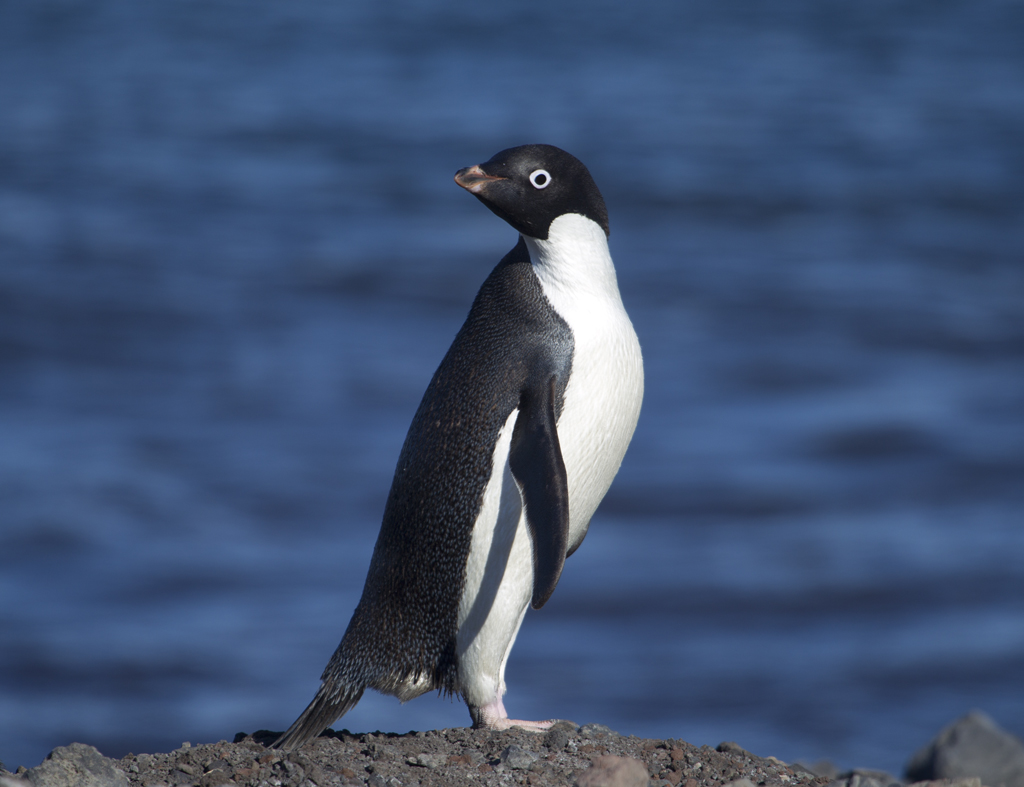
 Adelie Penguin at McMurdo station in the Ross Sea by Richard McManuson on Flickr 

Saturday, March 1, 2014

Just a peck on the cheek!

*Thanks to @Adelheid16 on Twitter for this gorgeous image!*

Image of the Day

Antarctica by richard.mcmanus.
Antarctica, a photo by richard.mcmanus. on Flickr.
Emperor penguins in McMurdo Sound