Wednesday, August 6, 2014

Monday, August 4, 2014

If London Zoo really cared about animals, they would cancel their rowdy 'Zoo Lates' parties


Mimi Bekhechi

We should recognize these institutions for what they are: profitable prison

Allegations that visitors to London Zoo's "Zoo Lates" stripped off and attempted to enter the penguin pool as well as pouring beer over a tiger have provoked an understandable uproar in recent weeks. The City of Westminster is reportedly now investigating these and other incidents, including one in which visitors were said to be getting "touchy feely" with the baby penguins and another in which a man apparently asked a staff member, "Which penguin can I fight?" But while such idiocy has prompted calls for any perpetrators to be thrown to the lions, the real culprits would be the zoo managers, if they have  put profits before the needs of the animals.

Many of the animals on display at London Zoo have evolved highly sensitive hearing and a well-developed sense of smell to alert them to danger and to changes in their environment. The noise levels from the Zoo Lates crowds could be much louder than anything to which most of these animals have ever been exposed. Add to that the increase in smells from the crowds and the alcohol consumption as well as the visual impact of the increase in visitors, and the animals' stress level could be greatly elevated – but for these captive animals, there is no escape.

The profound levels of stress, anxiety and agitation that wild animals experience in captivity mean attacks on people occur with staggering regularity. In the last month, a 16-month-old girl was scratched by a lion in a circus in France, a zookeeper was bitten by a tiger in Australia, a woman in the US lost a finger to a lion in a zoo and a boy had his hand ripped off by a tiger in a zoo in Brazil.

All these attacks were preventable and utterly predictable. Captive animals are not permitted to engage in normal behavior, such as running, jumping or hunting. Every facet of their lives is controlled, including when and what they eat, when they sleep and with whom they mate, so is it any wonder that they lash out in frustration? Patrons of what London Zoo actively promotes as "a wild night out" are there to party. Rowdy, drunk humans and captive wild animals make for an even more dangerous combination for all concerned.

With tickets costing up to £35, the zoo claims that Zoo Lates bring in important revenue, generating £800,000 a year to fund its "conservation" work. The zoo has also stated that animal welfare is of "paramount importance" and only three people were removed from the sessions during 2013 and 2014. But if the zoo were truly concerned about protecting animals, surely any event which posed even the slightest risk to the animals would be cancelled immediately?

Zoos put the "con" in conservation. Why else would they be raising money to keep animals incarcerated as living exhibits instead of asking the public to donate to schemes that would protect them in their native habitats? When, in 2007, London Zoo spent £5.3m on a new gorilla enclosure, Ian Redmond, the chief consultant to the UN Great Apes Survival Partnership, said, "£5m pounds for three gorillas when national parks are seeing that number killed every day for want of some Land Rovers, trained men and anti-poaching patrols. It must be very frustrating for the warden of a national park to see."

It's bad enough that the London Zoo's permanent residents have no way of escaping their day-to-day confinement, but to promote events which might pose a threat to them defies belief. Everyone who genuinely cares about tigers and all the other individuals held captive inside zoos should recognize these institutions for what they are: profitable prisons.

source
Plantings save penguins

JENNY CAMPBELL
Last updated 04/08/2014


Southland Times photo

DIGGING IN: University of Otago environmental management year two students Alice Thomson and Lucy Underwood and Southern Institute of Technology environmental management year one student Kate Dunlevey learn new skills to protect native trees while planting at Te Rere private scientific reserve on the Catlins coast at the weekend.


More than 500 trees have been planted on the Catlins coast to improve the environment for the endangered yellow-eyed penquin.

Students from environmental management courses at Otago University and the Southern Institute of Technology were among more than 50 people who planted the trees at Te Rere private scientific reserve on the Catlins coast.

Staff from the Department of Conservation, Forest & Bird members and volunteers also helped out.
Part-time caretaker Fergus Sutherland talked about the history of the reserve and how the adjacent farmer supported the establishment of a reserve when they realised the vulnerable state of the yellow-eyed penguin.

Southland Forest & Bird began planting natives nearly three decades ago on the grass covered paddocks, next to the sea coast, so the penguins had access to nesting sites. They were private birds and did not appreciate neighbours.

The revegetation has continued with annual plantings for about 27 years, but a disastrous fire in 1995 destroyed much of the well-established cover, with some nesting birds burnt in the fire.

However, the vegetation recovered remarkably well and about 50 penguin pairs are continuing to use the 70-hectare reserve, out of about 500 breeding pairs on the southeastern coast of the South Island.
The revegetation project not only protected the yellow-eyed penguin, it also provided habitat for other native species such as fernbirds, falcons, tui, bellbirds and fantails, Sutherland said.
A large area of native plantings had provided a safe place for animals, he said.  "The little blue penguin, sea lions and seals have taken up residence along with about 12 titi, or muttonbirds, using the reserve site for landing and hopefully later they will breed here, which is exciting."

Forest & Bird's Brian Rance co-ordinated the weekend's working bee, with plants sourced from Pukerau Nursery. With the trees planted, the workers helped check traps for stoats, rats and possums which continue to impact the penguins, particularly the juveniles.

- The Southland Times

source 

VIDEO: Is this penguin Dundee’s newest fire fighter?

By Tele Reporter, 4 August 2014

A video has appeared online showing a new recruit at Blackness Fire Station.
The minute-long clip shows firefighters sliding down their poles responding to an alarm, among them is Dundee Science Centre’s penguin mascot.
The video doesn't explain what the bird is doing at the station but it seems to be linked with the science centre's Ice Station Antarctica exhibition.
The video then shows the crew jumping into a fire engine before speeding off to the call-out.
The video was posted on to YouTube this morning with the title: 'Fire! Fire!'
More accustomed to freezing temperatures of the Antarctica, a penguin seems a strange choice to help tackle fires.
Dundee Science Centre is currently hosting the Ice Station Antarctica exhibition until September 30.

source

Penguin of the Day

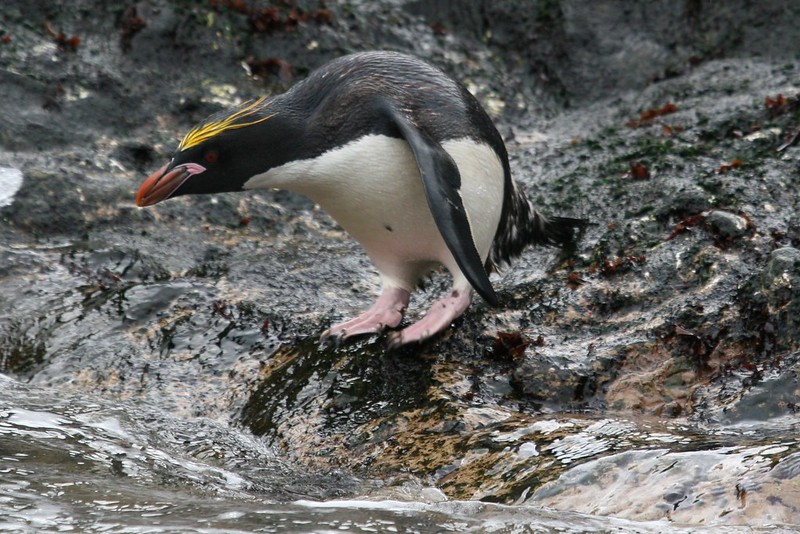
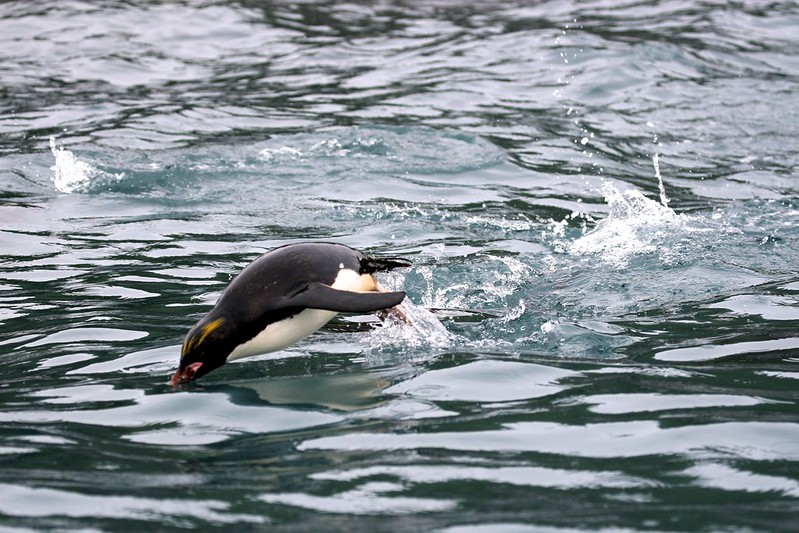
Macaroni off for breakfast 
Macaroni penguin is off to hunt for food


Macaroni Penguin

Saturday, August 2, 2014

London Zoo investigated


A Penguin swims at the  ZSL London Zoo's penguin exhibit in January 2, 2014 in London, England. (Photo by Oli Scarff/Getty Images)
A Penguin swims at the ZSL London Zoo's penguin exhibit in January 2, 2014 in London, England. (Photo by Oli Scarff/Getty Images)
The UK’s London Zoo is being investigated over allegations late-night guests are throwing beer at animals and attempting to climb into animal enclosures.

Westminster city council launched an investigation Thursday into the parties, known as “Zoo Lates” which are held Friday evenings, according to The Guardian.

Earlier in July, the publication detailed allegations of alcohol-related incidents that included beer being thrown at a tiger and a man stripping off his clothes before attempting to enter the penguin pool.

The Guardian reported a separate incident of a woman entering a lion enclosure, but the London Zoo only confirmed the incidents involving the tiger and penguin exhibit.

The London Zoo is one of the oldest  in the world and has been hosting events on Friday evenings to raise money to support its conservation work.

The events, which bring in about £800,000 a year, offer guests acoustic music performances, “silent discos” and talks from animal keepers. They also serve alcohol, according to the zoo’s website.
More than 33,000 people have signed a petition to stop “Zoo Lates” which claims the event has caused “fear and distress ” to the animals.

A spokesperson for the London Zoo told the BBC: “The wellbeing of our animals is always our first priority and we would like to reassure those people that have taken the time to sign the petition, that we would not continue to run any event or activity which compromised this, in any way.”

source

Penguin of the Day

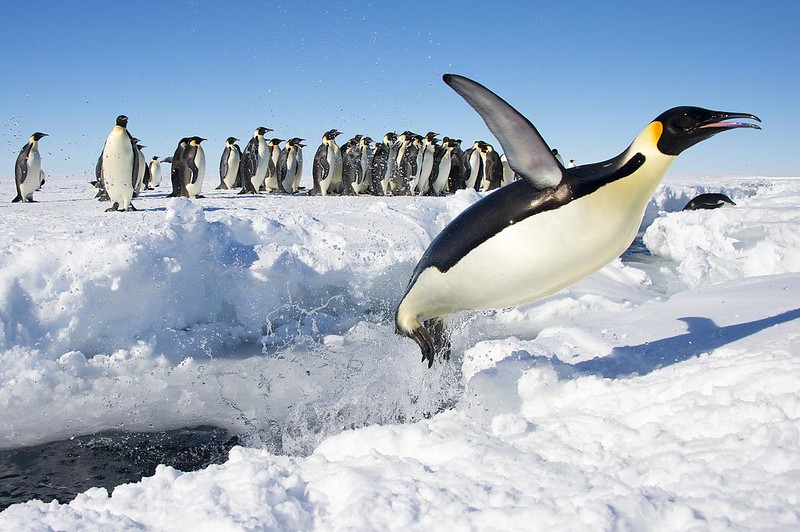
Emperor Penguin jumping!
The Emperor's Leap

Friday, August 1, 2014

Penguins of the Day

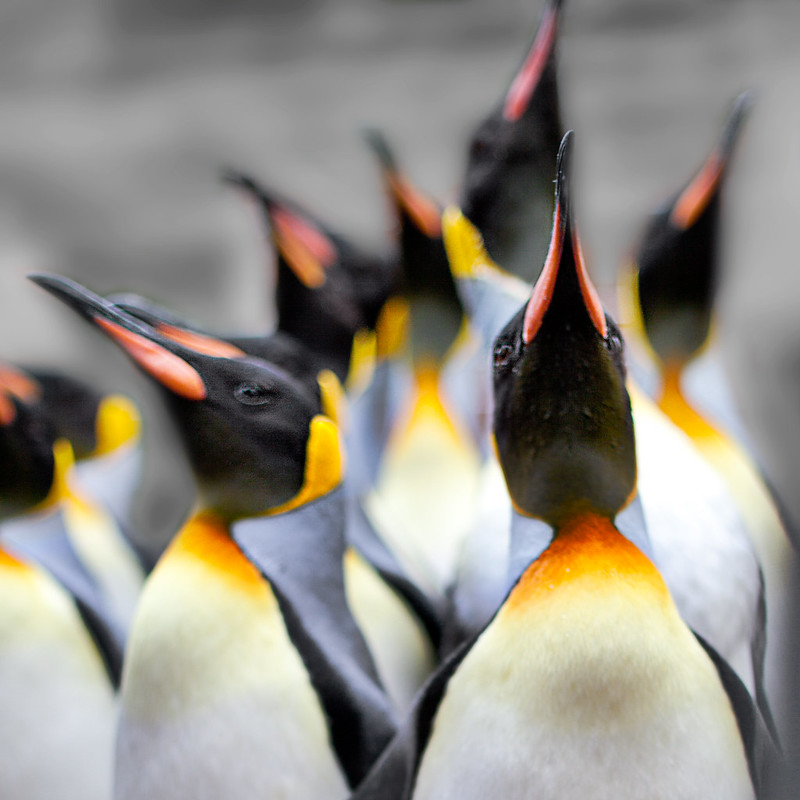
GlastonburyMore kings than you can count!


Peggortty Bluff Kings

This Stranded Penguin Was Separated From His Colony, and What A Whole City Did To Save Him

August 1, 2014

When Tomas the Humboldt Penguin was found washed up on the beaches of Lima, Peru, lifeguards were shocked. Penguins are extremely social animals and stay in large colonies, so it is extremely rare to see one by itself.

Knowing the severity of the situation, the lifeguards took the penguin in, giving him food, water, and a medical checkup before releasing him back to the wild. In fact, it seems as though the entire city got in on taking care of little Tomas from beach goers, to veterinarians, to even the Lima police department.

It’s a good thing too since these beautiful creatures are currently on the endangered species list. In fact, there are only an estimate 10,000 of these living in the wild today.

source

Penguin babies out with rest of Calgary Zoo flock


One of two new Gentoo penguin chicks huddles with the father penguin at the Calgary Zoo in Calgary,...
Jim Wells/Calgary Sun/QMI Agency

Gentoo chicks were born earlier this summer

CBC News Posted: Jul 31, 2014 
Arabel and Weddell are the parents of one of the new penguin chicks born this summer at the Calgary Zoo.
Arabel and Weddell are the parents of one of the new penguin chicks born this summer at the Calgary Zoo. (Calgary Zoo)
Two baby penguins are out with the rest of the colony now at the Calgary Zoo. One of the gentoo chicks was born at the end of June and the other in early July. Curator Malu Celli says the parents are doing a good job of raising their babies.

Two baby penguins
Two baby penguins born earlier this summer are now on display with the rest of the penguins. (CBC)

“They're doing really well. We haven't got our hands on them yet, so we don't know their weights but judging by their size, they're just growing as they should be and, yeah, we see all the right behaviours, all the milestones, so we think they're definitely on the right track.

Celli says they haven't been named yet. “We don't know the sexes of the chicks yet. Because at this age you can't really tell and with penguins, you can't really tell unless you do DNA. So we need the vets to get hold of them, draw a little bit of blood and then do a DNA testing and we're just waiting until they're a little bit bigger for that to happen.”

Celli says there are now 23 penguins in the zoo's colony.

 source