Friday, July 3, 2015

#Penguins of the Day

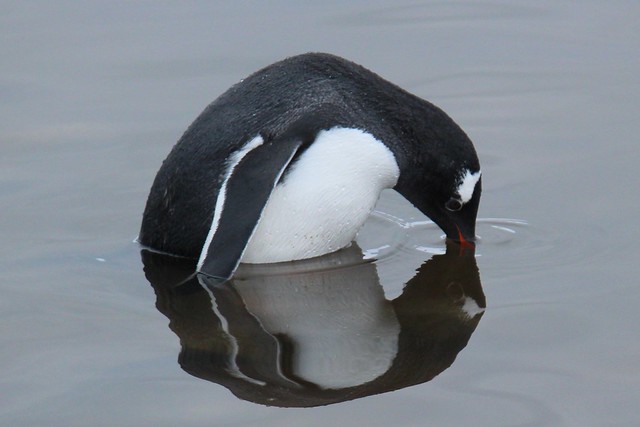
Coming in after a swim 

Coming in after a swim by Peter Orr

Fox investigation continues as the peninsula’s night watch keeps our penguins safe

Little Penguin Warden Murray Sharp is a member the voluntary team guarding the penguins a
Little Penguin Warden Murray Sharp is a member the voluntary team guarding the penguins against attacks by the thrill-killing fox. Picture: Martin Lange.
 
IT IS 4.30pm on the dot and eager National Parks and Wildlife Service team members are being briefed on their mission.
After close to three weeks of a military-like operation, they’re closing in on their target, the thrill-killing fox that has slaughtered 27 little penguins at North Head.
Thermal imaging has detected the fox around Store Beach, near the boxes where the penguins nest.
A sniper has killed one fox, but they believe the main killer is still at large.

NPWS Peter Bergman outlining the nights duties with staff. Picture: Martin Lange.
 
In the war room, a large map is marked with an X, and a marksman is dispatched nearby.
Other parks staff and volunteers will spend the cold night standing guard at Manly Wharf, Collins Beach, Store Beach and Q Station.
The team is briefed on safety: be on the lookout for ticks, watch footing on cliff edges and mossy rocks and confirm your contact number.

A penguin roosting in its box. Picture: Martin Lange.
 
A welfare check will be conducted during the evening. There will be a shift changeover at 3am.
By 5pm they are in position and the operation starts. Volunteer and penguin warden Murray Sharp is positioned at Collins Beach and will stay there until 3am. He is accompanied by three others to help keep watch.

A penguin roosting in its box. Picture: Martin Lange.
 
NPWS ranger Mel Tyas says human presence has been enough to deter the fox since the operation kicked off with the penguin toll still standing at 27.
“The human scent has been working a treat. Since we’ve ramped up the operation we haven’t lost a penguin,” Ms Tyas says.
Mr Sharp says moving around the headland in the middle of the night has been a challenge.
“One of the nests is around the corner and with high tide I had to go the back way to find it. I ended up on a cliff edge and realised I was in the wrong spot,” Mr Sharp says.
Navigating in pitch black surroundings isn’t the only obstacle. In winter, the chill is bone numbing.

NPWS ranger Melanie Tyas checking the camera which monitors the penguins and fox. Picture
NPWS ranger Melanie Tyas checking the camera which monitors the penguins and fox. Picture: Martin Lange.
 
Volunteer Beverley Prior is also set up for the night at Collins Beach.
She says its vital to protecting the penguins.
“They deserve to be able to survive in this environment and not be threatened by a feral intruder,” Ms Prior says.
She had a terrifying incident on her first night.
“We thought the fox had turned up because the penguins made such distressing calls,” she says.
“We thought, oh no, he’s here, and started madly screaming to try and distract him, it was really scary.”
Luckily, the penguins remained safe – the calls were likely to be mating calls.
Ms Tyas says breeding season leaves the penguins quite vulnerable.

Volunteer Beverley Priori and Little Penguin Warden Murray Sharp were on Thursday’s night
Volunteer Beverley Priori and Little Penguin Warden Murray Sharp were on Thursday’s night’s watch. Picture: Martin Lange.
 
“They’re busy, they’re out at night, they’re gathering things to build nests – it’s a high-risk time for them,” she says.
When the penguins come in, they’re often in groups, and she says while they do it for safety, the method is a little flawed.
“The fox has the opportunity to get six or seven at a time because they all arrive together.”
Ms Tyas says it’s only a matter of time before he’s caught. “I think we’re very close.”

source 

Thursday, July 2, 2015

Baby penguin dies at Fife aquarium

editorial image
Thursday 02 July 2015

Heartbreak has hit St Andrews Aquarium after Ace, the first baby Humboldt penguin to be born at the visitor attraction a couple of weeks ago, has sadly passed away this week.

The team at the aquarium had been providing round the clock care to ensure the little chick had the best possible chance of survival, but, sadly, nature took its course and Ace died on Tuesday morning.
Ace was born into the Murray penguin family at the aquarium where its mother, Andi, is named in honour of Andy Murray when he became Wimbledon Champion in 2013. It was hoped that he could be a lucky charm for Andy at this year’s Wimbledon championships as well as a new member of the Aquarium’s popular and much loved Humboldt penguin family.

John Mace, manager at St Andrews Aquarium, said: “We are devastated that we have lost Ace, but we were prepared for all potential outcomes as the chick’s arrival was unexpected and the odds were stacked against him. The early weeks are crucial and, sadly, nature took charge on this occasion.”

source

#Penguin of the Day

Antarctic Peninsula, Petermann Island IMG_3887 

Antarctic Peninsula, Petermann Island by Ian Withnall

Gentoo penguin - Pygoscelis papua


Lowry Park welcomes 9th African #Penguin chick

10 News Staff, WTSP  
July 1, 2015

The ninth African Penguin chick was born at Lowry Park

TAMPA, Florida -- Home to the only breeding colony of African penguins in the state of Florida, Tampa's Lowry Park Zoo has welcomed chick number 9 to its rookery of 15 endangered penguins.
Zoo officials say the newest chick, the first of 2015, hatched June 15 to experienced parents "Amber" and "Violet." The chick, whose gender is yet to be determined, weighed 160 grams on June 19 (first weight) and had more than doubled its weight to 512 grams on June 28.

At about six weeks old, the chick will transition from the parents to the aviary care team to facilitate independence and learning to swim before ultimately joining the colony on exhibit later this year.
In their range country of South Africa, penguin colonies are declining at an alarming rate: more than 60 percent in the past three decades. The dramatic population decline is attributed to a combination of factors: reduced food supply due to commercial fisheries; changes in habitat due to shifting prey populations; and catastrophic events including oil spills.

The ninth African Penguin chick was born at Lowry Park

At the current rate, scientists estimate the species may trend toward extinction within 20 years. In 1956, there were an estimated 141,000 breeding of African penguins. By last year, the total had plummeted to only 19,000 pairs - a loss of nearly 90 percent in half a century.

Tampa's Lowry Park Zoo opened its African penguin habitat in 2007, with the first chick hatched in 2011. In 2014, the Zoo launched an initiative known as "Protecting African Penguins" to double the size of its penguin nursery to have more room to raise more chicks. Individuals or businesses that wish to contribute to the Protecting African Penguins initiative can visit www.LowryParkZoo.org/Penguins.

In addition to helping to raise the number of penguins in the managed population in North America, Tampa's Lowry Park Zoo also helps to support the wild penguin population by partnering with organizations in South Africa dedicated to protecting coastal penguin habitats.

source
 
The ninth African Penguin chick was born at Lowry Park 

The ninth African Penguin chick was born at Lowry Park 
 The ninth African Penguin chick was born at Lowry Park
African penguin chick mom Amber. 
Mom Amber
African penguin chick mom Amber.

Wednesday, July 1, 2015

#Penguins of the Day

Antarctic Peninsula, Petermann Island IMG_3906 

Antarctic Peninsula, Petermann Island  by Ian Withnall

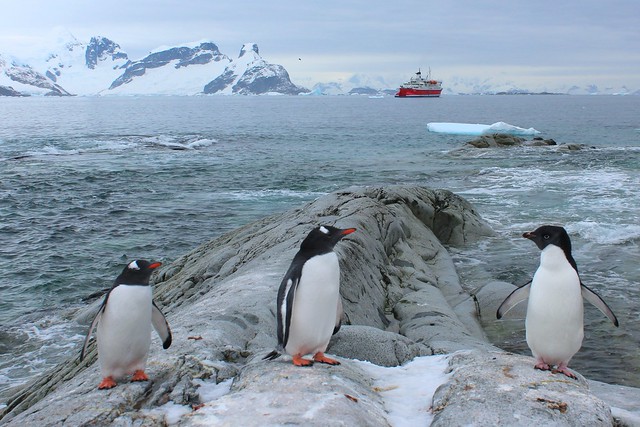
Three penguins; two Gentoo Penguins - Pygoscelis papua - and a lone Adelie Penguin - Pygoscelis adelie


The best job to have during a heatwave?

Penguin keeper, of course!

The job: Feeding and looking after the penguins at a zoo

Salary: £16,000-£22,000 a year

Workwear: Shorts, short-sleeved shirts, hats and boots

You’ll wish you were doing it because … “You feel like you’re on a holiday resort, only with penguins,” says Adrian Walls, head bird keeper at Penguin Beach at ZSL London Zoo. “It’s a unique place to work.” Every day he heads straight for the zoo’s beach – not far from the centre of London – to give the penguins their breakfast. “On a hot day they’ll sit on the beach and sunbathe, then cool off in the super huge pool. Penguins are like little people, each has got its own character. We get to know them all individually.”
penguin keeper
Pinterest
Adrian Walls, head bird keeper at Penguin Beach
To make sure that even on the hottest day of the year the temperature never rises above 30C, huge fans blow a breeze around the beach and jets of evaporated water are squirted into the air to create a constant cooling mist. “It’s the best job in the world on a hot day – and if you really want to cool down you can always find an excuse to go for a dip in the pool with the penguins.”

Any downsides on a hot day? “Going home smelling of the fish we feed the penguins,” Walls says. “It makes you very attractive on a hot tube train.”

source

St Kilda’s penguins find the Yarra River a tasty treat

A study has found the Yarra River is a feeding hot spot for Melbourne’s penguins.
 
THE Yarra River is considered muddy, brown and awash with E coli, but new research casts a different light on Melbourne’s often derided waterway. 
A study tracing the feeding patterns of St Kilda’s colony of little penguins suggests the Yarra mouth is a feeding hot spot for the loveable birds. “Nutrients like phosphorus are pushed down the river towards the bay, attracting anchovies and pilchards, which are key prey items for penguins,” explains Monash University PhD student and lead researcher, Nicole Kowalczyk.

Forty four of the 1000-strong St Kilda penguin colony were GPS tagged, and their movements recorded between 2008 and 2012.

Findings for the study, published this week, showed when the river was at its highest in 2010 after the drought broke, there was a 50-fold increase in nutrient levels in the bay.

And equally, in drought years when river outflow fell, the penguins foraged closer to the river mouth to eat the fish chasing a paucity of nutrients. “They’re a hardy bunch, so versatile and very flexible,” Ms Kowalczyk said.

The team of researchers, in collaboration with Earthcare St Kilda and Phillip Island Nature Parks, also collected data from the Spirit of Tasmania, which records water temperature, clarity and chlorophyll content across the entire bay at regular intervals.

Ms Kowalczyk found the penguins’ GPS tracks regularly overlapped with the shipping channel, however she said limitations in her study made it difficult to assess whether this was simply a coincidence, or an indication that penguins preferred to hunt in clearer water. “Melbourne is pretty proud of their penguin population and we just wanted to find out where they were feeding and why,” she said.

source 

Lowry Park Zoo welcomes baby African penguin

Last Updated: Wednesday, July 01, 2015
 
That’s one cute chick!

Tampa’s Lowry Park Zoo has welcomed chick number 9 to its rookery of 15 endangered penguins.
The newest chick, the first of 2015, hatched June 15 to experienced parents “Amber” and “Violet.”
The chick, whose gender is yet to be determined, weighed 160 grams on June 19 (first weight) and had more than doubled its weight to 512 grams on June 28.

The zoo is home to the only breeding colony of African penguins in the state of Florida.


At about six weeks old, the chick will transition from the parents to the aviary care team to facilitate independence and learning to swim before ultimately joining the colony on exhibit later this year.

source