Friday, May 13, 2016

Louisville Zoo opening exhibit of 'little' penguins

Sheldon S. Shafer,
Call them little, blue or fairy, but whatever you call them, the tuxedo-clad birds are cute and will be waddling around a new exhibit being dedicated Thursday at the Louisville Zoo.

City officials and Zoo Director John Walczak are scheduled to open Penguin Cove on Thursday at noon at the zoo off Trevilian Way.  Among the dignitaries will be Kent Lanum, president and CEO of the Paul Ogle Foundation, which supplied the lion's share of the $1 million required to develop Penguin Cove.

The exhibit – officially The Little Penguin Conservation Center – is in The Islands area of the zoo and is being stocked with eight to 10 of the miniature birds. Most of the penguins have arrived from the Bronx Zoo.

The species is new to the Louisville Zoo, which has long had an exhibit of larger Rockhopper penguins.

"Penguin Cove will give guests the opportunity to observe the penguins' social, natural behaviors in an outdoor exhibit area. Guests will be able to visit one-on-one with the animals in a private interactive area," the zoo said in a release promoting the ceremony to open the exhibit.

The fairy penguins are the smallest of the penguin species. The birds stand about a foot high at full development and weigh around 2 pounds.
The penguins live in colonies along the southern coast of Australia and around the nearby island of Tasmania as well as along the New Zealand coastline.

The penguins hunt during the day and can dive up to 200 feet in pursuit of fish and small invertebrate animals to feed on.

Scientists estimate that fewer than 1 million of the little penguins remain in the wild, with the species on the decline as a result of oil pollution and drowning in fish nets.

The Louisville Zoo is actively participating in an effort to conserve the penguins through a species survival program, in cooperation with other zoos and aquariums.


Endangered penguin egg poacher nabbed

Endangered penguin egg poacher nabbed

2016-05-12 07:30 - Selene Brophy


Cape Town - A local has breached the safety of Boulders Penguin Sanctuary and stolen endangered African penguin eggs - with SANParks saying this is not an isolated incident.

Table Mountain National Park confirmed the arrest of a Glencairn resident by law enforcement officials who found him to be in possession of illegally obtained penguin eggs.

It said it was unclear which part of the Boulders Colony the eggs had come from or why they had been taken. The eggs were handed over to SANParks and sent for verification to the Southern African Foundation for the Conservation of Coastal Birds (SANCCOB) who confirmed that the eggs were indeed penguin eggs.  African Penguins are classified as Endangered by the IUCN Red List and it is listed under appendix II of CITES (Convention on the Trade of Endangered Species).

In South Africa it is further listed as a protected species under the NEM: Biodiversity Act (10 of 2004). Once considered to be one of South Africa’s most iconic species, the African penguin was classified as endangered in 2010. There is believed to only be an estimated 25 000 breeding pairs left in the wild - a paltry 2.5% of the estimated figure of one million breeding pairs as recorded in the early 20th century.

It is for this reason that TMNP says it views these illegal actions as serious and will continue to work together with other conservation bodies to ensure the survival of the species.

SANParks has law enforcement staff and security on patrol within the park at Boulders Penguin Colony in Simonstown 24/7 and will continue with these patrols. SANParks and other agencies will continue to investigate to determine what could have been his motivation for removing the eggs.

Given the expanse of the colony at Boulders and the fact that the Penguins breed inside and outside of the national park, management would like to encourage residents and visitors to report any possible transgressions as soon as possible to the authorities.

source

*******************************************************************************


Glencairn resident on penguin egg theft charge

12 May 2016

POLICE have confirmed the court appearance of a Glencairn resident who had allegedly been caught with penguin eggs in his possession.

Constable Noloyiso Rwexana said the 30-year-old was arrested on Wednesday and appeared in the Simon’s Town Magistrate’s Court on charges of illegally possessing penguin eggs.

Table Mountain National Parks spokesperson Merle Collins welcomed the arrest. “It is not clear at this stage from which part of the Boulders colony (near Simon’s Town) the eggs were taken.”

Boulders Beach is in the Table Mountain National Park that falls under SANParks.

Francoise Louw, of the South African National Foundation for the Conservation of Coastal Birds, said: “The African Penguin is an endangered and protected species. The population in South Africa is 25 000 breeding pairs, which is critical to the survival of the species. We don’t condone actions that jeopardise the survival of eggs or penguins.”

Dangers to eggs include being laid outside a colony, eaten by pets or predators and trampled on, he added.

The foundation’s Shelley Chapman said eggs are the size of one’s palm, white to greyish in colour and oval but pointed at one end.

 source


PICTURES: Baby African penguin born at Combe Martin Wildlife Park


By North Devon Journal  |  Posted: May 13, 2016


All together now: awwwww!

*CUTE ALERT!*

It may be absolutely roasting outside, but that hasn't deterred the appearance of a creature that's used to a more chillier climate. Combe Martin Wildlife Park has welcomed a new arrival to the park – a baby African penguin!

source

Wednesday, May 11, 2016

#Penguins of the Day

King Penguins, Salisbury Plain, South Georgia 

King Penguins, Salisbury Plain, South Georgia by loraineltai

Tuesday, May 10, 2016

Egg-cellent news! First baby penguin expected at The Deep

By Hull Daily Mail  |  Posted: May 09, 2016

PARENTS TO BE: Nessie and Shackleton are looking after their egg at The Deep


It looks as though penguin chicks could soon be hatching at The Deep after the first egg was laid at the aquarium today.

Excited staff discovered the egg this morning, a weeks after long-term couple Nessie and Shackleton were seen getting close and lovingly making a nest together.

Graham Hill, science officer at The Deep, said: "It's a lovely surprise. We've been monitoring the mating but we didn't expect it to happen this quickly.


"The pair have been spending a lot of time together over the last few months but only began showing signs of mating a couple of weeks ago.

"During the courtship, they pair up and greet each other with a kind of head bang. They then stay together and choose an area which they think is safe and an appropriate place to nest.

"It's very difficult to know the time between when they do mate and laying an egg."


Nessie and Shackleton arrived at The Deep from Calgary Zoo in Alberta, Canada, two years ago.
Last week, the couple began 'nesting' which involves building a mound or 'nest' out of pebbles.

The pair will now spend the next 30 to 35 days rearing the egg, which is the size of a tennis ball. This will involve taking it in turns to sit on the nest and incubate it.

Mr Hill said: "They will shuffle around in order to rotate the egg and keep it warm which is needed for the embryo to develop."


While there is excitement among staff, Nessie and Shackleton's little one, which is expected to hatch in June, is not out of the woods just yet.

"We can't guarantee what will happen at the moment but all the signs are that they are dealing with the egg very well," said Mr Hill.

"At the moment it looks like they are going to make very good parents."

The aquarium is also home another penguin couple but they have not yet taken their relationship to the next level.

Mr Hill said: "Our other couple have been together for a long time but haven't shown any signs of mating."

source

2 Baby African Penguins born just days apart


photo

CAMDEN, NJ (WTXF) - Adventure Aquarium officially announced the birth of two African penguin chicks earlier today. The clutch mates were born just days apart on Wednesday, April 6 and Sunday, April 10, respectively.

The baby penguins are doing well and growing fast. When the chicks first hatched approximately five weeks ago they each weighed less than two ounces, the approximate weight and size of a golf ball, but have each grown to weigh just under three pounds.

“We’re thrilled to welcome two new, healthy African penguin chicks to Adventure Aquarium,” said Michele Pagel, Curator, Birds & Mammals, who has overseen the African penguin population since 1998.  “They are very active, growing strong and have hearty appetites.”

The chicks’ genders are unknown, and a DNA test is scheduled in the coming months. The new chicks have also not been named.  “A special announcement regarding how guests will help name our newest additions will be revealed in the very near future,” said Pagel. “Stay tuned for details!”

The Aquarium participates in the Association of Zoos and Aquarium’s (AZA’s) African penguin Species Survival Plan (SSP), a program that encourages zoos and aquariums to work in concert to help ensure the survival of African penguins through a scientifically-controlled breeding program. Since it began working with the program in 1998, the Aquarium has successfully bred and raised 22 African penguin chicks.

F Much like human newborn babies, when penguin chicks are first hatched, they are very dependent on their parents.

Their eyes are closed, and their bodies are developing muscles that will eventually allow them to hold their head up and walk (or waddle). A major difference between penguin and human babies is that penguin growth happens very quickly. In fact, in a year, the siblings will be the size of fully grown African penguins.

The chicks eat small whole fish just like the adult birds including silversides, smelt, anchovies, trout and capelin. Young penguins usually eat more than some of the adults at about 15-20 fish per day. The chicks’ care was transferred from their parents to AAQ F keepers on Monday, May 9 at which point they were able to eat small but whole fish and are more physically developed and mobile.

“In order for the penguin chicks to learn how to acclimate with the colony here at the Aquarium, our staff must take over caring for them,” said Pagel. “The birds need to learn how to eat from human hands, associate fish with the feed bucket and learn to be social with the keepers, which are all important steps to becoming part of the group.”

Adventure Aquarium visitors will be able to see the adorable siblings this month following the African penguin feeds.  Once they have grown large enough to assimilate with the other residents of the Aquarium’s Penguin Island exhibit, the chicks will join the rest of the colony on exhibit.

source

Edinburgh Zoo welcomes first gentoo penguin chicks


Play Video


WITH summer around the corner, the first of the gentoo penguin chicks at RZSS Edinburgh Zoo have started to poke their beaks out of their shells.

The first fluffy chick hatched on Thursday 5 May and was soon followed by another three hatchlings, two of which are on the same nest.

Gentoo penguin hatchlings at Edinburgh Zoo. Picture: Katie Paton

Gentoo penguin hatchlings at Edinburgh Zoo. Picture: Katie Paton

Penguin breeding season began in early March with the annual placing of the nest rings and pebbles into Penguins Rock, before the male penguins sought out the best looking and smoothest pebbles to ‘propose’ to their potential mates.

The first eggs were laid over Easter weekend and, after a 33-35 day incubation period, the chicks of 2016 have started to hatch!
Dawn Nicoll, Penguin Keeper at RZSS Edinburgh Zoo, said: “This is our favourite time of year as the new penguin chicks begin to hatch. The entire breeding season is an incredibly busy time, but it is all worth it when you see the tiny penguins start to break out of their shells and be cared for by both their parents.

The entire breeding season is an incredibly busy time, but it is all worth it when you see the tiny penguins start to break out of their shells and be cared for by both their parents.

Dawn Nicoll
“The rest of the eggs should hatch over the next two to three weeks, as the penguins don’t all lay their eggs at the same time. We had a very successful breeding season last year, with 16 chicks hatching, so we are hoping for another successful year as gentoo penguins are classified as near threatened.”

Once the chicks get a little older, they will leave the nest and join a nearby crèche where they will learn all the skills essential to being a penguin, such as how to swim and feed.
Due to the decline in their populations, gentoo penguins are listed as Near Threatened on the IUCN Red List. Reasons for their decline include increased illegal egg collection and oil exploration around the Falkland Islands, as well as disturbance from tourism which is leading to decreased breeding productivity.

Gentoo penguin hatchlings at Edinburgh Zoo. Picture: Maria Dorrian

Gentoo penguin hatchlings at Edinburgh Zoo. Picture: Maria Dorrian


Penguins have been an integral part of RZSS Edinburgh Zoo for over 100 years and the Zoo has the largest outdoor penguin pool in Europe. They were one of the first species that arrived and the Zoo and the Society became world renowned when they were the first outside the southern hemisphere to breed king penguins. The world famous daily Penguin Parade began in 1951 when a keeper accidentally left the gate open and the penguins went for a short walk and then returned to their enclosure – keepers still open the gate every day at 2.15pm and birds who voluntarily want to take part go for a short walk outside their enclosure.


Gentoo penguin hatchlings at Edinburgh Zoo. Picture: Maria Dorrian

Gentoo penguin hatchlings at Edinburgh Zoo. Picture: Maria Dorrian


Gentoo penguin hatchlings at Edinburgh Zoo. Picture: Maria Dorrian

Gentoo penguin hatchlings at Edinburgh Zoo. Picture: Maria Dorrian


Gentoo penguin hatchlings at Edinburgh Zoo. Picture: Katie Paton

Gentoo penguin hatchlings at Edinburgh Zoo. Picture: Katie Paton

source 


Monday, May 9, 2016

#Penguin of the Day

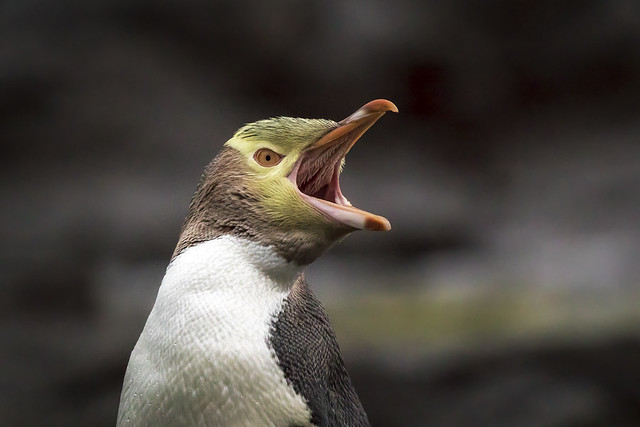
Yellow Eye 
Yellow Eye by Oliver Prince

New book tells tale of Warrnambool's Middle Island project

The tale of Swampy Marsh and the Middle Island Maremma project is the subject of a new children's book.

The unlikely story of using Maremma dogs to save Warrnambool’s dwindling penguin population has already been made famous on the big screen and will now be immortalised in print thanks to a new children’s book.

Chooks in Dinner Suits, written by Diane Jackson Hill and illustrated by Craig Smith, is inspired by the world-first Middle Island project that trained two Maremmas to become penguin guardians to protect the island’s shrinking population.

Jackson Hill said inspiration for the book came from an unusual source – a toilet block wall that featured a sign spruiking the success of the project.

She soon joined the Warrnambool Coastcare Landcare Group and met volunteers who were working on it first-hand. “The story follows a waddle of little penguins who live on the tiny, rocky outcrop of Middle Island. Foxes have caused their numbers to dwindle and local chicken farmer, Swampy Marsh, thinks his dogs Max and Mimi can protect the penguins,” she said. “They have been protecting his chooks for years and after all, penguins are really just chooks in dinner suits. “But everyone laughs at Swampy’s idea, until eventually he can count the last few penguins coming to shore on one hand. Desperate, the townsfolk decide to give Swampy’s idea a chance and Max and Mimi become the penguin protectors of Middle Island.”

Jackson Hill said she hoped the work would help educate youngsters about the importance of protecting and restoring marine environments, as well as promoting the unique Middle Island project. “I wanted to help in some way and thought a picture book would be a good way to promote the project nationally,” Jackson Hill said.  “Plus, what better way to show kids that creative and natural solutions can work,” she said.

Museum Victoria Publishing is releasing the book on June 1.

Jackson Hill is no stranger to children’s writing. The keen ukulele player co-authored the Uke’n Play Ukulele book and CD series. At age 60 Jackson Hill made a career change to become a full-time children’s author. Her other works include Annabel’s Dance and #HarmonyTweet, with Big Band Baby due for release next year. Craig Smith has been illustrating children’s books for decades. He has worked on books alongside authors such as John Marsden, Rachel Flynn and Emily Rodda.
Chooks in Dinner Suits will be officially launched on June 17.

The book follows on from the success of the Oddball movie.

source 

Can NOT stop laughing at penguins reaction to opera (video)


Sunday, May 8, 2016

Happy Mother's Day, Penguin Moms!


CUTE! Baby penguins at Paris Zoo


Published:
(WFLA) – The Paris Zoo has shown off its newest addition to the penguin family – the four Humboldt penguin chicks born in captivity.
Veterinarians took them out of the nest for the first time this week to weigh them. These are the first ever recorded penguin births at the zoo. The chicks were born in April.
It is unknown if the penguins are male or female.
This particular species is considered vulnerable. They are found in the wild in coastal Chile and Peru. Researchers estimate that there are fewer than 10,000 mature Humboldt penguins left in the wild.

source