Tuesday, July 17, 2012

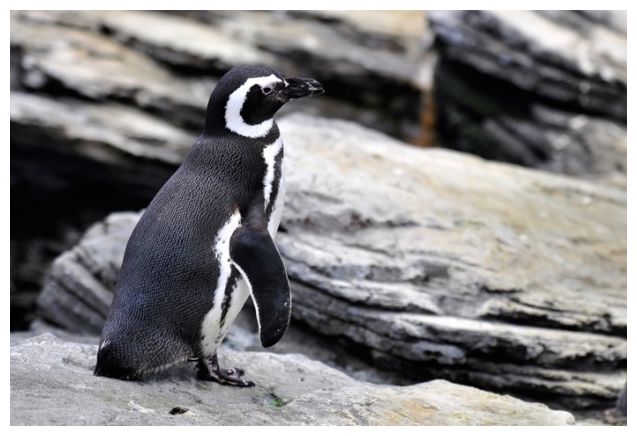
Magellanic Penguin Deaths In Brazil Being Investigated


Penguin
© ruigsantos / Shutterstock
 
Biologists are investigating the deaths of hundreds of penguins that were discovered washed up on the beaches at Brazil's southern Rio Grande do Sul state, various media outlets reported over the weekend.

Officials with the Center of Coastal and Marine Studies (Ceclimar) told AFP reporters on Friday that the 512 Magellanic penguin bodies were found on the coast between the towns of Tramandai and Cidreira.

They added that samples from the deceased birds had been taken to Porto Alegre University for further study. The results of that analysis were expected to be released in approximately one month's time.

According to Nick Allen of the Telegraph, the penguins, which were migrating north from Argentina in order to find food in warmer waters, showed no signs of injury, hunger or oil stains. The massive amount of the dead birds coupled with the lack of injury or signs of exhaustion have veterinarians puzzled, he added.

"Autopsies are being conducted on some of the birds to determine the cause of death," BBC News reported on July 13. "Similar incidents in the past have been blamed on shifting ocean currents and colder temperatures."

"Last week dozens of young penguins were rescued from beaches in Rio de Janeiro after straying far beyond their normal range," the British news organization added. "The birds delighted beach-goers, but scientists said their health was suffering in the tropical waters."

Magellanic penguins are named after the Magallenes region in which they breed, and they typically mate in large colonies in southern Argentina and Chile, the AFP reported. Between March and September, they tend to migrate along the Rio Grande do Sul coast to head up to Sao Paulo, and their diet is made up mostly of tiny fish and marine crustaceans. Their primary foe, the French news agency said, is the southern sea lion. 
 
source 

Image of the Day

Chinstrap & chick by DJG.Sydney
Chinstrap & chick, a photo by DJG.Sydney on Flickr.

Monday, July 16, 2012

Image of the Day

Pingüis Love by roshitz
Pingüis Love, a photo by roshitz on Flickr.

Same-Sex Penguin Couple Separated to Breed Is Reunited


by Jean Ann Esselink on July 15, 2012
                                                                                                                                Harry and Pepper
Last fall, Buddy and Pedro, a same-sex couple of endangered African penguins, were separated by the Toronto Zoo in hopes they would breed. Today, their life after gay love is On Our Radar.
 
When my first grandchild was a toddler, we wore out a copy of And Tango Makes Three, the true story of Silo and Roy, two male Chinstrap penguins at New York City’s Central Park Zoo. They cuddle together, and share a cozy nest, and when all the other penguin couples begin to produce eggs, Silo and Roy want to be parents too. Unaware of the laws of procreation, they bring an egg-shaped rock back to their nest, where they try faithfully to hatch it. A kindly zookeeper notices the plight of Silo and Roy and decides they deserve a chance to be daddies, so he entrusts them with a real egg. The book recalls the same-sex penguin couple’s devotion tending, first to their precious egg, and later, to their little hatchling daughter, Tango. As I remember it, the last words in the book are “Read it again Nana!”

Everybody outside the hard-core homophobes of this world, seems to love a “gay” penguin story. If human gay couples were half as popular, the House of Representatives would be picketing the Supreme Court to overturn DOMA. Why, even in China, a country not known for its embrace of gay rights, a pair of same-sex penguins at Harbin Polar Land was given a “wedding.” Then, when a female in the park had trouble keeping up with her twin hatchlings, keepers gave the pair one of her chicks to make them a family.
 Buddy and Pedro

“Gay” penguins have always been a huge draw. In the early 1990s, the SanFrancisco Zoo was fortunate to have a pair of “gay” Magellanic penguins from South America. Harry and Pepper drew adoring crowds for six years. The pair would help incubate the eggs of other penguins, and eventually hatched and raised their own chick, just like Silo and Roy. Their keepers said they were the best parents on the island, raising the biggest chick, who, by the way, showed no sign of maladjustment due to having two dads.

The affection for “gay” penguin couples revealed itself again last fall in a public outcry, when the Toronto Zoo announced they were splitting up their own same-sex penguin couple, Buddy and Pedro. Unlike the other penguins who were allowed to raise chicks, Buddy and Pedro are African Penguins, considered endangered, and the two had been born and bred in captivity to have the “right stuff,” genetically speaking, to strengthen their species. But in response to the public protest, the Zoo promised Pedro and Buddy would be reunited in the spring.

For the good of the species, Buddy and Pedro were each forced into what, in human terms, would be an arranged marriage. Buddy had been a successful breeder in the past, producing several chicks before his partner of ten years died and Pedro came into his life. He was introduced to a female named Farai. The two produced two chicks, which sadly didn’t survive. Pedro is said to have courted his handpicked bride, the standoffish Thandiwe, but the two did not produce an egg. Finally the breeding season was over, and the gentlemen were reintroduced into the zoo’s penguin exhibit.

Are you cheering for the lovebirds to find each other once again? Of course you are. That’s because people love “gay” penguins. (“Read it again Nana!”) But in reality, there’s no such thing as a gay penguin, at least not in the same committed way humans are gay.

Though Buddy and Pedro are back in the same Toronto Zoo penguin exhibit, they have given up their man love and have bonded with the females chosen for them. But before you feel too angry at the zoo for splitting them up in the first place, you should know Silo left Roy for a cute female newcomer and Pepper was lured away from Harry by a conniving widow named Linda before her former partner’s body was even cold, or warm, however that works for penguins

Scientists who study them say penguins aren’t gay the same way people are gay. It is the nature of the species to form “bonded pairs” and occasionally two males or even less frequently, two females will form such a pair. We anthropomorphize the cute little guys – attribute human characteristics to them – but they aren’t people, and how penguins instinctively behave really has nothing to do with human beings. Buddy and Pedro pair bonding doesn’t prove homosexuality is innate in all species, though it may be, nor does the fact they are now happy with female partners prove reparative therapy works. It doesn’t. But that doesn’t mean there isn’t something that we humans can learn from penguins.

The penguin community wasn’t scandalized because Buddy and Roy wanted to nest together. As long as they didn’t steal their eggs, the other penguins didn’t object to having Harry and Pepper in the neighborhood. No penguin felt compelled to protest to the zookeepers with a hunger strike. Not a single penguin bullied them, or ostracized them. Two boy penguins were experiencing penguin attraction, and not a feather was ruffled, imagine that! It is only humans who seem to feel the need to label them as “gay” and treat them as an oddity. To other penguins, they are just two birds in love, and isn’t that the way things should be?

Today, penguin love, and the prospect of all love being considered ordinary love – (which would make it pretty darn extraordinary) - are On Our Radar.

source 

Sunday, July 15, 2012

Image of the Day

Chinstrap chick (Isn't he adorable?)

More than 500 penguins show up dead on Brazil beaches

In the past week, 512 dead penguins were found on beaches of the southern state of Rio Grande do Sul. The cause of death should be known in about 30 days.


 Penguins killed in Tramandai beach on the north coast of Rio Grande do Sul, southern Brazil, on July 13, 2012. According to veterinarians and biologists, about 500 penguins were found dead on beaches between the towns of Tramandai and Cidreiras. A report on the deaths must be reported within 30 days. Photo: Tarlis Schneider/Acuracia Fotojornalismo/AE. (Agencia Estado via AP Images)

Tarlis Schneider/Agencia Estado/via AP

Penguins killed in Tramandai beach on the north coast of Rio Grande do Sul, southern Brazil, on July 13, 2012. According to veterinarians and biologists, about 500 penguins were found dead on beaches between the towns of Tramandai and Cidreiras. A report on the deaths must be reported within 30 days.

SAO PAULO— Marine biologists and veterinarians say the bodies of more than 500 penguins have washed up on beaches in southern Brazil over the past week.
They tell the G1 online news site that the Center of Coastal and Marine Studies is investigating what caused the deaths of the 512 penguins found on beaches of the southern state of Rio Grande do Sul. The cause of death should be known in about 30 days.
AP12061518450_WEB

Jorge Mesquita/Agencia Estado/via AP

Penguin is found dead in Maresias beach in San Sebastian, northern coast of Sao Paulo, southeastern Brazil, on June 15, 2012.

Calls to the center on Saturday went unanswered.
Biologists at the center told G1 the penguins were migrating north from Argentina in search of food in warmer waters. They say the birds appeared well-fed, unhurt and without oil stains.
AP120713115125_WEB

Tarlis Schneider/Agencia Estado/via AP

Penguins killed in Tramandai beach on the north coast of Rio Grande do Sul, southern Brazil, on July 13, 2012. According to veterinarians and biologists, about 500 penguins were found dead on beaches between the towns of Tramandai and Cidreiras. A report on the deaths must be reported within 30 days.

source 

~~~~~~~~~~~~~~~~~~~~~~~~~~~~~~~~~~~~~~~~~~~~~~~~~~~~~~~~~~~~~~~~~~~~~~~~~~~


The Magellanic penguin, though still numerous, is considered a threatened species because of human impact on its habitat. McClatchy Newspapers

By The Associated Press

Published: Saturday, July 14, 2012,

SAO PAULO — Marine biologists and veterinarians said the bodies of more than 500 penguins have washed up on beaches in southern Brazil during the past week. 

They told the G1 online news site that the Center of Coastal and Marine Studies is investigating what caused the deaths of the 512 penguins found on beaches of the southern state of Rio Grande do Sul. 

The cause of death should be known within a month, the scientists said. But it’s something of a mystery.

The penguins were migrating north from Argentina in search of food in warmer waters. The birds appeared to be well-fed, unhurt and without oil stains.

These Magellanic penguins, named after the Magallanes region in which they breed, mate in large colonies in southern Argentina and Chile.

They traditionally migrate north between March and September along the Rio Grande do Sul coast to head up to Sao Paulo.
Their diet consists mainly of small fish and marine crustaceans and their chief enemy is the southern sea lion.