by Bridget Butler Millsaps · January 19, 2015

Just
the word ‘penguin’ brings to mind the good-natured waddle of those
flightless birds that so easily elicit smiles. Penguins amuse us,
fascinate us, and inspire us — and now, one of them will be on display
in 3D print for everyone to see in Greenwich, CT, just in time for
National Penguin Day on January 20th.

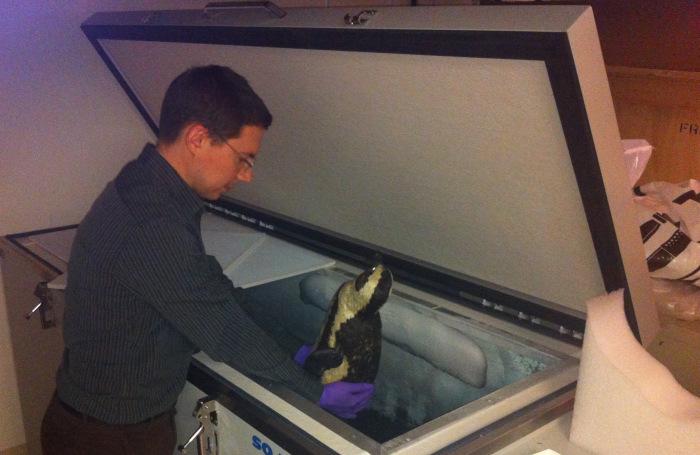
Dr. Dan Ksepka removing the Black-Footed penguin specimen from maintenance in frozen temperatures.
In a project just completed by Dr. Dan Ksepka, curator of science at the
Bruce Museum, and
MakerBot
of Greenwich, they’ve used 3D printing not only to create a splash at
their celebration and lecture regarding the esteemed penguin on January
20th, but also as an example of how 3D printing can be used to
manufacture specimens for display that are low maintenance, and can be
created easily and affordably.
While it’s always entertaining to go to a museum of any sort, we
often don’t stop to consider the amount of care that goes into a
collection, whether it is at an art museum, historical museum, natural
museum, or even a zoo. Science museums particularly rely on specimens,
which can often be quite diverse and share a lot of data with
museum-goers. Usually made by hand, they are created for display, for
public enjoyment, and education. The specimens may also be created
primarily for research purposes.
When it comes to bird and mammal specimens, they are often created
through taxidermy, with bird specimens traditionally being displayed as
‘stuffed skins,’ with wires used as supports. The specimens have to be
‘curated,’ watched over, and preserved.
At the Bruce Museum, they also take fastidious care of their
specimens, even often removing them from their collection cabinets,
sealing them in bags, and placing them into a deep freezer for up to a
week, to kill any pests that might be harbored in the feathers. The
specimens are valued, and meant to last for a long time.

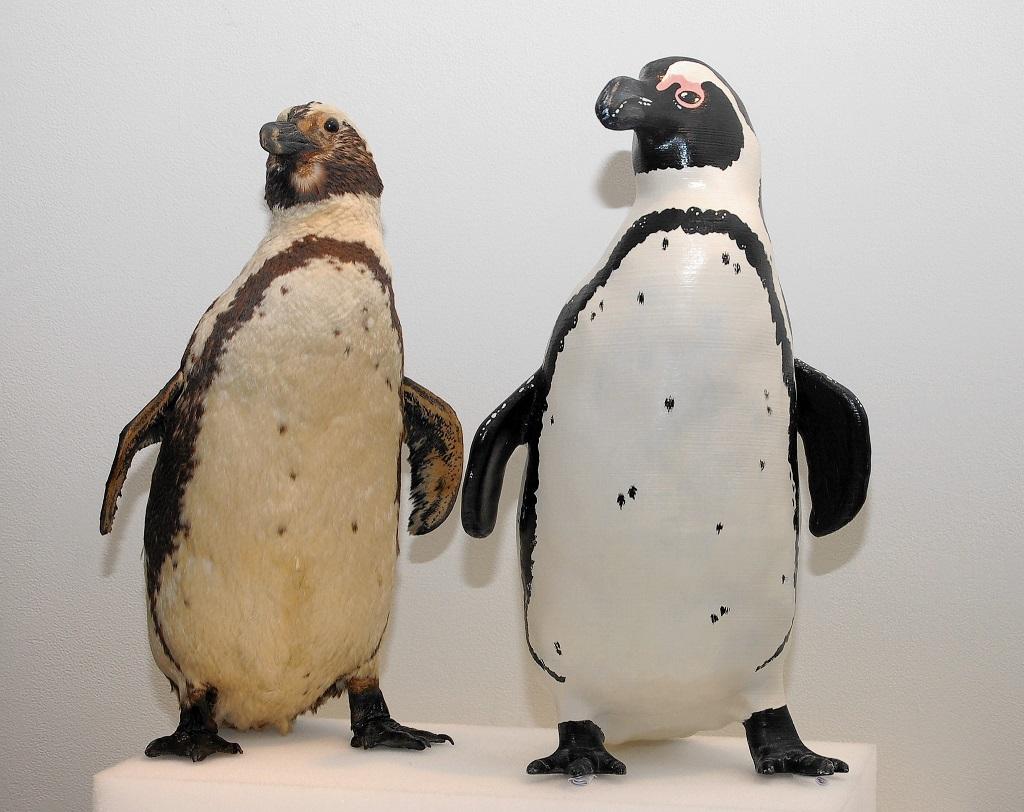
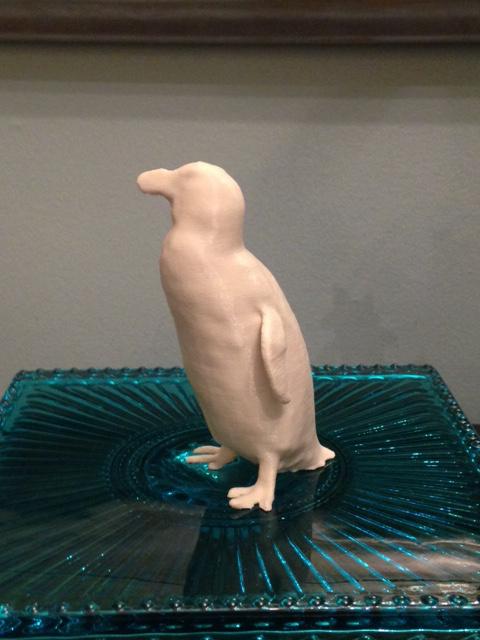
Black-Footed Penguin specimen, and 3D printed replica (right)
The Bruce Museum encompasses both art and science in their facility,
and now they are embracing progressive technology to streamline the
curation process, beginning with their black-footed penguin, a specimen
which the museum originally acquired from South Africa. Partnering with
MakerBot, with a deadline for National Penguin Day, the penguin was
scanned and then 3D printed, beginning with a smaller sample, and then
evolving to the full-size, painted 3D print to be shown off at the
museum’s lecture night on January 20th.
The resulting 3D print is very similar in size to the original.
While all of the markings were not completely accurate due to some
minor limitations of 3D scanning, the colors represented the penguin
nicely, as they had faded on the older, original specimen. Penguins are
noted for their striking coloring and the famous “collar” around the
face and neck.
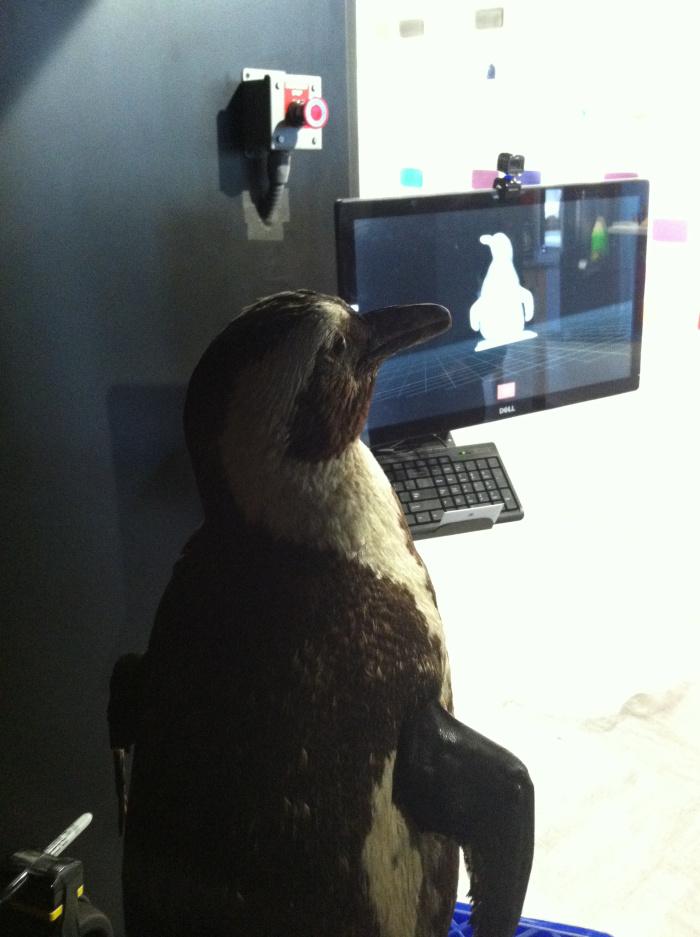
“Overall it is really nice to have not only a light
weight printed replica of our penguin, but a virtual copy that can be
viewed instantly on a computer,” Dr. Ksepka noted in his blog.
These hardy birds vary in size anywhere from 16 inches to four feet
tall and are found only in the Southern Hemisphere — mainly Antarctica —
where they are free from the predatory threat of animals like the polar
bear. Feeding on krill, fish, and squid, some of them can swim up to
approximately 20 mph, and they usually live in enormous colonies, which
can be populated into the thousands. With so much variety in the penguin
species, there are certainly many more which can be enjoyed in 3D
print, with the black footed penguin being just the tip of the iceberg —
and perhaps we should 3D print a replica of one of those as well, to
add to the scenery? Just a thought!
“Penguins are beloved to people throughout the world for
charming behaviors and their remarkable ability to survive in extreme
environments like Antarctica,” Dr. Ksepka notes. “They make perfect
ambassadors for conservation.”
It will be interesting to see what impact the technology of 3D
printing will have on museums, and curation and creation of specimens as
more institutions explore the options availabile, recognizing the
number of benefits 3D scanning and 3D printing can offer both to their
aesthetic displays, as well as the bottom line.
Tell us what effects you think 3D printing can have on museum curation and specimens in the
3D Printed Black Footed Penguin forum over at 3DPB.com.

3D scanning of the penguin specimen, by MakerBot

First 3D printed version, attempting smaller size to begin with.



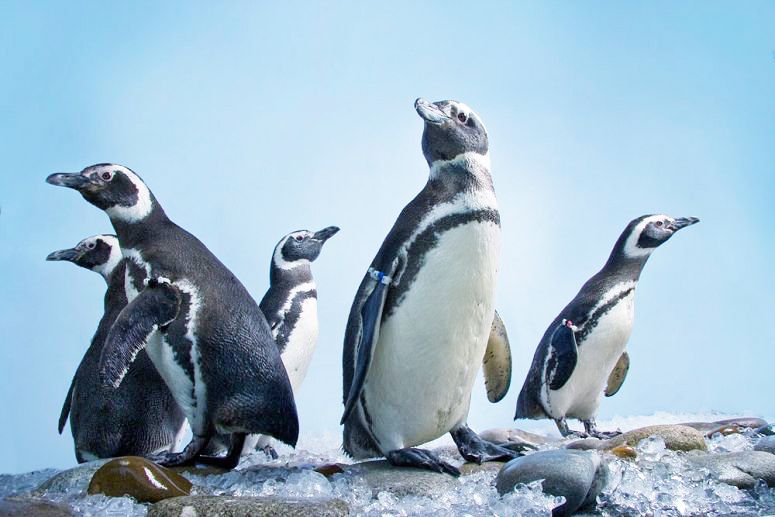


 Don’t be fooled by the sedate poses of these Humboldt penguins in the water. Some penguins can swim as fast as 20mph.
 That’s because penguin and seabird poo, actually called guano, has a
unique spectral signature which can be identified from satellite imagery
using infra red. Basically, if they can see a lot of staining, chances
are something has been to the toilet, and that something, is a penguin.
That’s because penguin and seabird poo, actually called guano, has a
unique spectral signature which can be identified from satellite imagery
using infra red. Basically, if they can see a lot of staining, chances
are something has been to the toilet, and that something, is a penguin.  The Adelie penguin is one of the smallest and most widely found penguins
on Antarctica. To recognise it quickly, check out the white ring around
each eye. It can dive to 180 metres, but catches food closer to the
surface. There’s thought to about five million left and listed as ‘near
threatened’.
The Adelie penguin is one of the smallest and most widely found penguins
on Antarctica. To recognise it quickly, check out the white ring around
each eye. It can dive to 180 metres, but catches food closer to the
surface. There’s thought to about five million left and listed as ‘near
threatened’. Well it does for penguins. We might have penguins in our John Lewis
Christmas adverts and zoos, but really these birds are at home in the
Southern Hemisphere.
Well it does for penguins. We might have penguins in our John Lewis
Christmas adverts and zoos, but really these birds are at home in the
Southern Hemisphere.  African penguins enjoy an average life expectancy of about 20 years in
the wild. In general, penguins can live for anything between 15-20
years.
African penguins enjoy an average life expectancy of about 20 years in
the wild. In general, penguins can live for anything between 15-20
years. Penguins spend about 60 per cent of their lives at sea. In fact, they
spend so much time in the water, their eyesight is far superior beneath
the surface than above in the air. They can even drink sea water.
Penguins spend about 60 per cent of their lives at sea. In fact, they
spend so much time in the water, their eyesight is far superior beneath
the surface than above in the air. They can even drink sea water.  We can’t help but smile at this picture of a Fiordland penguin. But they are another species which is listed as vulnerable.
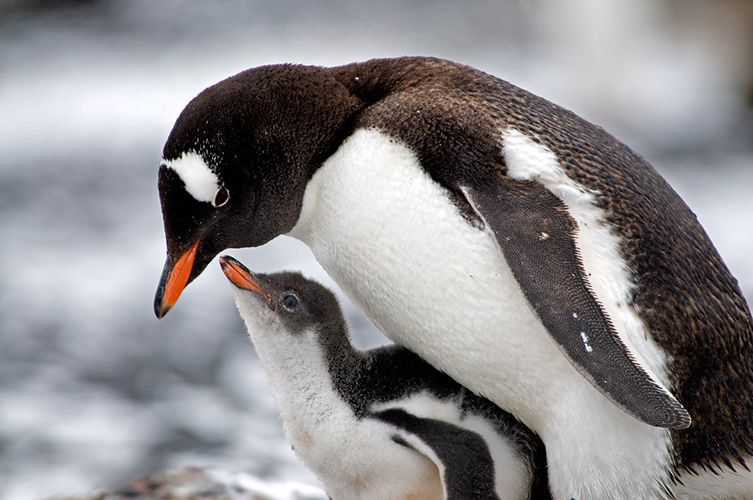
  This chick was born in a zoo (hence why it’s being handled), but in the
wild, a Humboldt penguin can expect to live for about 20 years, living
on a diet of herring, anchovies, and smelt. They are most likely to be
found in South America, on the coast of Peru and Chile.
This chick was born in a zoo (hence why it’s being handled), but in the
wild, a Humboldt penguin can expect to live for about 20 years, living
on a diet of herring, anchovies, and smelt. They are most likely to be
found in South America, on the coast of Peru and Chile.  We’ve already heard how poo has helped to spot new penguin colonies, but
even before that, Very High Resolution satellites were used to count
penguins. That’s how in 2012, British Antarctic Survey (BAS) researchers
counted 595,000 birds, almost double previous estimates of between
270,000 and 350,000. But they are really sociable animals with some
breeding colonies numbering in the tens of thousands.
We’ve already heard how poo has helped to spot new penguin colonies, but
even before that, Very High Resolution satellites were used to count
penguins. That’s how in 2012, British Antarctic Survey (BAS) researchers
counted 595,000 birds, almost double previous estimates of between
270,000 and 350,000. But they are really sociable animals with some
breeding colonies numbering in the tens of thousands. Penguin chicks usually put on 10% of their body weight every day.
Penguins can eat a variety of sealife, including krill, fish, shrimp and
even squid.
Penguin chicks usually put on 10% of their body weight every day.
Penguins can eat a variety of sealife, including krill, fish, shrimp and
even squid. The largest penguin is the Emperor penguin, which can also stay
underwater for 20 minutes, while the smallest is imaginatively-called
Little Penguin or Little Blue Penguin. This little fellow is two weeks
old, and was born at a Cincinnati Zoo, but Little Penguins are found in
Australia and New Zealand. Adults stand just over 25cm and weigh about a
kilo.
The largest penguin is the Emperor penguin, which can also stay
underwater for 20 minutes, while the smallest is imaginatively-called
Little Penguin or Little Blue Penguin. This little fellow is two weeks
old, and was born at a Cincinnati Zoo, but Little Penguins are found in
Australia and New Zealand. Adults stand just over 25cm and weigh about a
kilo.