Tennessee Aquarium senior aviculturist Loribeth Lee and animal
trainer Holly Lutz captured Sweet Pea, a macaroni penguin, laying an egg
while her mate, Paulie, celebrated with a loud call.
"Macaronis often swing their heads from side to side and let out very
loud calls as a sign of courtship during nesting season," Lee said.
"But it was extra sweet to catch Paulie vocalizing right after Sweet Pea
laid her egg."
Lutz caught the cell phone footage inside the aquarium's Penguins' Rock exhibit.
Nesting season began April 1 when aquarium experts placed nesting
rocks in the exhibit. Aquarium guests can view courtship, nesting and
egg-tending behaviors as they continue through the summer months.
Penguins at a Devon zoo are dreaming of scenes from the
blockbuster film Surf's Up – after taking delivery of their very own
surfboard.
Keepers at Living Coasts, Torquay’s coastal zoo, gave
the cool birds a new, hand-shaped board to mark World Penguin Day, on
Monday.
And while none of the birds actually leaped on the board
and started to recreate scenes from the 2007 computer-animated comedy
Surf’s Up, two-year old macaroni penguin named Yoyo was happy to be
snapped beside the board.
The miniature board was made by Circle
One, based in Crediton, near Exeter. Owner Jeff Townsley discussed the
idea with the animal staff.
He said: “In over 40 years of manufacturing and shaping surfboards I
have never been asked to make a surfboard for such a surprising or
worthy cause – but after thinking it over we were able to make one just
right for penguins.”
Yoyo the penguin runs off to check the swell on Magicseaweed
World
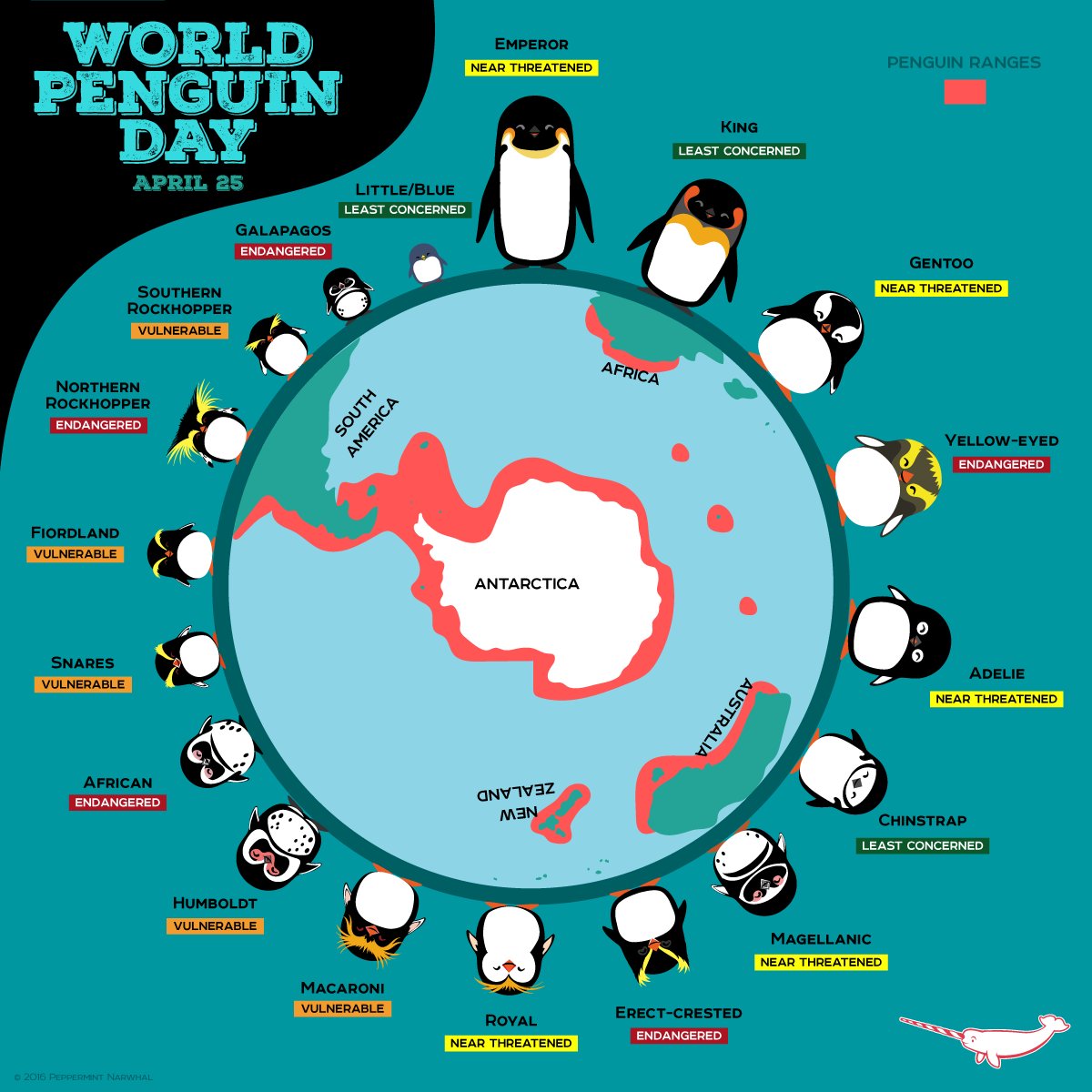
Penguin Day is an excuse – as if anyone needed one – to celebrate
penguins, to find out more about penguins and to raise awareness for the
conservation of penguins.
Living Coasts, a registered charity, supports penguin research, rescue and rehabilitation in South Africa.
Living
Coasts’ Clare Rugg: “Zoos routinely use what we call environmental
enrichment, including specially-designed toys, novel items and
activities, to stimulate animals mentally and physically.
“Someone suggested a surfboard as a joke – but then we began to wonder what would happen if a penguin really had a surfboard…”
Yoyo
was hatched in May 2013 to parents Corin and Blue, but had to be
hand-reared by keepers, so he is especially confident around people.
The world has had a love affair with penguins for some time now.
Their tuxedo-colored feathers, waddling walk, and awkward mannerisms
make them easy to adore. But get too close to penguins—chinstrap
penguins in particular—and your endearing perception of these birds may
be tested, given their penchant for projectile pooping and beating each
other up.
Douglas Krause, a National Geographic grantee and a wildlife
biologist with the National Oceanic and Atmospheric Administration
(NOAA), knows all too well the mischievous behavior of chinstrap
penguins. Krause is with a team of NOAA researchers in Cape Shirreff,
Antarctica, collecting data to help protect chinstrap penguins and
other Antarctic species, which means he often finds himself squarely in
the center a chinstrap penguin colony.
“Every time you touch them or get near them, the very first thing
that they do is projectile poop. They, and everything around them,
are constantly covered in feces,” Krause says of the penguins. “We’ll
have a whole separate set of field gear that’s only for the purpose of
working with penguins, because you are covered in poop to such a degree
that you can’t clean it.”
Chinstrap penguins are undoubtedly adorable, but they’re not known for their manners.
Chinstrap penguins are also known for being a little rough around the
edges for reasons beyond their bathroom etiquette. “They’re
cantankerous; they tend to be very aggressive. They’ll regularly beat
smaller chinstrap penguins for seemingly no reason at all,” says Krause.
Nonetheless, he and the NOAA team are committed to protecting the
sometimes crabby critters.
As NOAA seabird research leader Dr. Jefferson Hinke explains,
“Penguins are an ideal animal for assessing the status of the Antarctic
ecosystem. They’re approachable, return to predictable areas every year,
and are large enough to carry an array of instruments that give us a
direct window into their world.”
“We’re putting radio tags on the penguins to track when they go out
to find food and when they come back. So if it’s taking them a very long
time to go out and find food, it means the conditions out there are not
very good. We can pass that data onto agencies that set commercial
fishing regulations to protect the entire ecosystem,” says Krause. “To
attach the radio tags, we’ll insert a common plastic zip tie through the
feathers on the penguin’s back to give the attachment a stable base,
and then we’ll add little bit of nontoxic epoxy glue to ensure the tag
doesn’t get loose during the deployment. When it comes time to recover
the radio tag a few weeks later, we’ll simply catch the bird, clip that
plastic zip tie and the instrument just comes off. And if there’s any
residue left over it will come off in a few weeks when the penguins
naturally molt all their feathers.”
Tagging the penguins is part of a much bigger picture to protect
Antarctica’s environment and the animals that call it home. “Commercial
fishing is taking place all around the Antarctic and it can impact the
ecosystem that these animals are a part of,” Krause explains. “I am
often asked, ‘Why is the federal government, or this or that program,
down in the Antarctic, anyway? It’s so far from the United States.'”
But the United States is the major consumer of commercially fished
resources like Chilean sea bass and Antarctic krill. Therefore, it’s
very important for us to be contributing the best possible science to
organizations that regulate fishing, so that the fishing can continue
into the future responsibly and sustainably. And because of that,
despite chinstrap penguins’ oft unruly demeanor, Krause says, “I’m
extraordinarily privileged to be able to work with these animals in this
environment and do everything we can to make sure they’re healthy.”
Canberra, April 21 (IANS) Australia’s iconic Phillip Island Penguin
Parade, one of the nation’s leading tourist attractions, is set for a
$40 million facelift.
Most of the money will go toward a major upgrade of the visitor centre,
while the rest has been put aside for the restoration and preservation
of the penguin’s eight-hectare beach sanctuary, Xinhua news agency
reported.
The penguin parade, which happens every night at sunset as the
flightless birds return to shore, pulls in 600,000 international and
domestic tourists each year.
The Victoria state government said the new funding can help the nightly
penguin parade, which takes place 90 minutes outside of the state
capital of Melbourne, boost its annual visitor numbers by 20 percent
over the next decade.
Victoria’s Environment Minister Lisa Neville on Thursday said investing
in the parade made both economic and environmental sense.
“Anyone who has visited the Penguin Parade knows just how special this
natural spectacle is. It’s only right that they have the facilities to
match,” Neville said.
“Tourists to Phillip Island directly fund world class conservation
research. The announcement will ensure that the longest continuous
seabird study in the world can keep doing its vital work.”
Under the plan, the “outdated” 1988 visitors’ centre will be moved to
give the birds a chance to set up a new breeding ground in the vacated
area.
By 2019, it is expected that a larger, more environmentally-friendly
facility will be erected further down the beach closer to the fairy
penguins’ sand-dune burrows. It is estimated to be completed by 2019.
Phillip Island Nature Parks, the operators of the penguin parade, will
also contribute around $8 million as part of the redevelopment.
By Western Gazette - South Somerset
|
Posted: April 21, 2016
Yew the Humboldt penguin celebrates his 12th birthday
In case you are still unaware, today (April 21) is the day that Queen Elizabeth II celebrates her 90th birthday. Across the country businesses, towns and cities have been getting behind her to celebrate in style.
But at Weymouth Sea Life Adventure Park, they have been celebrating the birthday of one of their own special residents, Yew the Humboldt penguin.
Sharing his birthday with Her Royal Highness, Yew turns 12 today and in
honour, the Weymouth Sea Life have been giving him the royal treatment
by throwing him his very own street party.
Yew joined Weymouth Sea Life Adventure Park
in December last year from the Isle of Wight, but he has already made
lots of new penguin pals who all joined in the celebrations. They
include Juniper, Ceder, Laurel, Maple, Rowan, Birch, Walnut, Conquer,
Sequoia, Mango, Fig, Bonsai and Apple.
Today he will be treated to a very special frozen fish birthday cake. Happy birthday to Yew
It's almost World Penguin Day! Maui seems
an unlikely place to find penguins, but there they are -- and the island
will be celebrating Monday with its seven black-footed penguins.
The Hyatt Regency Maui Resort and Spa
in Lahaina is the only Hawaiian hotel with an on-site penguin habitat.
Come party with the birds -- a.k.a. African or jackass penguins -- named
Oreo, Nahu, Buddah, Zen, Mai, Tai and Momi.
One
of 18 species of penguins, these birds thrive in the tropical heat
because they are warm-climate creatures native to southern coastal
Africa.
Guests and visitors are invited to watch the penguins swim and waddle at a free event
that includes a penguin feeding at 9:30 a.m., penguin cookie-decorating
and a photo booth for pictures with the resort's mascot (yep, it's a
penguin).
Those who stay overnight Saturday will receive a turndown with a penguin toy to take home.
By
the way, the Hyatt Regency Maui's penguins range in age from 7 to 30
years old. Six of the seven were hatched at the property, and they
collectively eat about 300 pounds of fish each week.
The most distinctive thing about these penguins is that they honk and bray -- perfect for any World Penguin Day party.
The Fort Wayne Children's Zoo opens for the 2016 season Saturday
By WANE Staff Reports
Published:
FORT WAYNE, Ind. (WANE) Another rare African penguin chick has hatched at the Fort Wayne Children’s Zoo. A new African penguin, Blue, was hatched at the Fort Wayne Children’s Zoo.
Blue, an endangered African black-footed penguin, was introduced to
the media Tuesday during a season-preview open house. He was born in
February.
Blue is the uncle to Echo, the penguin hatched in November and introduced in January. Echo was the first African penguin to hatch at the zoo since 2012.
African black-footed penguins are endangered. Shelley Scherer, the
zoo’s Australian curator, said Blue and Echo’s births will help the zoo
bring awareness to endangered species.
New Zealand‘s elusive yellow-eyed penguin
naturally runs for cover under forest shrubs, trees and branches. It’s
an incredibly shy penguin. But the forest isn’t enough to protect the
world’s rarest penguin species, and experts fear that extinction could
become a reality soon without urgent action.
Struggling to Survive
While it’s difficult — even for scientists — to spot the yellow-eyed
penguin in the wild, it’s not difficult to identify them with their pale
yellow eyes and the yellow band across their heads. Their voice is
described by IUCN as “slightly musical” compared to other penguins. But right now, the endangered penguin species is likely singing a sad tune.
Despite conservation efforts, their population numbers continue to drop from approximately 6,000 a decade ago to only 2,000 today. Their future outlook looks even bleaker with only 18 out of 100 penguin chicks making it past year one.
Despite its shyness, the yellow-eyed penguin is a survivor. The New
Zealand penguin has survived having its habitat bulldozed through by
farmers to make room for cattle and sheep. It also survived a massive
fire in 1995 that burned half of the population, explains The New York Times. But the major threats to the penguins keep stacking up:
1. Predators like ferrets, stoats, pigs and cats
2. Disease, like avian malaria and blood parasites
3. Temperature changes and climate change
4. Food shortages
5. Human disturbance
6. Fires
7. Bycatch (e.g. drowning in fishing nets)
“The Political Lobby of the Fishing Industry is Much Stronger Than Us”
Fergus Sutherland, the caretaker of a penguin reserve called Te Rere,
worries about the last threat a lot. Even though the penguins benefit
from protections on land, they spend most of their time at sea — where
they aren’t afforded the same protections. Conservationists like
Sutherland are demanding more fishing restrictions to protect the
penguins, but as Sutherland explains to The New York Times, “the political lobby of the fishing industry is much stronger than us.”
Nelson Cross, who represents the fishing industry in a forum called South-East Marine Protection, admits to The New York Times
that there are “unfortunately occasional instances where a penguin has
been caught in a commercial trawl.” However, Cross is quick to add that
there’s “no evidence that recreational fishing impacts in any way on the
penguins.”
Overfishing hurts the penguins indirectly, too. Conservationists are
now seeing more barracuda and shark attacks on the penguins because of
decreasing fish numbers. These food shortages are forcing the penguins
to compete with other predators.
Take Action!
Lend your voice to the cause by signing and sharing this petition
demanding more penguin protection and more fishing restrictions. We
have to be louder than New Zealand’s fishing lobby or face the deafening
silence of the yellow-eyed penguin’s extinction.
The Penguin Camera is located on Torgersen Island (64°46’S, 64°04’W), off the coast of Anvers Island and less than a mile from Palmer Station. Torgersen Island is home to a colony of Adélie penguins numbering approximately 2,500. This camera is seasonal and operates primarily from October to February, the Adélie breeding season. The camera is solar-powered and may sometimes experience brief outages due to inclement weather. School classrooms and other educational demonstrations will often take control of the camera, moving it to gain better views of the colony.






 CanIndia New Wire Service


