Little Penguin Warden Murray
Sharp is a member the voluntary team guarding the penguins against
attacks by the thrill-killing fox. Picture: Martin Lange.
IT IS 4.30pm on the dot and eager National Parks and Wildlife Service team members are being briefed on their mission.
After close to three weeks of a military-like operation, they’re
closing in on their target, the thrill-killing fox that has slaughtered
27 little penguins at North Head.
Thermal imaging has detected the fox around Store Beach, near the boxes where the penguins nest.
A sniper has killed one fox, but they believe the main killer is still at large.
NPWS Peter Bergman outlining the nights duties with staff. Picture: Martin Lange.
In the war room, a large map is marked with an X, and a marksman is dispatched nearby.
Other
parks staff and volunteers will spend the cold night standing guard at
Manly Wharf, Collins Beach, Store Beach and Q Station.
The team is
briefed on safety: be on the lookout for ticks, watch footing on cliff
edges and mossy rocks and confirm your contact number.
A penguin roosting in its box. Picture: Martin Lange.
A welfare check will be conducted during the evening. There will be a shift changeover at 3am.
By
5pm they are in position and the operation starts. Volunteer and
penguin warden Murray Sharp is positioned at Collins Beach and will stay
there until 3am. He is accompanied by three others to help keep watch.
A penguin roosting in its box. Picture: Martin Lange.
NPWS ranger Mel Tyas says human presence has been enough to
deter the fox since the operation kicked off with the penguin toll still
standing at 27.
“The human scent has been working a treat. Since we’ve ramped up the operation we haven’t lost a penguin,” Ms Tyas says.
Mr Sharp says moving around the headland in the middle of the night has been a challenge.
“One
of the nests is around the corner and with high tide I had to go the
back way to find it. I ended up on a cliff edge and realised I was in
the wrong spot,” Mr Sharp says.
Navigating in pitch black surroundings isn’t the only obstacle. In winter, the chill is bone numbing.
NPWS ranger Melanie Tyas checking the camera which monitors the penguins and fox. Picture: Martin Lange.
Volunteer Beverley Prior is also set up for the night at Collins Beach.
She says its vital to protecting the penguins.
“They deserve to be able to survive in this environment and not be threatened by a feral intruder,” Ms Prior says.
She had a terrifying incident on her first night.
“We thought the fox had turned up because the penguins made such distressing calls,” she says.
“We thought, oh no, he’s here, and started madly screaming to try and distract him, it was really scary.”
Luckily, the penguins remained safe – the calls were likely to be mating calls.
Ms Tyas says breeding season leaves the penguins quite vulnerable.
Volunteer Beverley Priori and Little Penguin Warden Murray Sharp were on Thursday’s night’s watch. Picture: Martin Lange.
“They’re busy, they’re out at night, they’re gathering things to build nests – it’s a high-risk time for them,” she says.
When the penguins come in, they’re often in groups, and she says while they do it for safety, the method is a little flawed.
“The fox has the opportunity to get six or seven at a time because they all arrive together.”
Ms Tyas says it’s only a matter of time before he’s caught. “I think we’re very close.”
source


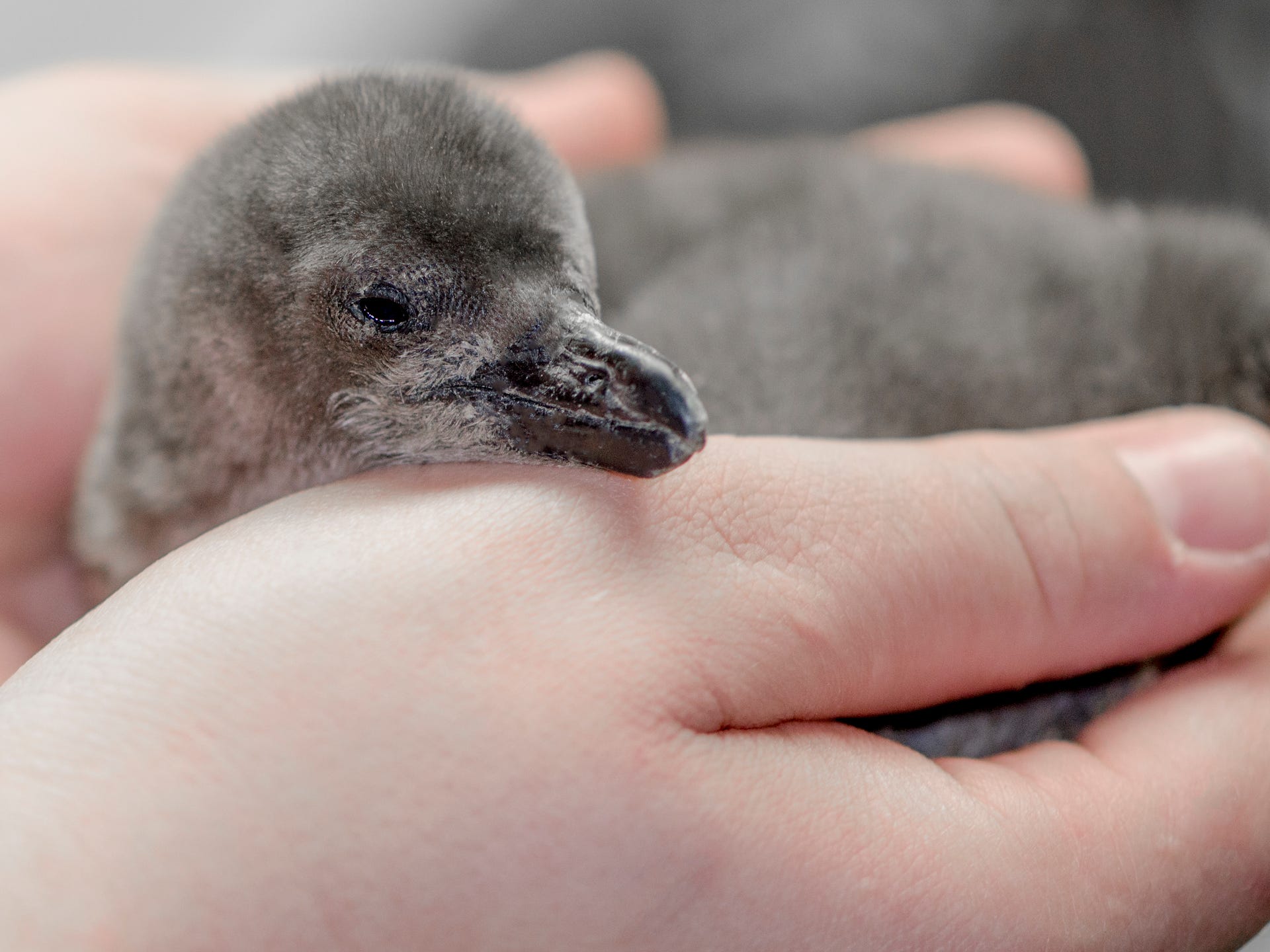






 That’s one cute chick!




 Davis
Davis
 Casey
Casey
 McMurdo